

By Wendy Murdoch
Copyright© 2012. All rights reserved.
Do you have difficulty lengthening your horse’s stride? Do you tense your buttocks in the rising trot? Do you lead with your chest instead of your seat as you rise? Here’s a quick tip to help you open your hips, rise the trot correctly, and ask for a longer stride.
Next time you ride notice the angle of your thighs. Do your feet and knees turn out? Do you turn your heels in when asking your horse to go forward? Do you post the trot in an up-and-down motion rather than a forward swing? The common cause for these problems is riders using their buttock (gluteal) muscles instead of the back of the leg (hamstring muscles) to open the hips.
The gluteal muscles are very powerful. Poorly timed or over use of these muscles causes problems, especially in rising trot and lengthenings. Many riders try to get the horse to lengthen by gripping with the heels. This causes the buttocks to strongly contract and limits the rider’s ability to follow the movement.
In order rise the trot and lengthen the stride correctly, your hips need to open (or extend) as you rise. Anything that limits opening the hip makes it more difficult. Contracting the buttocks causes the rider’s knees to turn out, which many riders think is opening the hips because they feel more space between the top of the thigh and the saddle near the pommel. However, turning the knees out causes external rotation of the hip, which limits the hip from opening fully and easily. Therefore, turning the knee out or heel in is contradictory to the movement you want for rising trot and lengthenings.
While the gluteal muscles are still doing some work, there is another area that is needed to press the foot back and pelvis forward - the hamstrings. These muscles attach to the seat bone. As you engage the hamstrings (back of the leg), the pelvis remains upright so that your seat stays upright and engaged.
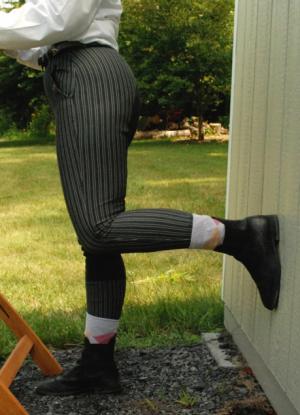
To feel how to open the hips correctly, stand with your back to a wall. Hold onto a chair at first. This exercise is not a balancing act, but once you learn how to do it, you probably won’t need the support anymore. Bend your knee to a 90-degree angle and place your whole foot flat on the wall behind you. If your tall boots are too restrictive, do this exercise before you put them on.
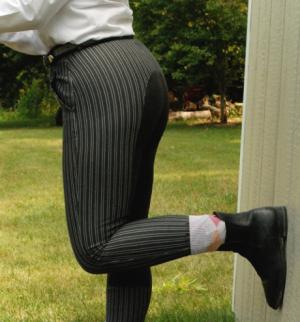
Press your foot against the wall while keeping the pelvis stable with your seat bones pointing toward the ground. Do not let your lower back hollow or your pelvis tip (anterior tilt) as you press. Lengthen up the front of your body as you press your foot against the wall. Make sure your heel is in contact and that you are pressing with your entire foot, not just your toes. Notice that your thigh lengthens down towards the ground as your body lengthens upwards; therefore, you are extending or opening the hip joint.
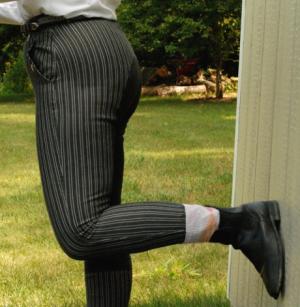
Carefully turn your knee and foot out to the side. With your hand on your buttocks, feel how you engage the gluteus muscles. Press the wall again. How does this affect your ability to open your hip? Put your foot in the original (vertical) position. As you press the wall, feel how your pelvis moves forward and the front of the hip opens. This allows you to follow the swing of the horse in a longer stride and rise to the trot correctly. Repeat with the other foot.
Use this Murdoch Minute to improve your rising trot and ability to ask the horse to lengthen his stride. Maintaining an upright pelvis and lengthening through the front of thigh keeps you stable throughout the posting motion, and lets your hips ask for the horse to lengthen his stride.
Wendy Murdoch resides in Washington, VA. She teaches riders of all levels and disciplines how to improve the horse’s performance by improving their body position. Her book, 50 5-Minute Fixes to Improve Your Riding, based on the Murdoch Minutes, is available at www.murdochmethod.com. On-line join Wendy’s Facebook group Fans of the Murdoch Method and find more articles and her blog at www: murdochmethod.com.
Photo 1. Place your foot flat on the wall. Press against the wall as you lengthen up from the pubic arch to the top of your head to open your hip joint.
Photo 2. Hollowing the back or tipping the pelvis forward down avoid opening at the hip.
Photo 3. Turning the knee out and heel in engages gluteal muscles and restricts the hip from opening fully.
Copyright© 2012. All rights reserved.
Do you have difficulty lengthening your horse’s stride? Do you tense your buttocks in the rising trot? Do you lead with your chest instead of your seat as you rise? Here’s a quick tip to help you open your hips, rise the trot correctly, and ask for a longer stride.
Next time you ride notice the angle of your thighs. Do your feet and knees turn out? Do you turn your heels in when asking your horse to go forward? Do you post the trot in an up-and-down motion rather than a forward swing? The common cause for these problems is riders using their buttock (gluteal) muscles instead of the back of the leg (hamstring muscles) to open the hips.
The gluteal muscles are very powerful. Poorly timed or over use of these muscles causes problems, especially in rising trot and lengthenings. Many riders try to get the horse to lengthen by gripping with the heels. This causes the buttocks to strongly contract and limits the rider’s ability to follow the movement.
In order rise the trot and lengthen the stride correctly, your hips need to open (or extend) as you rise. Anything that limits opening the hip makes it more difficult. Contracting the buttocks causes the rider’s knees to turn out, which many riders think is opening the hips because they feel more space between the top of the thigh and the saddle near the pommel. However, turning the knees out causes external rotation of the hip, which limits the hip from opening fully and easily. Therefore, turning the knee out or heel in is contradictory to the movement you want for rising trot and lengthenings.
While the gluteal muscles are still doing some work, there is another area that is needed to press the foot back and pelvis forward - the hamstrings. These muscles attach to the seat bone. As you engage the hamstrings (back of the leg), the pelvis remains upright so that your seat stays upright and engaged.
To feel how to open the hips correctly, stand with your back to a wall. Hold onto a chair at first. This exercise is not a balancing act, but once you learn how to do it, you probably won’t need the support anymore. Bend your knee to a 90-degree angle and place your whole foot flat on the wall behind you. If your tall boots are too restrictive, do this exercise before you put them on.
Press your foot against the wall while keeping the pelvis stable with your seat bones pointing toward the ground. Do not let your lower back hollow or your pelvis tip (anterior tilt) as you press. Lengthen up the front of your body as you press your foot against the wall. Make sure your heel is in contact and that you are pressing with your entire foot, not just your toes. Notice that your thigh lengthens down towards the ground as your body lengthens upwards; therefore, you are extending or opening the hip joint.
Carefully turn your knee and foot out to the side. With your hand on your buttocks, feel how you engage the gluteus muscles. Press the wall again. How does this affect your ability to open your hip? Put your foot in the original (vertical) position. As you press the wall, feel how your pelvis moves forward and the front of the hip opens. This allows you to follow the swing of the horse in a longer stride and rise to the trot correctly. Repeat with the other foot.
Use this Murdoch Minute to improve your rising trot and ability to ask the horse to lengthen his stride. Maintaining an upright pelvis and lengthening through the front of thigh keeps you stable throughout the posting motion, and lets your hips ask for the horse to lengthen his stride.
Wendy Murdoch resides in Washington, VA. She teaches riders of all levels and disciplines how to improve the horse’s performance by improving their body position. Her book, 50 5-Minute Fixes to Improve Your Riding, based on the Murdoch Minutes, is available at www.murdochmethod.com. On-line join Wendy’s Facebook group Fans of the Murdoch Method and find more articles and her blog at www: murdochmethod.com.
Photo 1. Place your foot flat on the wall. Press against the wall as you lengthen up from the pubic arch to the top of your head to open your hip joint.
Photo 2. Hollowing the back or tipping the pelvis forward down avoid opening at the hip.
Photo 3. Turning the knee out and heel in engages gluteal muscles and restricts the hip from opening fully.


