

By Nancy Brannon
Kakki Wright, who has been a practicing veterinarian in the mid-south area since 1990, is excited about the new improvements to her facilities, the more services she can now offer, and her new veterinary associate.
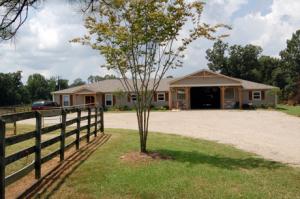
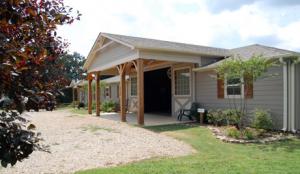
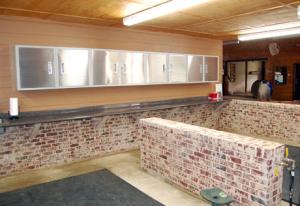
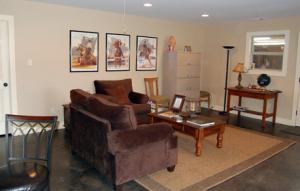
“We had ten stalls, so we’ve expanded the barn area, added the office and treatment area, an apartment for an employee, and cameras to monitor horses 24 hours a day,” she described. “Now we can provide full services to our clients, with referrals as needed to Mississippi State, which is only two hours and 15 minutes from here.”
A graduate of Mississippi State College of Veterinary Medicine, and so is her new associate Hope Burge. She started working with Kakki in June, 2013. “She’s been a real blessing to me,” Kakki raved about her. “She started working with me at the Germantown Charity Horse Show and has kept up our busy pace.”
Kakki’s area of interest is lameness, while Hope’s is reproduction and lameness. Hope has a lot of experience in the Quarter Horse world. She has ridden in rodeo, and “I’ve been in farm management all my life,” Hope said.
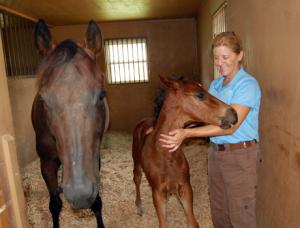
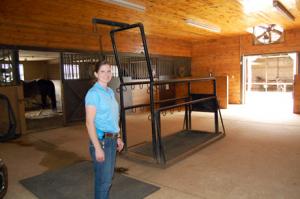
The facility now has 16 stalls in the clinic, plus four in the back, a large treatment area, a portable stock for use when needed, and two observation stalls. “We are set up to offer foaling services,” Kakki said, and, in fact, there are now two mares with foals at the clinic. One injured her leg foaling and is in a cast, and the other was just a normal foaling. “We offer everything – hospitalization, rehabilitation, short elective surgeries, anything we can’t manage at the horse’s home,” Kakki continued.
There is plenty of equipment to assist the diagnostic and healing processes. Digital radiography, digital ultrasound, thermography, an endoscope, gastroscope, motorized dental equipment, and a Pegasus laser (see www.litecure.com/pegasustherapy for more information about this technology). “We use this on horses with chronic lameness, and to treat acute problems, too. It works on arthritis; suspensory, hock, and tendon issues; and on sore backs,” Kakki explained.
One type of equipment that is essential for the mid-south heat is a fan. Kakki has discovered that greenhouse fans are ideal for keeping plenty of air flow in the barn and keeping it cool. Several are located in the barn aisle, while each stall has its own box fan.
For rehabilitation, the clinic has several “convalescent pens,” where horses can get out of their stalls and graze for an hour in the morning and another in the afternoon. “We’re managing their mental health as well as their physical health,” Kakki explained. “Some horses may be in the hospital for 30 to 60 days, depending on the injury, so they need that outside time. We’re all about trying to keep them happy as they heal.”
Kakki also manages a retirement facility: an 80-acre pasture that has about six horses on it at present. “We take older horses who need to be managed,” Kakki clarified. “Special needs horses; retired greats looking for a forever home. But we’re not an open boarding facility.”
“We’ve got a great group here,” Kakki bragged. Mandy Lawson is the office manager. Sherry Freeze is the administrative assistant. Two veterinary technicians are Nora Land and Tricia Wright. Isidro Arce and Carlos Flores are “more than barn help,” Kakki said. “They do whatever is needed to help maintain the hospital.
Kakki lives on the property, about 112 acres, so doesn’t have far to travel to the clinic. She has an arena with full jump course for her private use, “and we have a great trail riding area,” she added.
Kakki’s advice for fall horse care, when the temperatures are still hot: “Make sure horses are sweating. Make sure they drink plenty of water – hydration is very important. Horses need fresh, cool water at all times. They may develop hoof issues from stomping flies and the lack of moisture in the ground. We watch performance horses who have been competing a lot. We want to make them comfortable so they can continue to perform. We do see some colics in the fall. And we also see some eye problems, mainly fungal infections. The bottom line is client education on horse care and preventative care.”
Kakki Wright, who has been a practicing veterinarian in the mid-south area since 1990, is excited about the new improvements to her facilities, the more services she can now offer, and her new veterinary associate.
“We had ten stalls, so we’ve expanded the barn area, added the office and treatment area, an apartment for an employee, and cameras to monitor horses 24 hours a day,” she described. “Now we can provide full services to our clients, with referrals as needed to Mississippi State, which is only two hours and 15 minutes from here.”
A graduate of Mississippi State College of Veterinary Medicine, and so is her new associate Hope Burge. She started working with Kakki in June, 2013. “She’s been a real blessing to me,” Kakki raved about her. “She started working with me at the Germantown Charity Horse Show and has kept up our busy pace.”
Kakki’s area of interest is lameness, while Hope’s is reproduction and lameness. Hope has a lot of experience in the Quarter Horse world. She has ridden in rodeo, and “I’ve been in farm management all my life,” Hope said.
The facility now has 16 stalls in the clinic, plus four in the back, a large treatment area, a portable stock for use when needed, and two observation stalls. “We are set up to offer foaling services,” Kakki said, and, in fact, there are now two mares with foals at the clinic. One injured her leg foaling and is in a cast, and the other was just a normal foaling. “We offer everything – hospitalization, rehabilitation, short elective surgeries, anything we can’t manage at the horse’s home,” Kakki continued.
There is plenty of equipment to assist the diagnostic and healing processes. Digital radiography, digital ultrasound, thermography, an endoscope, gastroscope, motorized dental equipment, and a Pegasus laser (see www.litecure.com/pegasustherapy for more information about this technology). “We use this on horses with chronic lameness, and to treat acute problems, too. It works on arthritis; suspensory, hock, and tendon issues; and on sore backs,” Kakki explained.
One type of equipment that is essential for the mid-south heat is a fan. Kakki has discovered that greenhouse fans are ideal for keeping plenty of air flow in the barn and keeping it cool. Several are located in the barn aisle, while each stall has its own box fan.
For rehabilitation, the clinic has several “convalescent pens,” where horses can get out of their stalls and graze for an hour in the morning and another in the afternoon. “We’re managing their mental health as well as their physical health,” Kakki explained. “Some horses may be in the hospital for 30 to 60 days, depending on the injury, so they need that outside time. We’re all about trying to keep them happy as they heal.”
Kakki also manages a retirement facility: an 80-acre pasture that has about six horses on it at present. “We take older horses who need to be managed,” Kakki clarified. “Special needs horses; retired greats looking for a forever home. But we’re not an open boarding facility.”
“We’ve got a great group here,” Kakki bragged. Mandy Lawson is the office manager. Sherry Freeze is the administrative assistant. Two veterinary technicians are Nora Land and Tricia Wright. Isidro Arce and Carlos Flores are “more than barn help,” Kakki said. “They do whatever is needed to help maintain the hospital.
Kakki lives on the property, about 112 acres, so doesn’t have far to travel to the clinic. She has an arena with full jump course for her private use, “and we have a great trail riding area,” she added.
Kakki’s advice for fall horse care, when the temperatures are still hot: “Make sure horses are sweating. Make sure they drink plenty of water – hydration is very important. Horses need fresh, cool water at all times. They may develop hoof issues from stomping flies and the lack of moisture in the ground. We watch performance horses who have been competing a lot. We want to make them comfortable so they can continue to perform. We do see some colics in the fall. And we also see some eye problems, mainly fungal infections. The bottom line is client education on horse care and preventative care.”


