

By Gay Morgan Moore
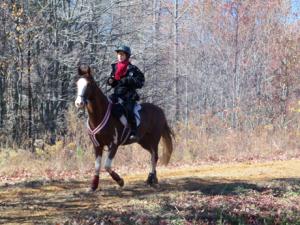
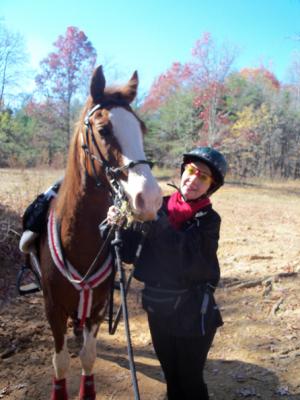
Distance rider Connie Bridges believed, “If God has put a dream in your heart, don’t let it die.” The story of this enthusiastic, diminutive 55-year-old, with bright blue eyes and smile to match, begins with a move to Bradley County, Tennessee from Texas in 2006. While moving into her new home, she began to bleed profusely from a mole on her right arm. Referred to a physician from the emergency room, she was diagnosed with malignant melanoma, a serious form of skin cancer.
Before moving to Tennessee, she and her husband, Tim, purchased two horses. Connie was eager to begin riding again, a sport she enjoyed as an adolescent, and Tim was happy to join her. When the horses were delivered it was obvious that one of them, Major, was not the well-behaved horse they believed they had purchased. Fiercely independent and aggressive with no respect for any mere human being, everyone including Connie was afraid of him. Nonetheless, Connie declared, “Major changed me in ways that I could never have anticipated. He became my buddy. He challenged me.”
Following surgery and beginning the first rounds of chemotherapy, Connie decided that she would continue to care for the horses Major and Buddy, rather than give into being a full-time cancer “victim.” Realizing she could not manage Major without special training, Connie visited Clinton Anderson in Crossville, Tennessee and began to use his techniques to win the horse’s respect. Slowly Connie and Major developed a bond of mutual respect, but it was one and half years before she would attempt to ride him, and even then he threw her, resulting in head injury.
As the child of a military family Connie was accustomed to moving and meeting new people, but her support system was back in Texas. Several months after her diagnosis, Connie and Tim started an adult riding club, the “Giddy-Up Riders,” which provided her with the supportive women friends she needed. Connie recruited Lenore Scannapiego and the two began making frequent trail rides. “Lenore understood my illness, including the exhaustion and mental fogginess caused by the chemo, and was willing to ride with me in the way I was able to ride, sometimes for just fifteen minutes. Lenore encouraged me, but she didn’t pressure me.” Connie also began working as a crew member for Lenore during distance races. Eventually, Connie prepared for her first distance race.
While training for her initial race at Talladega, Alabama, Connie was feeling increasingly exhausted and having difficulty breathing, so she returned to her oncologist. Four years, almost to the day, from her initial diagnosis, she saw a thoracic cancer specialist, who discovered an inoperable stage four melanoma between her lung and chest wall. Taking an experimental drug, she continued to plan for the race despite warnings from her doctor that she would probably be too weak to ride in the competition. She even ran in place for him, much to his surprise, to demonstrate that she had regained sufficient energy and stamina. But as the race approached, she found she could not ride and loaned her horse Major to Lenore to make the race. Connie, although quite weak, crewed for Lenore while nursing her own horse, Kinsey, who had injured his eye.
In February, 2011, before knowing whether or not the new drug was effective, Connie rode with Lenore in her first distance race in Mississippi. In a sport where completing the two-day, twenty-five mile competition is a victory, Connie, riding Kinsey who had lost his eye, and Lenore came in fifteenth and sixteenth, respectively.
Connie soon began to anticipate her next race. In fall, 2011 despite chemotherapy-related burning pain in her hands and feet, she placed thirty-sixth out of fifty-seven riders at Skyemount, Tennessee, riding Major who, despite balking while crossing a narrow bridge, carried her through the 25-mile race!
Insisting that she “does not feel inspirational,” she credited a number of sources for her success in dealing with cancer, including the support and caring of others such as her husband, the doctors who offered her hope, and her willingness to discharge one specialist who did not offer her hope. She further credited her military father, a strict disciplinarian who always told his children that the words “I can’t” were not acceptable in their home, and her boss at one of her two part-time jobs, who purchased a wig for her when she lost her hair, one of the few times she cried. Most of all it was her supportive friends in the riding club, especially Lenore, and the horses themselves, for “when you are riding all labels are off; you are not a cancer patient.”
Connie was her own best medicine with her indomitable resolve and her abiding spirituality, often visualizing herself as “David” shooting at the cancer “Goliath.” Though she would probably not use the word “courage,” Connie believed, “You always have a choice. You cannot control what happens to you, but you can control how you react and what you do.”
Connie Bridges died of malignant melanoma January 14, 2012, one month after this interview.
About the author: Gay Moore is a free-lance writer whose fifth book, Chattanooga’s St. Elmo, is due out in October. A non-rider who confesses to being intimidated by horses, she has the utmost respect for those who enjoy the sport of distance riding.
(Photos by Lenore Scannpiego)
Distance rider Connie Bridges believed, “If God has put a dream in your heart, don’t let it die.” The story of this enthusiastic, diminutive 55-year-old, with bright blue eyes and smile to match, begins with a move to Bradley County, Tennessee from Texas in 2006. While moving into her new home, she began to bleed profusely from a mole on her right arm. Referred to a physician from the emergency room, she was diagnosed with malignant melanoma, a serious form of skin cancer.
Before moving to Tennessee, she and her husband, Tim, purchased two horses. Connie was eager to begin riding again, a sport she enjoyed as an adolescent, and Tim was happy to join her. When the horses were delivered it was obvious that one of them, Major, was not the well-behaved horse they believed they had purchased. Fiercely independent and aggressive with no respect for any mere human being, everyone including Connie was afraid of him. Nonetheless, Connie declared, “Major changed me in ways that I could never have anticipated. He became my buddy. He challenged me.”
Following surgery and beginning the first rounds of chemotherapy, Connie decided that she would continue to care for the horses Major and Buddy, rather than give into being a full-time cancer “victim.” Realizing she could not manage Major without special training, Connie visited Clinton Anderson in Crossville, Tennessee and began to use his techniques to win the horse’s respect. Slowly Connie and Major developed a bond of mutual respect, but it was one and half years before she would attempt to ride him, and even then he threw her, resulting in head injury.
As the child of a military family Connie was accustomed to moving and meeting new people, but her support system was back in Texas. Several months after her diagnosis, Connie and Tim started an adult riding club, the “Giddy-Up Riders,” which provided her with the supportive women friends she needed. Connie recruited Lenore Scannapiego and the two began making frequent trail rides. “Lenore understood my illness, including the exhaustion and mental fogginess caused by the chemo, and was willing to ride with me in the way I was able to ride, sometimes for just fifteen minutes. Lenore encouraged me, but she didn’t pressure me.” Connie also began working as a crew member for Lenore during distance races. Eventually, Connie prepared for her first distance race.
While training for her initial race at Talladega, Alabama, Connie was feeling increasingly exhausted and having difficulty breathing, so she returned to her oncologist. Four years, almost to the day, from her initial diagnosis, she saw a thoracic cancer specialist, who discovered an inoperable stage four melanoma between her lung and chest wall. Taking an experimental drug, she continued to plan for the race despite warnings from her doctor that she would probably be too weak to ride in the competition. She even ran in place for him, much to his surprise, to demonstrate that she had regained sufficient energy and stamina. But as the race approached, she found she could not ride and loaned her horse Major to Lenore to make the race. Connie, although quite weak, crewed for Lenore while nursing her own horse, Kinsey, who had injured his eye.
In February, 2011, before knowing whether or not the new drug was effective, Connie rode with Lenore in her first distance race in Mississippi. In a sport where completing the two-day, twenty-five mile competition is a victory, Connie, riding Kinsey who had lost his eye, and Lenore came in fifteenth and sixteenth, respectively.
Connie soon began to anticipate her next race. In fall, 2011 despite chemotherapy-related burning pain in her hands and feet, she placed thirty-sixth out of fifty-seven riders at Skyemount, Tennessee, riding Major who, despite balking while crossing a narrow bridge, carried her through the 25-mile race!
Insisting that she “does not feel inspirational,” she credited a number of sources for her success in dealing with cancer, including the support and caring of others such as her husband, the doctors who offered her hope, and her willingness to discharge one specialist who did not offer her hope. She further credited her military father, a strict disciplinarian who always told his children that the words “I can’t” were not acceptable in their home, and her boss at one of her two part-time jobs, who purchased a wig for her when she lost her hair, one of the few times she cried. Most of all it was her supportive friends in the riding club, especially Lenore, and the horses themselves, for “when you are riding all labels are off; you are not a cancer patient.”
Connie was her own best medicine with her indomitable resolve and her abiding spirituality, often visualizing herself as “David” shooting at the cancer “Goliath.” Though she would probably not use the word “courage,” Connie believed, “You always have a choice. You cannot control what happens to you, but you can control how you react and what you do.”
Connie Bridges died of malignant melanoma January 14, 2012, one month after this interview.
About the author: Gay Moore is a free-lance writer whose fifth book, Chattanooga’s St. Elmo, is due out in October. A non-rider who confesses to being intimidated by horses, she has the utmost respect for those who enjoy the sport of distance riding.
(Photos by Lenore Scannpiego)


