

By Leigh Ballard
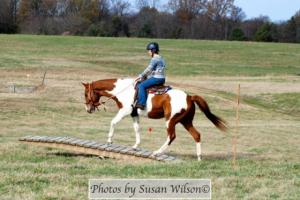
Franklin was taken from horrific conditions and certain disaster four years ago. He is now living an uncomplicated life as a “forever” family member in his adoptive home with Lisa Carter and her family in La Grange, TN. He is a shining example of the success of horse rescue operations.
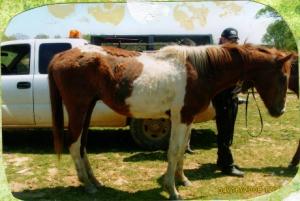
Franklin was just one of a large herd of horses that had been identified and confiscated by an animal rescue group. The pastures were bare of grass, the horses were in emaciated states of starvation and neglect, and there were horse skeletons with chains around their necks in open ditches on the property.
Lisa had recently lost her Thoroughbred horse to a lightening strike, and she was struggling to overcome that loss. Five Point Farm, where Lisa kept her horse, had also lost a horse to the same lightening, and was also in a state of grief from the recent losses. The owner of the farm was contacted about the rescue horses, and Five Point became the temporary “safe haven” for the needy herd.
Lisa wanted to be part of the rehabilitation and healing process, and became an important part of the horses’ daily care. She was one of the group of volunteers who were “the hands that helped” with feeding and medicating the herd. None of the horses had ever been handled much, if any. They were afraid of people and the barn. They were claustrophobic of small spaces like stalls. They were covered in bald spots from ringworm. Their feet had never been trimmed. Lisa and others at the farm had a giant task ahead of them.
Throughout the weeks of the rehabbing process, Lisa took a liking to Franklin. He was an inquisitive fellow, and although still wary, he was personable compared to the others. Lisa, because of extensive hunter/jumper experience, noticed how he used his body and changed his leads when he should as he played in the field. She noticed how he played with his food dish after eating, and how he had a quirky personality shining through his poor outward appearance.
Over time, Lisa decided maybe she could adopt Franklin. He had a few unsettling issues: he was reactive on a lead rope, rearing sometimes. But Lisa felt he was not vicious; he was defiant and reactive because he didn’t understand what was being asked of him; he was confused and frustrated.
She needed someone to help her decide whether she could take him. She called Robyn Miller of Point Pleasant Farm for help. Robyn started groundwork with him, and showed Lisa how to do the exercises. This was Lisa’s first hands-on experience with how helpful groundwork can be for gaining trust and establishing a relationship with a horse. Franklin caught on quickly, and soon Lisa was able to rub all over his body, swing lead ropes all around and on him, and eventually lay on his body like a plank with her feet hanging off of his rump.
After this level of trust and confidence in each other was established, she started riding him. A few months passed, he had gained considerable weight, and his character was coming through. He loved water, he became a “mud-dog” rolling and playing in the pond. Lisa even rode him into the pond for a swim.
It was clear that Franklin was going to develop into a good horse, so Lisa took him home for a year’s probation from the rescue group. Christy Gross, then a volunteer with Fayette County Animal Rescue, facilitated the adoption and guided Lisa through the process. Lisa rode him on easy trail rides, building his experience. She introduced him to several obstacles that she built at home. Nothing bothered him; he was very curious, so none of the pool noodles or tarps or kiddy pools upset him. She began teaching her children to ride on him. He was so level-headed that she used him to pony her children on their first trail rides. Eventually, he participated in the 2009 Shelby Farms Trail Challenge. He walked through tarp tunnels, dragged logs, zigzagged backwards, and never blinked an eye. The only thing he wouldn’t do was walk in the pond – how ironic for the “mud-dog!” Lisa’s son Haddon made his showing debut in the kid’s class and placed fourth. Lisa also placed fourth in her adult class. Franklin had arrived!
Lisa continues to enjoy the once pitiful neglected horse. She rides him regularly, in a halter sometimes, and broadens his tolerance for scary things, like dragging the garbage can from the end of the driveway. She continues to use natural horsemanship principles to progress to a new phase of disciplined riding, where he will develop more balance and use his body better. She continues to teach him focus and calm consistency, while she’s learning at the same time. It is a win-win relationship.
It has been a wonderful experience for her to learn such close one-on-one communication with her horse. She knows she made a good choice with Franklin. One of her goals for him is to compete in American Competitive Trail Horse Association (ACTHA) events. “We make a good team,” she says. “He’s always up for whatever I challenge him to do.”
Franklin was taken from horrific conditions and certain disaster four years ago. He is now living an uncomplicated life as a “forever” family member in his adoptive home with Lisa Carter and her family in La Grange, TN. He is a shining example of the success of horse rescue operations.
Franklin was just one of a large herd of horses that had been identified and confiscated by an animal rescue group. The pastures were bare of grass, the horses were in emaciated states of starvation and neglect, and there were horse skeletons with chains around their necks in open ditches on the property.
Lisa had recently lost her Thoroughbred horse to a lightening strike, and she was struggling to overcome that loss. Five Point Farm, where Lisa kept her horse, had also lost a horse to the same lightening, and was also in a state of grief from the recent losses. The owner of the farm was contacted about the rescue horses, and Five Point became the temporary “safe haven” for the needy herd.
Lisa wanted to be part of the rehabilitation and healing process, and became an important part of the horses’ daily care. She was one of the group of volunteers who were “the hands that helped” with feeding and medicating the herd. None of the horses had ever been handled much, if any. They were afraid of people and the barn. They were claustrophobic of small spaces like stalls. They were covered in bald spots from ringworm. Their feet had never been trimmed. Lisa and others at the farm had a giant task ahead of them.
Throughout the weeks of the rehabbing process, Lisa took a liking to Franklin. He was an inquisitive fellow, and although still wary, he was personable compared to the others. Lisa, because of extensive hunter/jumper experience, noticed how he used his body and changed his leads when he should as he played in the field. She noticed how he played with his food dish after eating, and how he had a quirky personality shining through his poor outward appearance.
Over time, Lisa decided maybe she could adopt Franklin. He had a few unsettling issues: he was reactive on a lead rope, rearing sometimes. But Lisa felt he was not vicious; he was defiant and reactive because he didn’t understand what was being asked of him; he was confused and frustrated.
She needed someone to help her decide whether she could take him. She called Robyn Miller of Point Pleasant Farm for help. Robyn started groundwork with him, and showed Lisa how to do the exercises. This was Lisa’s first hands-on experience with how helpful groundwork can be for gaining trust and establishing a relationship with a horse. Franklin caught on quickly, and soon Lisa was able to rub all over his body, swing lead ropes all around and on him, and eventually lay on his body like a plank with her feet hanging off of his rump.
After this level of trust and confidence in each other was established, she started riding him. A few months passed, he had gained considerable weight, and his character was coming through. He loved water, he became a “mud-dog” rolling and playing in the pond. Lisa even rode him into the pond for a swim.
It was clear that Franklin was going to develop into a good horse, so Lisa took him home for a year’s probation from the rescue group. Christy Gross, then a volunteer with Fayette County Animal Rescue, facilitated the adoption and guided Lisa through the process. Lisa rode him on easy trail rides, building his experience. She introduced him to several obstacles that she built at home. Nothing bothered him; he was very curious, so none of the pool noodles or tarps or kiddy pools upset him. She began teaching her children to ride on him. He was so level-headed that she used him to pony her children on their first trail rides. Eventually, he participated in the 2009 Shelby Farms Trail Challenge. He walked through tarp tunnels, dragged logs, zigzagged backwards, and never blinked an eye. The only thing he wouldn’t do was walk in the pond – how ironic for the “mud-dog!” Lisa’s son Haddon made his showing debut in the kid’s class and placed fourth. Lisa also placed fourth in her adult class. Franklin had arrived!
Lisa continues to enjoy the once pitiful neglected horse. She rides him regularly, in a halter sometimes, and broadens his tolerance for scary things, like dragging the garbage can from the end of the driveway. She continues to use natural horsemanship principles to progress to a new phase of disciplined riding, where he will develop more balance and use his body better. She continues to teach him focus and calm consistency, while she’s learning at the same time. It is a win-win relationship.
It has been a wonderful experience for her to learn such close one-on-one communication with her horse. She knows she made a good choice with Franklin. One of her goals for him is to compete in American Competitive Trail Horse Association (ACTHA) events. “We make a good team,” she says. “He’s always up for whatever I challenge him to do.”


