

Dr. Bridgett McIntosh
Extension Equine Specialist
Department of Animal Science
University of Tennessee
When many horse owners are asked “What do you feed your horse?” a common response is, “A 12 percent (protein) feed.” While protein is an important nutrient, especially for performance and reproduction, it should not be the first consideration in selecting feeds for horses. Forage (pasture and hay) should be the primary component of the equine diet and feed should be selected based on the nutrient and energy content of the forage as determined by laboratory analysis. Selection of horse feed also depends on the horses age, its use and activity level. Horses need a balanced diet to maintain optimal health and understanding how to read a feed tag will ensure that you are providing the correct diet.
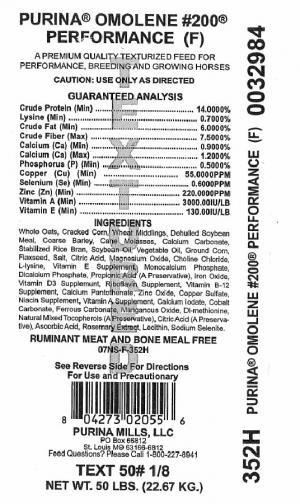
Reading horse feed tags is similar to reading ingredient labels on human foods. The information provided on feed labels is controlled by federal and state regulations. The Association of American Feed Control Officials (AAFCO) provides guidelines to ensure that information on the feed tags is consistent between manufacturers. Commercial feed labels should all contain the following information:
· Brand Name or Product Name
· Commercial Feed Class
· Purpose Statement
· Guaranteed Analysis
· List of Ingredients
· Directions for Use
· Name and Address of the Manufacturer
· Quantity statement
The purpose statement indicates the class(es) of horses the feed is intended for. For example, the purpose statement may read “for maintenance of mature non-working horses” or “for growing foals.” The commercial feed class includes four categories: 1) textured concentrates (sweet feed); 2) processed concentrates (pelleted or extruded); 3) Complete feeds (designed to feed as the sole ration and are high in fiber); and 4) supplements (minerals and/or vitamins, fat, protein).
The guaranteed analysis provides information on the amount of specific nutrients in the feed. Horses have specific nutrient requirements depending on their age, use and activity level. The guaranteed analysis can be used to make sure the feed complements the forage fed and that the nutrient requirements are met for the horse. Feed manufactures are required to list the minimum percentages of crude protein (CP), crude fiber and crude fat, the minimum and maximum percentages of Calcium (Ca) and the minimum percent of phosphorous (P). Other minerals that must be included are copper (Cu), zinc (Zn) and selenium (Se), which are reported in parts per million (ppm). Vitamin A (international units per lb, IU/lb) is also included in the guaranteed analyses. Feed manufacturers will often list additional nutrients such as Vitamin E and biotin and digestive aids such probiotics, depending on the specific class of horses it is targeting. More recently, amounts of essential amino acids such as lysine, methionine and threonine, are included on feed tags. Amino acids are the “building blocks” of protein and horses actually require a certain amount of essential amino acids rather than crude protein.
What is conspicuously missing from a horse feed tag, that is included on human food labels, is the amount of calories, or energy the feed provides. In equine nutrition, digestible energy (DE) is calculated based on the amount of fiber, fat and protein in the feed ingredients and is usually reported in mega calories (MCal). There is no standardization in the equation used to calculate energy, so it is left off of feed tags. Digestible Energy is not a nutrient, but horses have a daily requirement for DE. Even though the amount of energy isn’t indicated on feed tags, there are still guidelines you can use beyond feeding more at mealtime. If obesity is a concern, feeds can be selected that are indicated for weight control (low in starch) and first cutting grass hay is likely lower in DE than a second cutting grass hay (although a hay test is critical). If weight gain is a concern, then feeds that are high in fat and fiber are best and high quality forage like alfalfa hay should be fed.
The ingredient list provides all ingredients in the feed from the greatest to least amount. Feeds contain a variety of ingredients including grain, grain byproducts, and fiber sources, sources of vitamins and minerals, and additives. Grains may be listed as “grain products” which means they have been processed (ground, cracker or flaked) before being added to the feed. Plant protein products such as soybean meal are used as protein sources. Fiber or roughage products often include ingredients like soybean hulls and beet pulp.
Most feed manufacturers include feeding directions on the feed tag or on the bag itself. The feeding directions are important because they offer recommendations on how much to feed, information on feeding management for the specific feed, and what type of forage best complements the feed. Feeds should be fed according their specific directions. Feeds are designed to meet the requirements for the class of horse it is intended for. In order to provide the amount of nutrients that are listed on the guaranteed analysis, you have to feed the minimum recommended feeding rate. It is common for horse owners to feed only a handful (or less than 1lb) of a feed because the horse is an easy keeper, yet the recommended feeding rate may be 1% Bodyweight, or 10 lb per day for a 1,000 lb horse. In the case where you are feeding less than the recommended amount because the horse is an easy keeper, it may be better to feed a vitamin and mineral supplement designed to balance the nutrients in forage, often called “forage balancer” supplements. Likewise, if you find you are feeding more than the recommended amount, you may need to consider adding more energy to the diet in the form of fat and fiber.
In addition to the nutritional components listed on horse feed tags, they must include the manufacturers name and address, as well as guarantee the net weight of the feed in the bag. Most bagged feeds weigh 50 lb, but some complete or high fiber feeds may weigh less.
Understanding how to read feed tags is an important part of developing sound feeding management practices and will ensure you get the most for your money. Once the class of horse and the nutrient content of the forage are determined, a horse owner can evaluate feeds that are the best fit based on the feeding tag. It is best to select commercial feeds that are balanced and fortified with the intended use for horses. Feeding whole grains alone or diluting a commercial feed with cheaper feedstuffs is not advisable because it will create an unbalanced diet. Feeding programs should be forage based and as simple as possible for optimal nutrition and health.
Feeding Directions Commercial Feed
*This is the recommended minimum amount of hay to be fed. If feeding more hay, reduce the feeding rate of Commercial Feed 1Horse Feed
by 1.0 lb for every additional 2.0 lbs of hay fed. EXAMPLE:Using the chart above, if feeding 14 lbs instead of 12 lbs of hay to
a 1,000 lb moderate work horse, reduce Commercial Feed 1Horse Feed offered by 1.0 lb from 7.0 to 6.0 lbs per day (2.0 lbs of
additional hay divided by 2.0 lbs = 1.0 lb less of Commercial Feed 1 Horse Feed).
**Do not feed less than 0.35 lbs per 100 lbs of body weight per day. EXAMPLE:A 1,000 lb horse has ten 100 lb increments
(1,000 dividedthat minimum feeding rate, then you should replace Commercial Feed 1Horse Feed with Commercial Feed 3 by 100 = 10). So for this horse, do not feed less than 3.5 lbs per day (10 x 0.35 = 3.5 lbs per day). If your horse gains too much weight at that minimum feeding rate, then you
should replace Commercial Feed 1Horse Feed with Commercial Feed 3.
Important Considerations:
·Do not feed free-choice
·Feed at regular times (at least twice daily). When feeding rates exceed 1% of body weight, three daily feedings are preferred
·Any feed changes should be made gradually over a period of 7 to 10 days
·Changes in the rate of feeding should not exceed one pound per day for each horse
·Feed along with at least 1-1.5% of horse’s body weight of good quality hay or the equivalent in pasture to make a complete ration
·Have plenty of fresh, clean water available at all times
·Prevent the rapid eating by the horse of any feed stuffs
·Store feed in a dry, well-ventilated area protected from rodents and insects
·Do not feed moldy or insect-infested feed to animals as it may cause illness or death
·This product to be fed to the animal species as directed on the label
·In addition to nutritional care and consultation, be sure to make regular veterinary checkups and farrier appointments part of your horse wellness program
Extension Equine Specialist
Department of Animal Science
University of Tennessee
When many horse owners are asked “What do you feed your horse?” a common response is, “A 12 percent (protein) feed.” While protein is an important nutrient, especially for performance and reproduction, it should not be the first consideration in selecting feeds for horses. Forage (pasture and hay) should be the primary component of the equine diet and feed should be selected based on the nutrient and energy content of the forage as determined by laboratory analysis. Selection of horse feed also depends on the horses age, its use and activity level. Horses need a balanced diet to maintain optimal health and understanding how to read a feed tag will ensure that you are providing the correct diet.
Reading horse feed tags is similar to reading ingredient labels on human foods. The information provided on feed labels is controlled by federal and state regulations. The Association of American Feed Control Officials (AAFCO) provides guidelines to ensure that information on the feed tags is consistent between manufacturers. Commercial feed labels should all contain the following information:
· Brand Name or Product Name
· Commercial Feed Class
· Purpose Statement
· Guaranteed Analysis
· List of Ingredients
· Directions for Use
· Name and Address of the Manufacturer
· Quantity statement
The purpose statement indicates the class(es) of horses the feed is intended for. For example, the purpose statement may read “for maintenance of mature non-working horses” or “for growing foals.” The commercial feed class includes four categories: 1) textured concentrates (sweet feed); 2) processed concentrates (pelleted or extruded); 3) Complete feeds (designed to feed as the sole ration and are high in fiber); and 4) supplements (minerals and/or vitamins, fat, protein).
The guaranteed analysis provides information on the amount of specific nutrients in the feed. Horses have specific nutrient requirements depending on their age, use and activity level. The guaranteed analysis can be used to make sure the feed complements the forage fed and that the nutrient requirements are met for the horse. Feed manufactures are required to list the minimum percentages of crude protein (CP), crude fiber and crude fat, the minimum and maximum percentages of Calcium (Ca) and the minimum percent of phosphorous (P). Other minerals that must be included are copper (Cu), zinc (Zn) and selenium (Se), which are reported in parts per million (ppm). Vitamin A (international units per lb, IU/lb) is also included in the guaranteed analyses. Feed manufacturers will often list additional nutrients such as Vitamin E and biotin and digestive aids such probiotics, depending on the specific class of horses it is targeting. More recently, amounts of essential amino acids such as lysine, methionine and threonine, are included on feed tags. Amino acids are the “building blocks” of protein and horses actually require a certain amount of essential amino acids rather than crude protein.
What is conspicuously missing from a horse feed tag, that is included on human food labels, is the amount of calories, or energy the feed provides. In equine nutrition, digestible energy (DE) is calculated based on the amount of fiber, fat and protein in the feed ingredients and is usually reported in mega calories (MCal). There is no standardization in the equation used to calculate energy, so it is left off of feed tags. Digestible Energy is not a nutrient, but horses have a daily requirement for DE. Even though the amount of energy isn’t indicated on feed tags, there are still guidelines you can use beyond feeding more at mealtime. If obesity is a concern, feeds can be selected that are indicated for weight control (low in starch) and first cutting grass hay is likely lower in DE than a second cutting grass hay (although a hay test is critical). If weight gain is a concern, then feeds that are high in fat and fiber are best and high quality forage like alfalfa hay should be fed.
The ingredient list provides all ingredients in the feed from the greatest to least amount. Feeds contain a variety of ingredients including grain, grain byproducts, and fiber sources, sources of vitamins and minerals, and additives. Grains may be listed as “grain products” which means they have been processed (ground, cracker or flaked) before being added to the feed. Plant protein products such as soybean meal are used as protein sources. Fiber or roughage products often include ingredients like soybean hulls and beet pulp.
Most feed manufacturers include feeding directions on the feed tag or on the bag itself. The feeding directions are important because they offer recommendations on how much to feed, information on feeding management for the specific feed, and what type of forage best complements the feed. Feeds should be fed according their specific directions. Feeds are designed to meet the requirements for the class of horse it is intended for. In order to provide the amount of nutrients that are listed on the guaranteed analysis, you have to feed the minimum recommended feeding rate. It is common for horse owners to feed only a handful (or less than 1lb) of a feed because the horse is an easy keeper, yet the recommended feeding rate may be 1% Bodyweight, or 10 lb per day for a 1,000 lb horse. In the case where you are feeding less than the recommended amount because the horse is an easy keeper, it may be better to feed a vitamin and mineral supplement designed to balance the nutrients in forage, often called “forage balancer” supplements. Likewise, if you find you are feeding more than the recommended amount, you may need to consider adding more energy to the diet in the form of fat and fiber.
In addition to the nutritional components listed on horse feed tags, they must include the manufacturers name and address, as well as guarantee the net weight of the feed in the bag. Most bagged feeds weigh 50 lb, but some complete or high fiber feeds may weigh less.
Understanding how to read feed tags is an important part of developing sound feeding management practices and will ensure you get the most for your money. Once the class of horse and the nutrient content of the forage are determined, a horse owner can evaluate feeds that are the best fit based on the feeding tag. It is best to select commercial feeds that are balanced and fortified with the intended use for horses. Feeding whole grains alone or diluting a commercial feed with cheaper feedstuffs is not advisable because it will create an unbalanced diet. Feeding programs should be forage based and as simple as possible for optimal nutrition and health.
Feeding Directions Commercial Feed
| - WEIGHT OF HORSE IN POUNDS - | |||||
| LIFESTYLE | 600 | 800 | 1,000 | 1,200 | 1,400 |
| Minimum Hay or Equivalent Pasture* | 7.0 | 9.50 | 12.0 | 14.5 | 17.0 |
| Commercial Feed 1Horse Feed (lbs/day) | |||||
| Light Work | 3.25 | 4.25 | 5.25 | 6.25 | 7.25 |
| Moderate Work | 4.25 | 5.75 | 7.25 | 8.50 | 10.00 |
| Heavy Work | 5.50 | 7.25 | 9.00 | 10.75 | 12.50 |
| Very Heavy Work | 8.00 | 10.75 | 13.50 | 16.00 | 18.75 |
| Early Gestation (first 250 days) | 2.25 | 3.00 | 3.75 | 4.25 | 5.00 |
| Late Gestation (last 90 days) | 3.25 | 4.25 | 5.50 | 6.50 | 7.50 |
| Lactation (when fed separately) | 7.25 | 9.50 | 11.75 | 14.00 | 16.50 |
| Breeding Stallion | 4.00 | 5.00 | 6.25 | 7.50 | 8.75 |
*This is the recommended minimum amount of hay to be fed. If feeding more hay, reduce the feeding rate of Commercial Feed 1Horse Feed
by 1.0 lb for every additional 2.0 lbs of hay fed. EXAMPLE:Using the chart above, if feeding 14 lbs instead of 12 lbs of hay to
a 1,000 lb moderate work horse, reduce Commercial Feed 1Horse Feed offered by 1.0 lb from 7.0 to 6.0 lbs per day (2.0 lbs of
additional hay divided by 2.0 lbs = 1.0 lb less of Commercial Feed 1 Horse Feed).
**Do not feed less than 0.35 lbs per 100 lbs of body weight per day. EXAMPLE:A 1,000 lb horse has ten 100 lb increments
(1,000 dividedthat minimum feeding rate, then you should replace Commercial Feed 1Horse Feed with Commercial Feed 3 by 100 = 10). So for this horse, do not feed less than 3.5 lbs per day (10 x 0.35 = 3.5 lbs per day). If your horse gains too much weight at that minimum feeding rate, then you
should replace Commercial Feed 1Horse Feed with Commercial Feed 3.
Important Considerations:
·Do not feed free-choice
·Feed at regular times (at least twice daily). When feeding rates exceed 1% of body weight, three daily feedings are preferred
·Any feed changes should be made gradually over a period of 7 to 10 days
·Changes in the rate of feeding should not exceed one pound per day for each horse
·Feed along with at least 1-1.5% of horse’s body weight of good quality hay or the equivalent in pasture to make a complete ration
·Have plenty of fresh, clean water available at all times
·Prevent the rapid eating by the horse of any feed stuffs
·Store feed in a dry, well-ventilated area protected from rodents and insects
·Do not feed moldy or insect-infested feed to animals as it may cause illness or death
·This product to be fed to the animal species as directed on the label
·In addition to nutritional care and consultation, be sure to make regular veterinary checkups and farrier appointments part of your horse wellness program


