

Fayette County Horse & Farm Owners Oppose
Intermodal Facility
concerns loss of prime farmland and pastureland
By Nancy Brannon
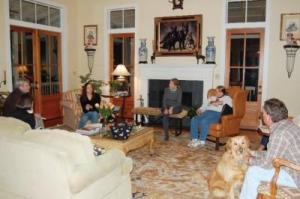
Several horse and horse farm owners who live adjacent to the proposed Norfolk Southern Intermodal Facility (IMF) site in Fayette County, TN gathered in February to formulate plans for their continued opposition to the facility. They met with Memphis Daily News reporter Eric Smith about their grievances. Some reside on Knox Road, some on Lenderman Road, and some off Hwy. 72 n all surrounding the former Twin Hill Ranch, site of Norfolk Southern’s 650-acre IMF. In addition, several thousand acres of farmland on Hwy. 72 are slated for warehousing development. Their main concern: the loss of prime farmland and pastureland, that was once a haven of horse activities, and conversion to an industrial area. They foresee their bucolic lifestyle and ability to have sufficient land for their horses disappearing.
Many of the residents moved to the area to be near the former Twin Hill Ranch, which once hosted a variety of horse activities from foxhunting to trail riding, to dressage and eventing, to working cattle and roping. They fear their area will become another “Capleville,” something they don’t want to see.
Some complained that they didn’t receive proper notice of the decisions being made, particularly zoning changes that will drastically affect their lives. Lenderman Road residents officially reside in Marshall County, MS and the area is zoned for “estate lots,” one resident said. However, “The site was in Rossville’s urban growth boundary and they annexed the part that would encompass the railroad and rezoned the area to industrial. This was done without the residents’ commentary involved,” she said. Other residents are in Fayette County and not in any municipality’s growth area, so they say both groups were largely unapprised of what this project will bring. “It undermines our way of life and the democratic process,” said one resident. “This completely changes people’s lives without their input. I believe property values will drop by at least 30%.”
One resident did a financial analysis of the project, researching data on the latest trends in freight shipments by rail. “This may not be a financially feasible project,” she said, “unless you link the intermodal with barge and air transport. This facility won’t have those links. Railroads have been seeing spotty earnings nationwide. The old adage that if you build it they will come does not apply to this type facility. Equity analysts say don’t buy stock in railroads. Railroads are notoriously losing money. It is doubtful that this facility will be profitable, even if the government subsidizes it. This railroad is a money loser.” Another commented, “This is not a jobs-building program as promoted, since there will only be 140 employees at this facility.”
Residents are concerned about the environmental impacts. “What does EPA say about this?” asked one resident. “The environmental impact is very big thing!” exclaimed another resident. They have concerns about the impacts on the aquifer recharge area and the water retention ponds that would be built, as well as noise, traffic, and light pollution. They do not believe the environment matters to the railroad, and they saw the bulldozing and deforestation that is currently happening as “raping the land.”
The group explored several plans to continue their opposition, and members had made contacts with a grassroots organizer, an environmental consultant, and other resource persons.
In February, Norfolk Southern was granted $105 million in TIGER funds (Transportation Investment Generating Economic Recovery) under the American Recovery and Reinvestment Act of 2009. The federal grant will be split between the Fayette County project and another Norfolk Southern IMF in McCalla, AL. Both are part of Norfolk Southern’s Crescent Corridor Plan.
See the September 2009 issue of the Mid-South Horse Review for a profile and history of Twin Hill Ranch.


