

AWS Sport Horse
Inspection and Seminar
Sponsored by Delta Dressage Association
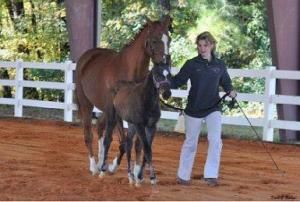
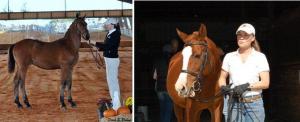
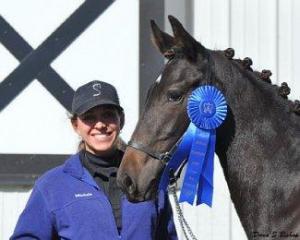
On October 31, Delta Dressage Association sponsored an American Warmblood Society (AWS) Sport Horse Breeding Seminar and Performance Registry at Greystone Stables near Collierville, TN. Dana Shah Bishop, of Blues City Warmboods organized the event.The AWS offers such events for owners of young and aged horses to register their horses with AWS and to evaluate their horses’ conformation and ways of going to best suit their performance capabilities. The AWS is a non-profit Performance/Breeding Registry, whose purpose is to represent, promote, award and aid the development of the most talented sport horses of all bloodlines. AWS supports Olympic-type sports, i.e., dressage, eventing, show jumping, and combined driving. The educational seminars provide detailed information about good Sport Horse qualities for performance and/or breeding. The purpose of the inspections is to help owners keep their horses sound throughout their competition years.
Horses registered with AWS can be any breed. The organization is not breed specific and AWS registered horses can be all kinds of combinations and crosses, some even “unknowns,” explained Patricia Ellis, National Registrar. “All traditional sport horses have either Thoroughbred or Arabian lineage. Sport Horses were developed for particular sports, not so much for their bloodlines. What you can do with the Sport Horse is more important than pedigree. We want owners to know the strengths and weaknesses of their horses, so we can make the next generation better.” At these inspection seminars, “all horses are shown in-hand at walk and trot in an English bridle with a snaffle bit. Young horses (3 years and younger) are also shown at liberty. The judge, Jean Brooks at this event, evaluates the horses on the basis of conformation, gaits quality, and temperament n attentiveness.”Greystone Stables owner Lori Losorwith further explained, “The AWS inspections are one way to get horses registered for dressage shows and for riders to learn what judges want to see. It’s a good way for owners of quality horses, who don’t have papers, to go through the inspection and get registered, and that increases their value.”
Scoring is on the basis on 1 to 10, with 1 indicating very bad and 10 indicating excellent; 6 is satisfactory, and 5 is sufficient. Horses are scored in each category described below, the scores are totaled, and the final score is a percentage of the individual horse’s score over the maximum allowed. Percentage designations are: 80% and higher = supreme; 75%-79.99% = blue preferred; 67%-74.99% = red preferred; 62%-66.99% = certified.
Young horses are evaluated separately from mature horses in four main categories: Walk quality and correctness (25%); Trot quality and correctness (25%); conformation (40%); and sport horse potential (10%).
For walk, the horse is expected to maintain four even beats with regularity, balance, cadence and rhythm; have reasonably straight legs; have some overstep with a ground covering marching tempo; have freedom, reaching out with the shoulders and haunches; have elastic swinging momentum through the body; and go forward and energetic without rushing. Similar requirements apply to trot: the horse must maintain two even beats with regularity, balance, cadence and rhythm; plus the judge wants to see some power with upward thrust, a rounded topline, elastic swinging back, natural engagement, impulsion, self-carriage, articulation of the joints and some suspension.
Conformation quality consists of well-connected harmonious proportions, correct muscling; a gradual uphill well-muscled topline; condition and appropriate development, without faults that affect soundness and physical trainability; correct angulation and formation of the legs and joints; and a strong foundation (base of support).
For Sport Horse Potential, judges look for the horse being suitable to progress through the levels; tractable with generous forward drive; obedient, respectful, attentive, focused, and safe; noble, self-confident, presence, femininity, and masculinity.
Mature Horses are evaluated in three main categories: Desirable Movement Qualities (50%), Desirable Conformation Qualities (40%); and Sport Horse Potential (10%). In walk and trot, horses are evaluated on purity and correctness of the gait, and the quality of the gait.The four areas of the body conformation evaluated are: (1) Fame, Loin and Back (10%), looking for well connected, strong loin and back; harmonious proportions, correct muscling, and uphill well-muscled topline. (2) Head, Neck, and Withers (10%), looking for head and neck in proportion to body; wedge shaped neck, gradual uphill from base of wither to poll; refined, flexible underside of neck, with clean unrestricted throatlatch; flexible poll; neck set moderately high above point of shoulder; and well-defined saddle position (withers). (3) Shoulder and forelegs (10%), looking for appropriate shoulder length, slope and depth; straight, strong forelegs with length in proportion to body; defined clear and dry joints; strong foundation (base of support). (4) Hindquarters and Hind legs (10%), looking for forward sloping femur, strong rounded croup and hindquarters; strong and correct hind legs, appropriate length in proportion to body; defined clear and dry joints; and strong foundation (base of support).
The Sport Horse Potential evaluation of mature horses is the same as for young horses with the addition of appropriate development and being well-conditioned.To read more about these AWS inspections, see the August-September Delta Dressage Association newsletter at: http://www.deltadressage.com/ or visit the AWS website at: http://www.americanwarmblood.org/inspections/index.htm


