

Review by Leigh Ballard
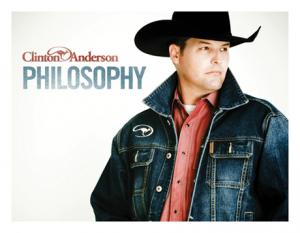
Top clinician Clinton Anderson has a new book that explains the keys to his philosophy of training to enjoy a safe, fun and fulfilling partnership with your horse. Clinton’s belief is that having the knowledge and confidence to be a horse’s leader is paramount to a successful relationship. This book explains the important components of his method of horsemanship which include establishing respect, the use of pressure, and the role of body language.
Clinton talks about the horse as a prey animal and the instincts that guide its behavior. He tells us what motivates a horse and how we as predators should approach the horse to use these natural motivations to our advantage. One of Anderson’s top priorities is establishing respect. He tells the reader about the “personal hula hoop space” which keeps a horse at a respectful and safe distance. Part of his philosophy is that “respect gives you options.” He maintains that you can do whatever you want – trail ride, cattle work, jumping – with a horse that respects you because you can control him, or as Anderson calls it, “control his feet.”
For effective learning in the training process, Anderson says, “In order to have a well-balanced responsive horse, you have to act like you own two separate horses.” He calls these horses “Lefty” and “Righty” because whatever a horse learns on one side, he has to learn it again on the other side just as if it is new information.
Anderson explains some of his other basic concepts like the notion of “the thinking side versus the reactive side” of the horse’s brain. He says, “A horse is a reaction waiting to happen,” but the more a horse is properly trained, the more he is likely to use the thinking side of his brain.
He talks about “pressure,” how to use it, and how to remove it. Putting on or removing pressure can “make the right thing easy and the wrong thing difficult.” Most importantly, he says, “Horses don’t learn from pressure, they learn from the release of pressure.” He also talks about the Nagging Mother style of asking for a response, and the Barbarian style, neither of which achieve the goal of a horse respecting you but not fearing you.
Following chapters include discussions of other important concepts such as consistency, use of body language, and developing and using “feel.” Illustrated with many photographs, and interspersed with Anderson’s humor and anecdotes from life experience, this book is almost a conversation with an important modern horse trainer.
For those who don’t already know Clinton Anderson’s style of Downunder Horsemanship, this book is an excellent summary and explanation of the philosophy and experience behind his training methods. It is the “why” for his entire method of horsemanship, a method which has achieved good results for him, and which he strives to share with others so that they may develop an excellent partnership with their horse.
Top clinician Clinton Anderson has a new book that explains the keys to his philosophy of training to enjoy a safe, fun and fulfilling partnership with your horse. Clinton’s belief is that having the knowledge and confidence to be a horse’s leader is paramount to a successful relationship. This book explains the important components of his method of horsemanship which include establishing respect, the use of pressure, and the role of body language.
Clinton talks about the horse as a prey animal and the instincts that guide its behavior. He tells us what motivates a horse and how we as predators should approach the horse to use these natural motivations to our advantage. One of Anderson’s top priorities is establishing respect. He tells the reader about the “personal hula hoop space” which keeps a horse at a respectful and safe distance. Part of his philosophy is that “respect gives you options.” He maintains that you can do whatever you want – trail ride, cattle work, jumping – with a horse that respects you because you can control him, or as Anderson calls it, “control his feet.”
For effective learning in the training process, Anderson says, “In order to have a well-balanced responsive horse, you have to act like you own two separate horses.” He calls these horses “Lefty” and “Righty” because whatever a horse learns on one side, he has to learn it again on the other side just as if it is new information.
Anderson explains some of his other basic concepts like the notion of “the thinking side versus the reactive side” of the horse’s brain. He says, “A horse is a reaction waiting to happen,” but the more a horse is properly trained, the more he is likely to use the thinking side of his brain.
He talks about “pressure,” how to use it, and how to remove it. Putting on or removing pressure can “make the right thing easy and the wrong thing difficult.” Most importantly, he says, “Horses don’t learn from pressure, they learn from the release of pressure.” He also talks about the Nagging Mother style of asking for a response, and the Barbarian style, neither of which achieve the goal of a horse respecting you but not fearing you.
Following chapters include discussions of other important concepts such as consistency, use of body language, and developing and using “feel.” Illustrated with many photographs, and interspersed with Anderson’s humor and anecdotes from life experience, this book is almost a conversation with an important modern horse trainer.
For those who don’t already know Clinton Anderson’s style of Downunder Horsemanship, this book is an excellent summary and explanation of the philosophy and experience behind his training methods. It is the “why” for his entire method of horsemanship, a method which has achieved good results for him, and which he strives to share with others so that they may develop an excellent partnership with their horse.


