

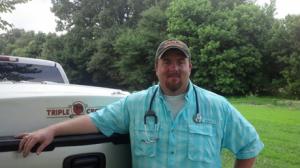
With Dr. Brent Pugh MS, DVM of Mid South Veterinary Services
1: What are summer horse care needs owners need to focus on?
With summer time heavily upon us we need to pay particular attention to many basic husbandry efforts for our equine friends. As usual I try to take a common sense approach to animal welfare. Remember “KISS” Keep It Simple Students. As a horse owner personally and a veterinarian, I try to put myself in the place of the animal. Would I be happy, hungry, satisfied, or healthy? I feel strongly if owners would think this way, many problems could be avoided.
·Water, Water, Water. This amazing substance is probably the single most important nutrient horses or any living thing needs. Please pay very close, daily, attention to your horse’s water supply, intake, and accessibility. Every Horse needs constant free choice access to CLEAN water at all times. During the summer I actually fill my water tank half full and keep it in the shade. I watch it like a hawk. This keeps the algae under control, keeps the water cooler, and refreshed more frequently. Hot water baking in the sun loaded with algae is not a considered a good choice of water. Remember – if you would not consider drinking it, then neither should your horse. A pond or lake is a potential source of water as long as levels stay high, and it does not become stagnant, hot and murky.
·Grass or Forage. Just because the pasture is green does not mean it is edible or should be eaten by horses. If the pasture is mostly weeds (broadleaf) and the ground is barren around these weeds you really need to provide plenty of GOOD quality hay to compensate for lack of forage. A horse will not thrive and maintain body condition if its intestinal tract is not constantly full of roughage (Grass, Hay, Complete feed). It does not matter how much grain you feed them; God made horses to eat grass and that is the feed they need most. Also, when forage supply is low or absent, horses/livestock begin to eat plants they otherwise would not. Many of these weeds can be toxic to horses/livestock.
·Salt. Free choice salt is crucial to the metabolism of livestock. It is one of the primary electrolytes that help maintain cellular function, cell stability, and the body’s metabolism. I recommend free choice over force feed salt. Although, there are some instances when your veterinarian will recommend adding salt to the diet. Horses have instincts that drive cravings for salt. One is that when grazing green grass, which is rich in Potassium, this offsets their Sodium to Potassium ratios increasing a horse’s desire for salt (Sodium Chloride).
·Shade. The HOT sun is sometimes relentless. Your horse thinks so also. Give your horse the choice to get out of the sun. Just a good ole shade tree works great and they can often get some sort of a breeze or scratch a few flies off at the same time. Please remember that barns get very, very hot during the summer. Even with fans blowing, sometimes outside is cooler than in a stall. Again, put yourself in their place. If it seems hot, humid, smothering, with the smell of ammonia (urine) burning your nose, I’m sure your horse feels the same.
·Sensible Exercise. Stand between two horses with your farrier the next time he is working on them and feel the body heat they dissipate. Horses get very hot when exercised; they MUST sweat and continue sweating after exercise. If your horse is not sweating, STOP the exercise, remove the saddle, slowly cool him down with slow walking in the shade, offer a drink of clean water, and slowly begin to water your horse down. Always pay special attention to your horse’s attitude, movement, and amount of sweating during summer exercise. If is too hot for you to run around toting a big back pack, then think twice before asking your horse to do so.
·Flies. Sorry, no real magic tricks. Do the best you can with fly sprays, fly predators, fly traps, or smashing the big daddies with your hands. Midsouth horse flies are just some bad dudes. A cool, dark stall with lots of fans will be a favorite for your horses as a free choice option to get out of the heat and flies.
Please be safe, enjoy your loyal horse, and protect him. These horses depend on us to care for them.
2. What are some safety points to keep in mind when traveling with your horses?
·Truck and Trailer: This is what will get your horses were they are going, so this is where I start. Check the air in the tires and make sure tires are not dry rotted or showing extreme wear. Examine the floor and side walls of the trailer for cracked boards, loose or sharp metal. Check for WASPS around the trailer and dividers. It’s rough for a horse to be tied into trailer with a red wasp nest while traveling 55 mph down the highway. To tie a horse’s head in the trailer or let them stay loose is a topic for much debate. I do not have the correct answer. Just try to make a common sense judgment call when securing your horses in the trailer. Make sure your trailer lights work to help inform other motorists of your travel. If it is very hot, consider traveling at night. A metal trailer can be like an oven while in the sun. Keep vents open to allow ventilation for your horse while traveling.
·Water and Hay: Always carry plenty of fresh hay that your horse is accustomed to during your travel. I am very picky about hay and would rather depend on my hay than hope for good quality hay wherever we travel. You may need to carry a water tank if your horse is fickle about abnormal water sources. This is one time when providing electrolytes to the feed or by mouth (paste) could be advised. This may increase your horse’s thirst resulting in increased foreign water consumption. I don’t generally recommend adding electrolytes to a new water source. This may further discourage your horse from drinking.
·Travel Requirements for your destination: Make sure you obtain the correct travel documents required. A current negative Coggins (Equine Infectious Anemia test) result is always required to travel beyond your horse’s pasture limits. Ask your veterinarian for digital Coggins so you can have unlimited access to your results on the internet, smart phone, or smart pad device. Obtain a CVI (Certificate of Veterinary Inspection) prior to crossing state lines. Remember, a CVI is only useful if a veterinarian actually examines the animal to determine if it is not sick prior to travel. Contagious diseases are only contagious if a sick horse comes into direct/indirect contact with another horse. Hopefully, this animal will be detected during a health certificate exam and prevent your horse from getting ill.
·Preventative Health Care: Vaccinations are very important. They are like health insurance (before the new healthcare reform law). It is important to your horse’s well-being to have them. Many people take the gamble without vaccines and do just fine (no health insurance), but when your horse really needs them, you are glad he is protected. As veterinarians we see the impact on a horse’s health when vaccines are ignored. We see tetanus, West Nile, occasionally a rare case of EEE, and often Influenza or likely Rhino. Biosecurity is crucial to protecting your horse from exposure, but establishing a risk based vaccination program with your veterinarian is a wise investment. As with health insurance, you truly hope you never have to put it to the test, but the money spent is worth it when you do.
Always use good judgment and common sense while on the road with your horses. Watch out for other people and try to practically protect your horse by being prepared.
1: What are summer horse care needs owners need to focus on?
With summer time heavily upon us we need to pay particular attention to many basic husbandry efforts for our equine friends. As usual I try to take a common sense approach to animal welfare. Remember “KISS” Keep It Simple Students. As a horse owner personally and a veterinarian, I try to put myself in the place of the animal. Would I be happy, hungry, satisfied, or healthy? I feel strongly if owners would think this way, many problems could be avoided.
·Water, Water, Water. This amazing substance is probably the single most important nutrient horses or any living thing needs. Please pay very close, daily, attention to your horse’s water supply, intake, and accessibility. Every Horse needs constant free choice access to CLEAN water at all times. During the summer I actually fill my water tank half full and keep it in the shade. I watch it like a hawk. This keeps the algae under control, keeps the water cooler, and refreshed more frequently. Hot water baking in the sun loaded with algae is not a considered a good choice of water. Remember – if you would not consider drinking it, then neither should your horse. A pond or lake is a potential source of water as long as levels stay high, and it does not become stagnant, hot and murky.
·Grass or Forage. Just because the pasture is green does not mean it is edible or should be eaten by horses. If the pasture is mostly weeds (broadleaf) and the ground is barren around these weeds you really need to provide plenty of GOOD quality hay to compensate for lack of forage. A horse will not thrive and maintain body condition if its intestinal tract is not constantly full of roughage (Grass, Hay, Complete feed). It does not matter how much grain you feed them; God made horses to eat grass and that is the feed they need most. Also, when forage supply is low or absent, horses/livestock begin to eat plants they otherwise would not. Many of these weeds can be toxic to horses/livestock.
·Salt. Free choice salt is crucial to the metabolism of livestock. It is one of the primary electrolytes that help maintain cellular function, cell stability, and the body’s metabolism. I recommend free choice over force feed salt. Although, there are some instances when your veterinarian will recommend adding salt to the diet. Horses have instincts that drive cravings for salt. One is that when grazing green grass, which is rich in Potassium, this offsets their Sodium to Potassium ratios increasing a horse’s desire for salt (Sodium Chloride).
·Shade. The HOT sun is sometimes relentless. Your horse thinks so also. Give your horse the choice to get out of the sun. Just a good ole shade tree works great and they can often get some sort of a breeze or scratch a few flies off at the same time. Please remember that barns get very, very hot during the summer. Even with fans blowing, sometimes outside is cooler than in a stall. Again, put yourself in their place. If it seems hot, humid, smothering, with the smell of ammonia (urine) burning your nose, I’m sure your horse feels the same.
·Sensible Exercise. Stand between two horses with your farrier the next time he is working on them and feel the body heat they dissipate. Horses get very hot when exercised; they MUST sweat and continue sweating after exercise. If your horse is not sweating, STOP the exercise, remove the saddle, slowly cool him down with slow walking in the shade, offer a drink of clean water, and slowly begin to water your horse down. Always pay special attention to your horse’s attitude, movement, and amount of sweating during summer exercise. If is too hot for you to run around toting a big back pack, then think twice before asking your horse to do so.
·Flies. Sorry, no real magic tricks. Do the best you can with fly sprays, fly predators, fly traps, or smashing the big daddies with your hands. Midsouth horse flies are just some bad dudes. A cool, dark stall with lots of fans will be a favorite for your horses as a free choice option to get out of the heat and flies.
Please be safe, enjoy your loyal horse, and protect him. These horses depend on us to care for them.
2. What are some safety points to keep in mind when traveling with your horses?
·Truck and Trailer: This is what will get your horses were they are going, so this is where I start. Check the air in the tires and make sure tires are not dry rotted or showing extreme wear. Examine the floor and side walls of the trailer for cracked boards, loose or sharp metal. Check for WASPS around the trailer and dividers. It’s rough for a horse to be tied into trailer with a red wasp nest while traveling 55 mph down the highway. To tie a horse’s head in the trailer or let them stay loose is a topic for much debate. I do not have the correct answer. Just try to make a common sense judgment call when securing your horses in the trailer. Make sure your trailer lights work to help inform other motorists of your travel. If it is very hot, consider traveling at night. A metal trailer can be like an oven while in the sun. Keep vents open to allow ventilation for your horse while traveling.
·Water and Hay: Always carry plenty of fresh hay that your horse is accustomed to during your travel. I am very picky about hay and would rather depend on my hay than hope for good quality hay wherever we travel. You may need to carry a water tank if your horse is fickle about abnormal water sources. This is one time when providing electrolytes to the feed or by mouth (paste) could be advised. This may increase your horse’s thirst resulting in increased foreign water consumption. I don’t generally recommend adding electrolytes to a new water source. This may further discourage your horse from drinking.
·Travel Requirements for your destination: Make sure you obtain the correct travel documents required. A current negative Coggins (Equine Infectious Anemia test) result is always required to travel beyond your horse’s pasture limits. Ask your veterinarian for digital Coggins so you can have unlimited access to your results on the internet, smart phone, or smart pad device. Obtain a CVI (Certificate of Veterinary Inspection) prior to crossing state lines. Remember, a CVI is only useful if a veterinarian actually examines the animal to determine if it is not sick prior to travel. Contagious diseases are only contagious if a sick horse comes into direct/indirect contact with another horse. Hopefully, this animal will be detected during a health certificate exam and prevent your horse from getting ill.
·Preventative Health Care: Vaccinations are very important. They are like health insurance (before the new healthcare reform law). It is important to your horse’s well-being to have them. Many people take the gamble without vaccines and do just fine (no health insurance), but when your horse really needs them, you are glad he is protected. As veterinarians we see the impact on a horse’s health when vaccines are ignored. We see tetanus, West Nile, occasionally a rare case of EEE, and often Influenza or likely Rhino. Biosecurity is crucial to protecting your horse from exposure, but establishing a risk based vaccination program with your veterinarian is a wise investment. As with health insurance, you truly hope you never have to put it to the test, but the money spent is worth it when you do.
Always use good judgment and common sense while on the road with your horses. Watch out for other people and try to practically protect your horse by being prepared.


