

By Leigh Ballard
Beet pulp is a byproduct from the processing of sugar beets. After sugar has been extracted, the leftover fibrous material is a great source of highly digestible fiber for horses.
Beet pulp is about 18% crude fiber and about 10% crude protein. Other nutritional aspects like vitamins and minerals are unremarkable; the value is mostly in the fiber and the type of energy it provides.
There are several benefits to feeding beet pulp. With its high fiber content, it is almost a forage, but it provides more calories than most forages. Beet pulp is high in calories, but lower in energy than grains. However, the energy in beet pulp comes from soluble fiber energy which is easily broken down to usable energy, unlike energy from grains’ carbohydrate sources. Therefore, beet pulp provides a “safe” source of energy.
Beet pulp has excellent digestibility. Even though it is a little lower in fiber than hay, it can be used to substitute part of the forage ration and increase total calories fed. It can also be used to “dilute” a grain ration without sacrificing calories. It is a good product to feed for a “hard keeper” or a geriatric horse because it encourages weight gain.
Beet pulp can increase total calories fed without increasing the risk of colic or founder. It has a low glycemic index which is good for horses at risk for metabolic disorders. In contrast, high glycemic feeds, like corn and other cereal grains, break down to glucose rapidly in the small intestine and cause spikes in blood glucose levels. Beet pulp causes very little rise to blood glucose levels, but still provides energy from fiber, which is broken down more slowly by microbes in the hindgut. Beet pulp does not contribute to “hot” behavior brought on by too much carbohydrate energy in the diet. It is a source of “cool calories” because of its low glycemic index.
Many horse-owners are already feeding beet pulp without knowing it. Because of its good digestibility, beet pulp is a key ingredient in many well-known commercial feeds for senior horses, also called complete feeds, performance rations, and in formulas for those that need low sugar diets.
When feeding beet pulp as a supplement to regular rations, soaking is recommended because beet pulp is very dry. It is dehydrated for feed use since in its natural state it will mold easily. There is much misinformation and myth about beet pulp’s dry state. The most often heard myth is that it causes choke. While some horses may choke on beet pulp, it is bolting food that causes choke, not the food itself. That said, soaking for about 15 minutes is often enough and is not too inconvenient for most people; the added benefit is more water in the horse’s system.
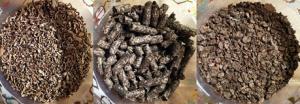
Beet pulp comes in pellets or shreds. For many horses beet pulp is an “acquired taste,” and as with any new feed, should be introduced gradually in small amounts to the normal feed ration.
Resources:
“The Myths and Reality of Beet Pulp” by Susan Garlinghouse Evans, DVM
www.shady-acres.com/susan/beetpulp.shtml
“Feeding Beet Pulp” by Karen Briggs, www.thehorse.comArticle #314
“What is Beet Pulp Horse Feed?” by Eric Haydt, www.triplecrownfeed.com
Feed Your Horse Like a Horseby Juliet Getty, Ph.D.
Beet pulp is a byproduct from the processing of sugar beets. After sugar has been extracted, the leftover fibrous material is a great source of highly digestible fiber for horses.
Beet pulp is about 18% crude fiber and about 10% crude protein. Other nutritional aspects like vitamins and minerals are unremarkable; the value is mostly in the fiber and the type of energy it provides.
There are several benefits to feeding beet pulp. With its high fiber content, it is almost a forage, but it provides more calories than most forages. Beet pulp is high in calories, but lower in energy than grains. However, the energy in beet pulp comes from soluble fiber energy which is easily broken down to usable energy, unlike energy from grains’ carbohydrate sources. Therefore, beet pulp provides a “safe” source of energy.
Beet pulp has excellent digestibility. Even though it is a little lower in fiber than hay, it can be used to substitute part of the forage ration and increase total calories fed. It can also be used to “dilute” a grain ration without sacrificing calories. It is a good product to feed for a “hard keeper” or a geriatric horse because it encourages weight gain.
Beet pulp can increase total calories fed without increasing the risk of colic or founder. It has a low glycemic index which is good for horses at risk for metabolic disorders. In contrast, high glycemic feeds, like corn and other cereal grains, break down to glucose rapidly in the small intestine and cause spikes in blood glucose levels. Beet pulp causes very little rise to blood glucose levels, but still provides energy from fiber, which is broken down more slowly by microbes in the hindgut. Beet pulp does not contribute to “hot” behavior brought on by too much carbohydrate energy in the diet. It is a source of “cool calories” because of its low glycemic index.
Many horse-owners are already feeding beet pulp without knowing it. Because of its good digestibility, beet pulp is a key ingredient in many well-known commercial feeds for senior horses, also called complete feeds, performance rations, and in formulas for those that need low sugar diets.
When feeding beet pulp as a supplement to regular rations, soaking is recommended because beet pulp is very dry. It is dehydrated for feed use since in its natural state it will mold easily. There is much misinformation and myth about beet pulp’s dry state. The most often heard myth is that it causes choke. While some horses may choke on beet pulp, it is bolting food that causes choke, not the food itself. That said, soaking for about 15 minutes is often enough and is not too inconvenient for most people; the added benefit is more water in the horse’s system.
Beet pulp comes in pellets or shreds. For many horses beet pulp is an “acquired taste,” and as with any new feed, should be introduced gradually in small amounts to the normal feed ration.
Resources:
“The Myths and Reality of Beet Pulp” by Susan Garlinghouse Evans, DVM
www.shady-acres.com/susan/beetpulp.shtml
“Feeding Beet Pulp” by Karen Briggs, www.thehorse.comArticle #314
“What is Beet Pulp Horse Feed?” by Eric Haydt, www.triplecrownfeed.com
Feed Your Horse Like a Horseby Juliet Getty, Ph.D.


