

by Leigh Ballard
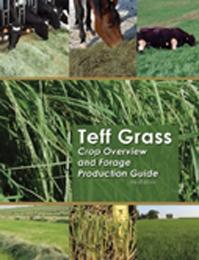
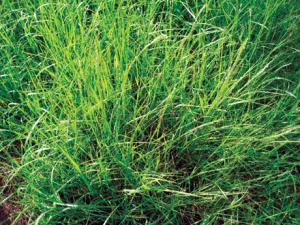
Although it is not widely known in our area, Teff makes very good horse hay. It is an annual warm season grass originally imported from Africa several decades ago. There are many varieties of teffgrass, about 400 available to growers in the United States. In Africa, where the grass has been used for centuries, there are about 4,000 varieties.
Teff is used both as grain and as forage. It is a source of gluten-free grain. In the United States Teff is also used for cattle and other livestock grazing. However, Teffgrass is shallow-rooted so overgrazing can be a problem, depending on local soil and nutrient conditions. Tiffany Teff is one of the top varieties, noted for its adaptability, durability and protein content. Teff is used primarily for the premium horse hay market. Anecdotal reports on horse forums and blogs would indicate that horses find the hay very tasty!
Teff is very adaptable to many soil types. For horses, the hay is cut before any grain appears. Teff does not tolerate frost, and growers find it to be a good rotation crop with cool season annual grasses. It is a quick growing, short season crop, with a first cutting often at seven weeks from sowing. Seed is tiny, so good soil-bed preparation is critical. A four-inch stubble should be left at cutting to encourage new growth.
Becky Muller, Extension Agent II with UT Extension-Shelby County adds:
“Bermuda is still yielding more tons per acre on a dry matter basis.
“I think the thing to remember is that the teff grass will do better if you cut one hay cutting from it and then graze it. The roots are shallow and overgrazing can be a huge issue. The seed is also very small.
“Bermuda is a little more tolerant if being grazed as well. In our area we normally have the situation of more horses than grass. We need a grass as tolerant to grazing as possible.”
Resources:
www.teffgrass.com
www.hayandforage.com/hay/grasses/teff-adaptable-appealing
www.hayandforage.com/mag/farming_tons_teff
www.producerschoiceseed.com/products/teff-grass/tiffany-teff-grass-2/
Links to 2011 Warm Season Annual Grass Reports 12-8 and 12-9, UT’s forage variety trials: http://forages.tennessee.edu/Page11-%20Variety%20Trials%20and%20Research/2011%20WAG%20Report.pdf
http://forages.tennessee.edu/Page11-%20Variety%20Trials%20and%20Research/2011%20Bermudagrass%20Report.pdf
“Summer Annual Teff Makes Great Horse Hay,” Hay and Forage Grower, January 2008
Exploring Options with Teff Grass:
http://pubs.ext.vt.edu/news/fbmu/2010/08/article_5-fbu_08-10.html
Although it is not widely known in our area, Teff makes very good horse hay. It is an annual warm season grass originally imported from Africa several decades ago. There are many varieties of teffgrass, about 400 available to growers in the United States. In Africa, where the grass has been used for centuries, there are about 4,000 varieties.
Teff is used both as grain and as forage. It is a source of gluten-free grain. In the United States Teff is also used for cattle and other livestock grazing. However, Teffgrass is shallow-rooted so overgrazing can be a problem, depending on local soil and nutrient conditions. Tiffany Teff is one of the top varieties, noted for its adaptability, durability and protein content. Teff is used primarily for the premium horse hay market. Anecdotal reports on horse forums and blogs would indicate that horses find the hay very tasty!
Teff is very adaptable to many soil types. For horses, the hay is cut before any grain appears. Teff does not tolerate frost, and growers find it to be a good rotation crop with cool season annual grasses. It is a quick growing, short season crop, with a first cutting often at seven weeks from sowing. Seed is tiny, so good soil-bed preparation is critical. A four-inch stubble should be left at cutting to encourage new growth.
Becky Muller, Extension Agent II with UT Extension-Shelby County adds:
“Bermuda is still yielding more tons per acre on a dry matter basis.
“I think the thing to remember is that the teff grass will do better if you cut one hay cutting from it and then graze it. The roots are shallow and overgrazing can be a huge issue. The seed is also very small.
“Bermuda is a little more tolerant if being grazed as well. In our area we normally have the situation of more horses than grass. We need a grass as tolerant to grazing as possible.”
Resources:
www.teffgrass.com
www.hayandforage.com/hay/grasses/teff-adaptable-appealing
www.hayandforage.com/mag/farming_tons_teff
www.producerschoiceseed.com/products/teff-grass/tiffany-teff-grass-2/
Links to 2011 Warm Season Annual Grass Reports 12-8 and 12-9, UT’s forage variety trials: http://forages.tennessee.edu/Page11-%20Variety%20Trials%20and%20Research/2011%20WAG%20Report.pdf
http://forages.tennessee.edu/Page11-%20Variety%20Trials%20and%20Research/2011%20Bermudagrass%20Report.pdf
“Summer Annual Teff Makes Great Horse Hay,” Hay and Forage Grower, January 2008
Exploring Options with Teff Grass:
http://pubs.ext.vt.edu/news/fbmu/2010/08/article_5-fbu_08-10.html


