

By Denise O’Meara
ELCR’s first Regional One-Day Forum was held on March 10, 2012 at Shannondale Farm in Alpharetta, Georgia, covering the Southeast Region. The focus for this seminar was Community Land Use Planning, one of the six issues that ELCR has identified as being critical to the preservation of equine lands, facilities and trails access. We focused on this particular issue because it is the basis upon which all land use is determined within the bounds of urban, suburban and rural communities. It is also the issue that horse owners, enthusiasts and horse land owners tend to have the least information about, and often disregard until the bulldozer is at the door, a facility closes down, or access to a favorite trail is lost.
This Forum also fit in with ELCR’s goal of expanding its educational curriculum and offerings. Four highly qualified expert presenters were engaged, and all presentations were filmed in HQ video format by LeVar James. The video will be edited and uploaded to our website for future viewing as part of our curricular offerings.
Our first presenter was Dr. Tom Daniels, Professor in City and Regional Planning at the University of Pennsylvania. His primary interest area is rural land use planning and land conservation. Dr. Daniels gave a two-part presentation covering the basics of land use planning for horsemen. Part I, ‘Stop the Sprawl, I Want to Get Off’ covered the fundamentals of land use planning, including the fundamentals of the planning process, who is involved, and the implementation of the comprehensive plan via zoning and regulations.
Part II, ‘The Invisible Horse: Horse Friendly Comprehensive Plan Language’ explored the types of language to include in comprehensive plans, zoning and ordinances in order to ensure horse-friendly land use and activities within communities. Dr. Daniels also included several examples of communities where horsemen were engaged in the planning process, appropriate language was written into zoning ordinances, and several types of planning tools, such as overlay agricultural districts, were used successfully to conserve open lands. Dr. Daniels will continue to participate in our Conservation Partners Educational Conference Calls and in future One-Day Seminars.
Shannon Kettering, ASLA, AIA, of ECOS/POND consulting group and Steve Nygren, a developer, conservationist, visionary and restaurateur, talked about the Chattahoochee Hill Country, a 65,000 acre ‘development’ that included 80% conserved agricultural and open land in its master plan and ongoing implementation. Ms. Kettering reviewed the history and planning process for this very horse friendly community and Mr. Nygren, founder and president of the Serenbe Community, one of three villages in the Hill Country, talked about the process of engendering grass-roots support and action, and holding the vision of conserving the land, culture and lifestyle of the region.
Laurel Florio J.D., Land Trust Alliance lecturer and expert in conservation easements, is also an ELCR board member. Mrs. Florio presented a workshop on donated conservation easements. The workshop covered the essential elements for creating and administering donated easements on equine lands. The workshop included a charette activity where participant break-out groups developed example farm drawings, identified farm features and current land and facility use, made decisions on future use and determined an appropriate conservation easement plan for ‘their’ farm. Group representatives then presented their plans and shared their process.
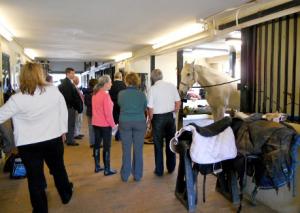
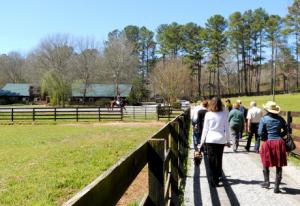
Also included in the day’s activities was a tour of Shannondale Farm, and history of owners David and Julie Shannon’s efforts in placing a conservation easement on the farm. Shannondale Farm specializes in the training of dressage horses and riders.
The Forum included breakfast and a delightful lunch catered from Never Enough Thyme.
Attendance was broad based, with registrants coming in from seven states, including Georgia, Alabama, Florida, North and South Carolina, Maryland and Illinois, representing horse organizations, planners and other horse enthusiasts. Feedback indicated that the Forum was very well-received.
ELCR’s first Regional One-Day Forum was held on March 10, 2012 at Shannondale Farm in Alpharetta, Georgia, covering the Southeast Region. The focus for this seminar was Community Land Use Planning, one of the six issues that ELCR has identified as being critical to the preservation of equine lands, facilities and trails access. We focused on this particular issue because it is the basis upon which all land use is determined within the bounds of urban, suburban and rural communities. It is also the issue that horse owners, enthusiasts and horse land owners tend to have the least information about, and often disregard until the bulldozer is at the door, a facility closes down, or access to a favorite trail is lost.
This Forum also fit in with ELCR’s goal of expanding its educational curriculum and offerings. Four highly qualified expert presenters were engaged, and all presentations were filmed in HQ video format by LeVar James. The video will be edited and uploaded to our website for future viewing as part of our curricular offerings.
Our first presenter was Dr. Tom Daniels, Professor in City and Regional Planning at the University of Pennsylvania. His primary interest area is rural land use planning and land conservation. Dr. Daniels gave a two-part presentation covering the basics of land use planning for horsemen. Part I, ‘Stop the Sprawl, I Want to Get Off’ covered the fundamentals of land use planning, including the fundamentals of the planning process, who is involved, and the implementation of the comprehensive plan via zoning and regulations.
Part II, ‘The Invisible Horse: Horse Friendly Comprehensive Plan Language’ explored the types of language to include in comprehensive plans, zoning and ordinances in order to ensure horse-friendly land use and activities within communities. Dr. Daniels also included several examples of communities where horsemen were engaged in the planning process, appropriate language was written into zoning ordinances, and several types of planning tools, such as overlay agricultural districts, were used successfully to conserve open lands. Dr. Daniels will continue to participate in our Conservation Partners Educational Conference Calls and in future One-Day Seminars.
Shannon Kettering, ASLA, AIA, of ECOS/POND consulting group and Steve Nygren, a developer, conservationist, visionary and restaurateur, talked about the Chattahoochee Hill Country, a 65,000 acre ‘development’ that included 80% conserved agricultural and open land in its master plan and ongoing implementation. Ms. Kettering reviewed the history and planning process for this very horse friendly community and Mr. Nygren, founder and president of the Serenbe Community, one of three villages in the Hill Country, talked about the process of engendering grass-roots support and action, and holding the vision of conserving the land, culture and lifestyle of the region.
Laurel Florio J.D., Land Trust Alliance lecturer and expert in conservation easements, is also an ELCR board member. Mrs. Florio presented a workshop on donated conservation easements. The workshop covered the essential elements for creating and administering donated easements on equine lands. The workshop included a charette activity where participant break-out groups developed example farm drawings, identified farm features and current land and facility use, made decisions on future use and determined an appropriate conservation easement plan for ‘their’ farm. Group representatives then presented their plans and shared their process.
Also included in the day’s activities was a tour of Shannondale Farm, and history of owners David and Julie Shannon’s efforts in placing a conservation easement on the farm. Shannondale Farm specializes in the training of dressage horses and riders.
The Forum included breakfast and a delightful lunch catered from Never Enough Thyme.
Attendance was broad based, with registrants coming in from seven states, including Georgia, Alabama, Florida, North and South Carolina, Maryland and Illinois, representing horse organizations, planners and other horse enthusiasts. Feedback indicated that the Forum was very well-received.


