


By Pam Gamble
People love auctions. Buying on online auctions such as EBay has become a way of life for many people. Bidding in person, on the other hand, can be a little intimidating. Following the rapid fire sing-song voice of the auctioneer takes some getting used to. Is the bid $300 or $350? The potential of getting caught in a bidding war also is greater when we are facing off with another bidder. Plus, the bidder has to be informed about what they are bidding on, what the retail price of an item really is, because sometimes an item really isn’t a bargain!
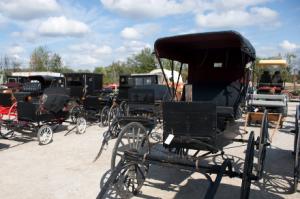
The 13th Annual Southern Indiana Fall Antique, Carriage and Machinery Auction, Montgomery, IN September 27-28 was a big auction. The auction is known for carriages, but it is also full of antiques, and lots of junk! Even though the big ticket items such as a stage coach or hearse weren’t present this year, the auction had a nice variety of carriages, with over 300 carriages going through the auction.
The smart bidder arrives early, maybe the day before, with a tape measure and a notepad. If the bidder needs a large pony cart, there is no need to look at small pony vehicles. Pick out several things that are acceptable because a budget-minded bidder sometimes may have to settle on an earlier item if the bid stays low, even though the nicer carriage is coming later. Or maybe he should be patient and wait. Sometimes the bidding gets dull toward the end of the day and later items can be the real bargains.
Over 40 easy entry pony carts went through the auction. Bidders paid on average $250 each for the new little spoke-wheeled carts. Approximately ten of these were pre-owned and sold for less.
Several Vis-à-vis carriages were at the Southern Indiana Auction. Even though many people refer to commercial carriages as Hansom Cabs, most of them are Vis-à-vis. Vis-à-vis means “face-to-face” in French, which describes the passenger seats in this type of carriage. Hansom carriages are two-wheeled carriages in which the driver stands up behind the passengers.
This auction usually has at least one carriage made by local Amish carriage maker, Victor Raber. Victor has one of the most successful custom carriage building companies in the U. S. His sturdy commercial carriages grace the streets of St. Augustine, New York, and Memphis, to name a few.
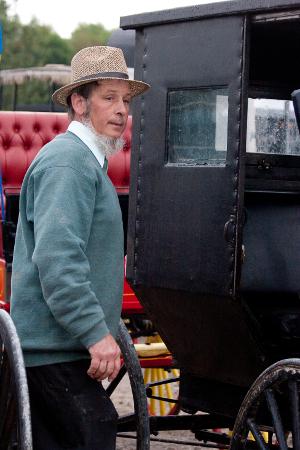
Victor’s relative and fellow carriage maker, Paul Raber, organizes the auction every year. In fact the entire auction is run by local Amish. In matters of business, this community makes certain allowances for technology. For example, Paul Raber keeps a telephone only for business use and only at his carriage shop. During the auction, Paul will take phone bids via cell-phone. Paul offered several two wheeled carts suitable for pleasure driving and shows. His nice full sized, easy entry, stained two-wheel cart went for $1400. His elegant draft sized spindle back gig went for $1600.
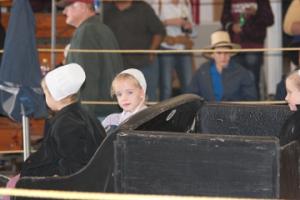
The Amish also bid on many of the vehicles since many black Amish buggies go through the sale. Particularly interesting, and somewhat ironic, are the buggies decked out for“Rumspringa.” Rumspringa is the youthful time of an Amish person between 16 years of age and marriage, according to Aaron Miller. These buggies are outfitted more “youthfully” with radios, multiple lights and even fuzzy dice. These buggies are quick sellers, and are the “hot rods” of Amish vehicles.
The highlight of the auction was an antique milk wagon in very good original condition. This late 1800’s milk delivery wagon was used as late as the 1920’s. The wagon was sold for $5500, but it probably would have sold for more if had been consigned earlier and made the advertising flyer.
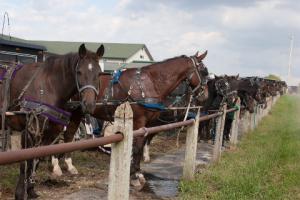
Carriage auctions are fun and full of bargains, almost like treasure hunts. When you visit one in Amish country, you might be lucky enough to see the people working in the fields with their teams.
People love auctions. Buying on online auctions such as EBay has become a way of life for many people. Bidding in person, on the other hand, can be a little intimidating. Following the rapid fire sing-song voice of the auctioneer takes some getting used to. Is the bid $300 or $350? The potential of getting caught in a bidding war also is greater when we are facing off with another bidder. Plus, the bidder has to be informed about what they are bidding on, what the retail price of an item really is, because sometimes an item really isn’t a bargain!
The 13th Annual Southern Indiana Fall Antique, Carriage and Machinery Auction, Montgomery, IN September 27-28 was a big auction. The auction is known for carriages, but it is also full of antiques, and lots of junk! Even though the big ticket items such as a stage coach or hearse weren’t present this year, the auction had a nice variety of carriages, with over 300 carriages going through the auction.
The smart bidder arrives early, maybe the day before, with a tape measure and a notepad. If the bidder needs a large pony cart, there is no need to look at small pony vehicles. Pick out several things that are acceptable because a budget-minded bidder sometimes may have to settle on an earlier item if the bid stays low, even though the nicer carriage is coming later. Or maybe he should be patient and wait. Sometimes the bidding gets dull toward the end of the day and later items can be the real bargains.
Over 40 easy entry pony carts went through the auction. Bidders paid on average $250 each for the new little spoke-wheeled carts. Approximately ten of these were pre-owned and sold for less.
Several Vis-à-vis carriages were at the Southern Indiana Auction. Even though many people refer to commercial carriages as Hansom Cabs, most of them are Vis-à-vis. Vis-à-vis means “face-to-face” in French, which describes the passenger seats in this type of carriage. Hansom carriages are two-wheeled carriages in which the driver stands up behind the passengers.
This auction usually has at least one carriage made by local Amish carriage maker, Victor Raber. Victor has one of the most successful custom carriage building companies in the U. S. His sturdy commercial carriages grace the streets of St. Augustine, New York, and Memphis, to name a few.
Victor’s relative and fellow carriage maker, Paul Raber, organizes the auction every year. In fact the entire auction is run by local Amish. In matters of business, this community makes certain allowances for technology. For example, Paul Raber keeps a telephone only for business use and only at his carriage shop. During the auction, Paul will take phone bids via cell-phone. Paul offered several two wheeled carts suitable for pleasure driving and shows. His nice full sized, easy entry, stained two-wheel cart went for $1400. His elegant draft sized spindle back gig went for $1600.
The Amish also bid on many of the vehicles since many black Amish buggies go through the sale. Particularly interesting, and somewhat ironic, are the buggies decked out for“Rumspringa.” Rumspringa is the youthful time of an Amish person between 16 years of age and marriage, according to Aaron Miller. These buggies are outfitted more “youthfully” with radios, multiple lights and even fuzzy dice. These buggies are quick sellers, and are the “hot rods” of Amish vehicles.
The highlight of the auction was an antique milk wagon in very good original condition. This late 1800’s milk delivery wagon was used as late as the 1920’s. The wagon was sold for $5500, but it probably would have sold for more if had been consigned earlier and made the advertising flyer.
Carriage auctions are fun and full of bargains, almost like treasure hunts. When you visit one in Amish country, you might be lucky enough to see the people working in the fields with their teams.


