

By Nancy Brannon
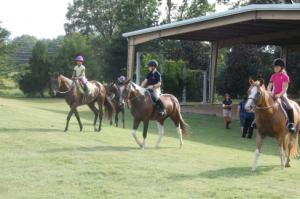
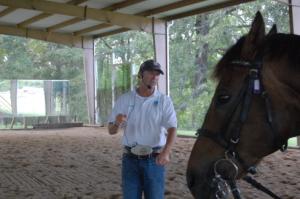
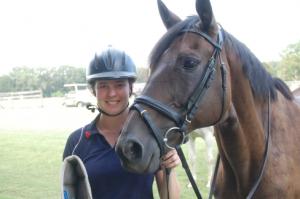
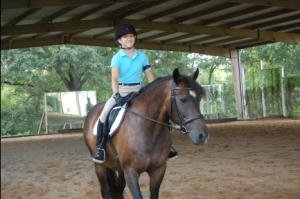
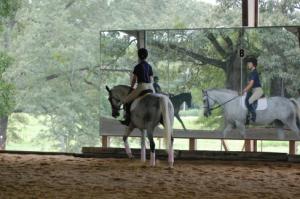
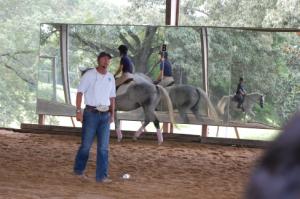
West Tennessee Pony Club (WTPC) grabbed an opportune moment to book a clinic with Daniel Stewart when he had an opening in his busy schedule. He came to Vicki Rimstidt’s farm near Somerville, TN on August 15 for a Video Analysis Clinic. Twelve riders, nine WTPC members and three adults, took advantage of the cooler weather, an ideal facility, and the top trainer to improve their riding skills.
Daniel is a strong Pony Club supporter and is usually a guest speaker on the topic of Sports Psychology at the U. S. Pony Club annual meeting. He has trained riders in Spain, Portugal, Canada, Mexico, Belgium, United Arab Emirates, Greece and the West Indies. From 2000 to 2006 he coached riders on several US Equestrian Teams to success at World Championships, World Equestrian Games, and Olympics. He is the author of “Ride Right” and is considered a leading expert on equestrian sport psychology, biomechanics, and athletics. He teaches clinics and seminars to thousands of riders each year and is a popular guest speaker at many conventions such as Equine Affaire, World Horse Expo, USPC, AQHA, USEA, NAHRA, CHA, NAHRA and the International Equestrian Festival at the 2010 World Equestrian Games in Lexington KY.
Stewart’s all-day clinic began with videotaping all participating riders. Afterwards, all riders watched the videos and analyzed their own and each others’ assets and faults. Then began a series of follow-up lessons: 45 minutes each for groups of four riders to work on the needed improvements ear-marked by the video analysis. Then came a dinner break, and after dinner, Stewart gave a wrap-up and his Equestrian Sport Psychology talk.
In the video analysis session, Stewart explained many of the key aspects of rider position he would be working on, along with key terms he would use so that riders could know immediately what to change. For example, in the clinics, he often gave the cue “heel, hind hoof,” meaning riders should position their lower leg so that they feel like their heel is angled toward the horse’s hind hoof. His cue “pony tail” evokes the image of having a pony tail and someone pulling it upward. This means the rider should elevate her head, upper body, and straighten her posture. The cue “thumb tacks” is used to help riders prevent their butt from bumping the cantle of the saddle at trot and in two-point position at canter. The cue evokes the image of a thumb tack sticking out of the cantle of the saddle. Riders don’t want to get stuck!
“Riders have a choice,” he said. “If you have a bad habit and you are aware of it, you can ignore it, or fix it.” Riders attending the clinic obviously wanted to learn about their bad habits and fix them.
Some of Daniel’s coaching was geared to “all riders,” and some was tailored to a rider’s specific needs. He helped riders improve their position by focusing on various parts of their bodies. Shoulders should be square, but also go beyond square to help maintain balance. “Open your shoulders!” he said. “Keep them still and supple. Find suppleness and grace at the same time,” he said.
He emphasized the importance of developing independent hands. “You should have control of your hip and elbow; having independent control of them leads to developing independent hands. Don’t hold anything stiff and still. That creates muscular tension.” For one rider who was constantly kicking to keep her horse going, he advised,” Use your body as an aid instead of kick, kick, kicking.”
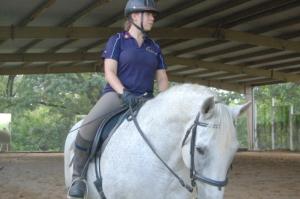
On leg position, he advised riders to press the weight in their heels toward a particular direction. “You’ve heard ‘heels down’ but it’s not just about heels down. Keep your knees bent and your toes up. Use your hips to do that! Then make your shoulders still while your hips keep moving.”
To increase hip flexibility, he sometimes asked riders to show a pelvic tilt at the sitting trot. One exercise he used in the lessons was to ask riders to alternate between two-point position and posting trot. “The two-point position is not a forward transition with the hips,” he explained. “It is a backward transition with the hips. You should feel your hips over the top of your heels.”
Suppling the horse’s mouth comes from riders’ suppling their hands. “Use your ring fingers in a back and forth motion to massage the horse’s mouth and supple the horse. Use your ring fingers to ask the horse to accept the bit. When the horse accepts the bit, don’t brace your hands to try to hold the horse’s head, but keep your hands supple.” To advance to the next level, follow this same pattern, then when the horse accepts the bit, “close your hands to encourage the horse to elevate. Think of wrapping your legs around the horse and lifting him up. Think elevation, suspension in the horse.” He emphasized the point that riders need to be equally quick in rewarding the horse’s correct response, as riders are quick to reprimand the wrong response.
In the second half of the lesson, Daniel asked riders to show their “new” position, or “new” trot, or whatever improved position they were working on. His encouraging remarks helped riders feel a sense of success at the end of the lesson.
Margaret Meyers, District Commissioner of WTPC, hopes to have Daniel return on a regular basis for clinics.
For more information about Daniel Stewart and the clinics and service he offers, visit http://www.stewartclinics.com
West Tennessee Pony Club (WTPC) grabbed an opportune moment to book a clinic with Daniel Stewart when he had an opening in his busy schedule. He came to Vicki Rimstidt’s farm near Somerville, TN on August 15 for a Video Analysis Clinic. Twelve riders, nine WTPC members and three adults, took advantage of the cooler weather, an ideal facility, and the top trainer to improve their riding skills.
Daniel is a strong Pony Club supporter and is usually a guest speaker on the topic of Sports Psychology at the U. S. Pony Club annual meeting. He has trained riders in Spain, Portugal, Canada, Mexico, Belgium, United Arab Emirates, Greece and the West Indies. From 2000 to 2006 he coached riders on several US Equestrian Teams to success at World Championships, World Equestrian Games, and Olympics. He is the author of “Ride Right” and is considered a leading expert on equestrian sport psychology, biomechanics, and athletics. He teaches clinics and seminars to thousands of riders each year and is a popular guest speaker at many conventions such as Equine Affaire, World Horse Expo, USPC, AQHA, USEA, NAHRA, CHA, NAHRA and the International Equestrian Festival at the 2010 World Equestrian Games in Lexington KY.
Stewart’s all-day clinic began with videotaping all participating riders. Afterwards, all riders watched the videos and analyzed their own and each others’ assets and faults. Then began a series of follow-up lessons: 45 minutes each for groups of four riders to work on the needed improvements ear-marked by the video analysis. Then came a dinner break, and after dinner, Stewart gave a wrap-up and his Equestrian Sport Psychology talk.
In the video analysis session, Stewart explained many of the key aspects of rider position he would be working on, along with key terms he would use so that riders could know immediately what to change. For example, in the clinics, he often gave the cue “heel, hind hoof,” meaning riders should position their lower leg so that they feel like their heel is angled toward the horse’s hind hoof. His cue “pony tail” evokes the image of having a pony tail and someone pulling it upward. This means the rider should elevate her head, upper body, and straighten her posture. The cue “thumb tacks” is used to help riders prevent their butt from bumping the cantle of the saddle at trot and in two-point position at canter. The cue evokes the image of a thumb tack sticking out of the cantle of the saddle. Riders don’t want to get stuck!
“Riders have a choice,” he said. “If you have a bad habit and you are aware of it, you can ignore it, or fix it.” Riders attending the clinic obviously wanted to learn about their bad habits and fix them.
Some of Daniel’s coaching was geared to “all riders,” and some was tailored to a rider’s specific needs. He helped riders improve their position by focusing on various parts of their bodies. Shoulders should be square, but also go beyond square to help maintain balance. “Open your shoulders!” he said. “Keep them still and supple. Find suppleness and grace at the same time,” he said.
He emphasized the importance of developing independent hands. “You should have control of your hip and elbow; having independent control of them leads to developing independent hands. Don’t hold anything stiff and still. That creates muscular tension.” For one rider who was constantly kicking to keep her horse going, he advised,” Use your body as an aid instead of kick, kick, kicking.”
On leg position, he advised riders to press the weight in their heels toward a particular direction. “You’ve heard ‘heels down’ but it’s not just about heels down. Keep your knees bent and your toes up. Use your hips to do that! Then make your shoulders still while your hips keep moving.”
To increase hip flexibility, he sometimes asked riders to show a pelvic tilt at the sitting trot. One exercise he used in the lessons was to ask riders to alternate between two-point position and posting trot. “The two-point position is not a forward transition with the hips,” he explained. “It is a backward transition with the hips. You should feel your hips over the top of your heels.”
Suppling the horse’s mouth comes from riders’ suppling their hands. “Use your ring fingers in a back and forth motion to massage the horse’s mouth and supple the horse. Use your ring fingers to ask the horse to accept the bit. When the horse accepts the bit, don’t brace your hands to try to hold the horse’s head, but keep your hands supple.” To advance to the next level, follow this same pattern, then when the horse accepts the bit, “close your hands to encourage the horse to elevate. Think of wrapping your legs around the horse and lifting him up. Think elevation, suspension in the horse.” He emphasized the point that riders need to be equally quick in rewarding the horse’s correct response, as riders are quick to reprimand the wrong response.
In the second half of the lesson, Daniel asked riders to show their “new” position, or “new” trot, or whatever improved position they were working on. His encouraging remarks helped riders feel a sense of success at the end of the lesson.
Margaret Meyers, District Commissioner of WTPC, hopes to have Daniel return on a regular basis for clinics.
For more information about Daniel Stewart and the clinics and service he offers, visit http://www.stewartclinics.com


