

www.reedhillfarm.net
White and Colored Thoroughbreds
By Carolyn Reed
In 1896 the first white Thoroughbred colt was born in Nashville, Tennessee. He was registered in the American Stud Book as White Cross. Research provided by Jorge A. Martinez-Gonzalez, author of History and Development of White Thoroughbreds (TBs), found that White Cross won a hurdle race at Cumberland Park near Nashville as a four year old.
Fast forward to 2011, the number of rare white thoroughbreds preserved by colored Thoroughbred breeders and registered with the Jockey Club has reached a population of 125. Also registered are 178 Palominos. The color Buckskin has not yet been approved by the Jockey Club as a color for TBs; although they exist, they are still registered as bay.
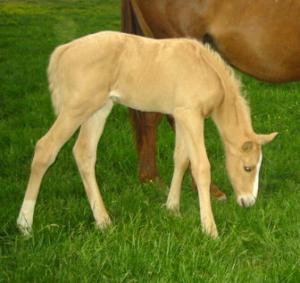
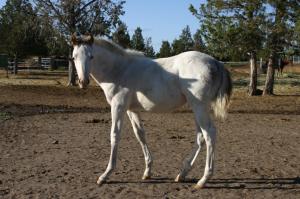
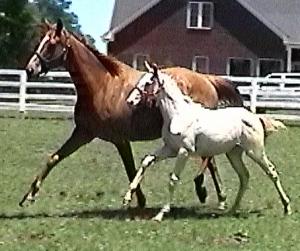
In Eagleville, TN, which is south of Nashville in middle Tennessee, Reed Hill Farm (RHF) owners Harry and Carolyn Reed have been breeding some fine looking white, sabino, palomino, buckskin, and the super rare frame overo Thoroughbreds. Currently standing at Reed Hill Farm are the Jockey Club stallions; ALLAMYSTIQUE (Dominant White with a bay base coat), TWENTYFOUR KT GOLD (palomino), and REMARQUEZ (black/brown minimally marked frame overo positive). Another colored stallion, formerly owned by RHF, was RED WHITE N GOLD (palomino) and a leased stallion named LEGACY IN GOLD (palomino), have also added to the small gene pool of known “dilute” Thoroughbreds.
Carolyn explained her interest in colored Thoroughbreds: “I was riding my mother’s gentle gelding named Colonel before I could walk, and have showed, started, and bred horses for many years for several disciplines. When we switched from breeding Hanoverians and holding inspections for the American Warmblood Registry and Society to colored TB’s in the winter of 2006, I knew it was going to be a long slow road to make a big impact on this very new and specialty breeding challenge. We purchased a five-year-old raced and unbred white stallion, a yearling palomino colt, and a weanling palomino colt to start our breeding program. We bought young colts because they had the conformation, height, and moves needed to improve the colored TB’s. Watching them grow into the stallions we hoped they would become has paid off, and we are just now beginning to see the rewards of very selective breeding with colored TBs.”
There are several Thoroughbreds far back in history that, when bred together, create an increased chance for a Dominant White or Loud Sabino to be produced. As for the very rare Frame Overo Thoroughbreds (not including Splash White Overo TB‘s), there are only two known bloodlines, and one is almost extinct. As for the Dilute (palomino, cremello, buckskin, perlino, and smokey black) Thoroughbreds, there are also only two bloodlines known to be able to produce them. We are breeding for “breeding stock” so very few of our fillies are sold.
“Reed Hill Farm has worked very hard every year to improve line of the colored Thoroughbreds. In the horse industry today, buyers are particularly looking for a specific type of TB to show. One of our goals is to produce a colored foal that will mature to a height of at least 16.2 hands, so buying the right mares to compliment the stallions is important. Ideal uphill conformation and straight legs on our broodmares is a must, and they must have better than average movement. We are slowly integrating racing bloodlines of commercial TB sires and dams to offer the private racing breeders and trainers a chance to purchase a colored race foal for the track. “One reason height, movement, and conformation is so important, is because producing a dilute, overo, or white/sabino foal is a 50-50% chance, and the foals that come solid have to be just as nice to fit into the show or racing industry.”
There are still so many folks who don’t know that there are more colors in TBs than just bay, chestnut, black, and grey. The Thoroughbred is one of the only breeds that crosses very well and can be registered with other horse breeds including Warmbloods, Arabs, Quarter Horses, Paints, and ponies, to name a few. Now with more colors to offer in Thoroughbreds, breeders have even more liberty to “design” their perfect cross bred foal or Thoroughbred!
“Colored Thoroughbreds are now in demand both here in the U.S. and abroad. Our farm motto is exquisite color and uncompromised quality!” said Carolyn.
Reed Hill Farm announces a total liquidation sale of all stallions, broodmares, and foals. “Life Changes” have led us to this decision, said Carolyn. If you are interested in a purchase, please contact Carolyn Reed at Carolynrdhll@aol.com. All fair market value offers will be considered. Please refer to our website for current information on all stock: www.reedhillfarm.net. Additional photos are available upon request.
White and Colored Thoroughbreds
By Carolyn Reed
In 1896 the first white Thoroughbred colt was born in Nashville, Tennessee. He was registered in the American Stud Book as White Cross. Research provided by Jorge A. Martinez-Gonzalez, author of History and Development of White Thoroughbreds (TBs), found that White Cross won a hurdle race at Cumberland Park near Nashville as a four year old.
Fast forward to 2011, the number of rare white thoroughbreds preserved by colored Thoroughbred breeders and registered with the Jockey Club has reached a population of 125. Also registered are 178 Palominos. The color Buckskin has not yet been approved by the Jockey Club as a color for TBs; although they exist, they are still registered as bay.
In Eagleville, TN, which is south of Nashville in middle Tennessee, Reed Hill Farm (RHF) owners Harry and Carolyn Reed have been breeding some fine looking white, sabino, palomino, buckskin, and the super rare frame overo Thoroughbreds. Currently standing at Reed Hill Farm are the Jockey Club stallions; ALLAMYSTIQUE (Dominant White with a bay base coat), TWENTYFOUR KT GOLD (palomino), and REMARQUEZ (black/brown minimally marked frame overo positive). Another colored stallion, formerly owned by RHF, was RED WHITE N GOLD (palomino) and a leased stallion named LEGACY IN GOLD (palomino), have also added to the small gene pool of known “dilute” Thoroughbreds.
Carolyn explained her interest in colored Thoroughbreds: “I was riding my mother’s gentle gelding named Colonel before I could walk, and have showed, started, and bred horses for many years for several disciplines. When we switched from breeding Hanoverians and holding inspections for the American Warmblood Registry and Society to colored TB’s in the winter of 2006, I knew it was going to be a long slow road to make a big impact on this very new and specialty breeding challenge. We purchased a five-year-old raced and unbred white stallion, a yearling palomino colt, and a weanling palomino colt to start our breeding program. We bought young colts because they had the conformation, height, and moves needed to improve the colored TB’s. Watching them grow into the stallions we hoped they would become has paid off, and we are just now beginning to see the rewards of very selective breeding with colored TBs.”
There are several Thoroughbreds far back in history that, when bred together, create an increased chance for a Dominant White or Loud Sabino to be produced. As for the very rare Frame Overo Thoroughbreds (not including Splash White Overo TB‘s), there are only two known bloodlines, and one is almost extinct. As for the Dilute (palomino, cremello, buckskin, perlino, and smokey black) Thoroughbreds, there are also only two bloodlines known to be able to produce them. We are breeding for “breeding stock” so very few of our fillies are sold.
“Reed Hill Farm has worked very hard every year to improve line of the colored Thoroughbreds. In the horse industry today, buyers are particularly looking for a specific type of TB to show. One of our goals is to produce a colored foal that will mature to a height of at least 16.2 hands, so buying the right mares to compliment the stallions is important. Ideal uphill conformation and straight legs on our broodmares is a must, and they must have better than average movement. We are slowly integrating racing bloodlines of commercial TB sires and dams to offer the private racing breeders and trainers a chance to purchase a colored race foal for the track. “One reason height, movement, and conformation is so important, is because producing a dilute, overo, or white/sabino foal is a 50-50% chance, and the foals that come solid have to be just as nice to fit into the show or racing industry.”
There are still so many folks who don’t know that there are more colors in TBs than just bay, chestnut, black, and grey. The Thoroughbred is one of the only breeds that crosses very well and can be registered with other horse breeds including Warmbloods, Arabs, Quarter Horses, Paints, and ponies, to name a few. Now with more colors to offer in Thoroughbreds, breeders have even more liberty to “design” their perfect cross bred foal or Thoroughbred!
“Colored Thoroughbreds are now in demand both here in the U.S. and abroad. Our farm motto is exquisite color and uncompromised quality!” said Carolyn.
Reed Hill Farm announces a total liquidation sale of all stallions, broodmares, and foals. “Life Changes” have led us to this decision, said Carolyn. If you are interested in a purchase, please contact Carolyn Reed at Carolynrdhll@aol.com. All fair market value offers will be considered. Please refer to our website for current information on all stock: www.reedhillfarm.net. Additional photos are available upon request.


