

by Cindy Daigre
In some parts of the country, winter can be especially harsh. Horses in their senior years often need extra assistance to stay warm and maintain a healthy weight. While this is written with the senior horse in mind, any horse who is recovering from an illness, undergoing stress, is a picky eater, or a challenge to maintain can benefit from these ideas.
Feeding wholesome, pure, and healthy foods to our horses is important. Inquire about organic farmers in your area, and see what they have to offer. It is worth the effort and they are worth supporting.
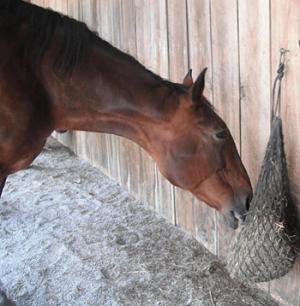
Since the grass is very limited in winter and the ground may be frozen, it is often necessary to make dietary changes to ensure the horses consume enough calories and have continuous access to forage. It is best to give supplemental feeds, such as grains and seeds, in smaller portions several times a day. There are a variety of hay feeders designed to keep horses eating and occupied for longer than when just putting out loose flakes of hay. Easy keepers and horses with digestive problems can benefit from being fed this way. They actually enjoy pulling and yanking on the bags, which can be placed low or on the ground for natural head height and used safely, because the holes are too small for a hoof to get caught in.
Forage Types
Grass hay is soft, tender, and easier for the senior horse to chew. It should be good quality and free of mold and dust. Testing the hay through an approved lab or local agricultural office can reveal the nutrient values, and any deficiencies that indicate the need for supplements. If you are unsure how much hay you will need for your horse, the suggested rate is 2-2.5% of your horse's ideal body weight in hay per day (20-25 lbs. daily for a 1000 lb. horse).
For horse caregivers concerned with the amount of sugar and starches they feed their horses, the rule of thumb is that no feed should have more than 10% non-structural carbohydrates (NSC). Since most commercially produced grains have well over that amount, it is much easier to accomplish this using a forage-based diet.
Fresh, non-processed forages and hays have the advantages, if the horse can process it himself by chewing and digesting it completely. However, the senior horse, especially as dental health declines, typically requires some compromises, such as chopping to make smaller forage particles. Supplements provide added nutrients and help make up for diminishing absorption capabilities, as well as what is lost by processing of feeds.
Easy to chew forage options include the following:
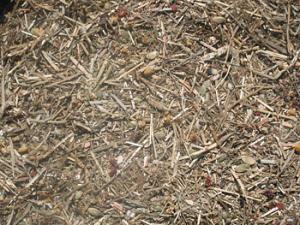
Chopped Hay Mixes: Chopped forage products are a blend of grass hays, some of which contain soy or vegetable oil. Necessary vitamins and minerals are sometimes included in these mixtures, so read the label. If extra nutrients are needed, chopped, bagged alfalfa with no additives can be useful; however, balancing it with other foods to keep the calcium/ phosphorus ratio to 2:1 is needed. If you cannot find a local farmer who could chop hay, an option is to use a clean chipper/ shredder to chop hay. Chopped forage makes a great carrier when feeding supplements and can also be fed as a complete ration. The mixture pictured contains a chopped timothy/ orchard grass hay with an added custom herbal blend and seed mix.
Hay Cubes: There are many brands of grass and alfalfa cubes. Some hay cubes are balanced with a vitamin/ mineral mix, but check the key ratios to ensure it meets your horse's needs and is truly balanced. Common key ratios include: 2 calcium:1 phosporus:1 magnesium, 1 copper:3 zinc:3 manganese, and 1 copper:6 iron.
Although these cubes are usually smaller in size than other hay cubes, it is a wise practice to never feed them dry unless they are completely broken apart into tiny pieces that resemble chopped forage to avoid any potential choking, colic, or tooth damage issues. Some older horses are nearing the ends of their teeth and they can become loosened prematurely by chewing hard substances. The easiest way to feed cubes for the winter is to pour hot water over them and let them soak for 20 to 40 minutes or until there are no hard pieces left. They will absorb the excess water, expand, and help to keep the horse hydrated. Prepare only the amount needed for that feeding to avoid freezing or spoilage. Herbs and supplements can be added to the soaked cubes to make a complete meal.
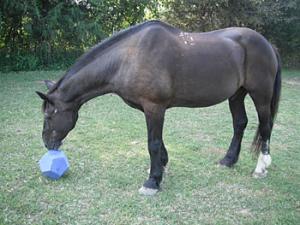
Hay Pellets: Make sure that the hay pellets used are hay only products, and that no fillers or unwanted ingredients are added. Years ago I was shocked to see that a bag of alfalfa pellets had animal fat added, so always ask to see the manufacturer's label before buying. Unless the pellets are very small and easy for the senior horses to chew, avoid the risk of choke and soak them too before feeding. Pellets can also be added to various treat toys to alleviate boredom.
Fermented hays:
These are usually available and can be beneficial in a senior horse's diet, if fed using common sense and stored with care. Fermented hays contain beneficial micro-organisms, are 'pre-digested' and highly absorbable, and can enhance digestion. Check with your holistic veterinarian for more information on using these for your horse.
Herbs and Seeds Add Natural Nutrients
Adding herbs and seeds to a variety of forage products offers a number of health care benefits as well as keeps meal times interesting with their different flavors and textures. Herbs and seeds also help balance the ration. Equally as important as the health benefits, the horses love having herbs and seeds mixed into their meals!
Burdock helps relieve dry, scurfy skin conditions and recurrent sores by cleansing the liver and kidneys.
Meadowsweet has been hailed as the "herbal aspirin" due to its salicylic acid content, which has anti-inflammatory properties and is useful for joint and muscle pain. It also protects the digestive tract and reduces excess acid, making it an excellent choice for ulcers and diarrhea.
Parsley is considered a digestive tonic that reduces flatulence, supports the kidneys and removes toxins that cause joint pain.
Rosemary has a wonderful fragrance, stimulates circulation and also contains antibacterial and antifungal properties.
Sesame, sunflower and pumpkin seeds all boast good amounts of minerals such as calcium, magnesium, phosphorus, potassium, copper and zinc, as well as vitamins B and E. Copper and zinc are considered to be critical to a horse's hoof and skin health. Another added benefit is that the amino acid cucurbitin, active in pumpkin seeds, has been shown to be effective in eliminating worms.
Flaxseed and hempseed provide essential omega-3 fatty acids (as do sesame and sunflower seeds), and other valuable nutrients.
Seeds also contain adequate amounts of protein, fiber and amino acids. Fresh seeds contain important utilizable fats, which can help maintain body weight during the colder months.
For senior horses, as for any horse, forage variety is important. Herbs, nuts and seeds add essential nutrients and help balance the diet while keeping meal times interesting. Spice up your senior horse's diet by offering him these nutritious options, and maybe this winter won't seem so harsh!
About the author:
Cindy Daigre is the founder and director of Ferrell Hollow Farm, an Equine Retirement facility in Tennessee focusing on the unique concerns of senior and special needs horses. In addition, she provides equine nutritional consultations and has developed a specialized line of natural horse care products.
www.ferrellhollowfarm.com
cindy@ferrellhollowfarm.com
In some parts of the country, winter can be especially harsh. Horses in their senior years often need extra assistance to stay warm and maintain a healthy weight. While this is written with the senior horse in mind, any horse who is recovering from an illness, undergoing stress, is a picky eater, or a challenge to maintain can benefit from these ideas.
Feeding wholesome, pure, and healthy foods to our horses is important. Inquire about organic farmers in your area, and see what they have to offer. It is worth the effort and they are worth supporting.
Since the grass is very limited in winter and the ground may be frozen, it is often necessary to make dietary changes to ensure the horses consume enough calories and have continuous access to forage. It is best to give supplemental feeds, such as grains and seeds, in smaller portions several times a day. There are a variety of hay feeders designed to keep horses eating and occupied for longer than when just putting out loose flakes of hay. Easy keepers and horses with digestive problems can benefit from being fed this way. They actually enjoy pulling and yanking on the bags, which can be placed low or on the ground for natural head height and used safely, because the holes are too small for a hoof to get caught in.
Forage Types
Grass hay is soft, tender, and easier for the senior horse to chew. It should be good quality and free of mold and dust. Testing the hay through an approved lab or local agricultural office can reveal the nutrient values, and any deficiencies that indicate the need for supplements. If you are unsure how much hay you will need for your horse, the suggested rate is 2-2.5% of your horse's ideal body weight in hay per day (20-25 lbs. daily for a 1000 lb. horse).
For horse caregivers concerned with the amount of sugar and starches they feed their horses, the rule of thumb is that no feed should have more than 10% non-structural carbohydrates (NSC). Since most commercially produced grains have well over that amount, it is much easier to accomplish this using a forage-based diet.
Fresh, non-processed forages and hays have the advantages, if the horse can process it himself by chewing and digesting it completely. However, the senior horse, especially as dental health declines, typically requires some compromises, such as chopping to make smaller forage particles. Supplements provide added nutrients and help make up for diminishing absorption capabilities, as well as what is lost by processing of feeds.
Easy to chew forage options include the following:
Chopped Hay Mixes: Chopped forage products are a blend of grass hays, some of which contain soy or vegetable oil. Necessary vitamins and minerals are sometimes included in these mixtures, so read the label. If extra nutrients are needed, chopped, bagged alfalfa with no additives can be useful; however, balancing it with other foods to keep the calcium/ phosphorus ratio to 2:1 is needed. If you cannot find a local farmer who could chop hay, an option is to use a clean chipper/ shredder to chop hay. Chopped forage makes a great carrier when feeding supplements and can also be fed as a complete ration. The mixture pictured contains a chopped timothy/ orchard grass hay with an added custom herbal blend and seed mix.
Hay Cubes: There are many brands of grass and alfalfa cubes. Some hay cubes are balanced with a vitamin/ mineral mix, but check the key ratios to ensure it meets your horse's needs and is truly balanced. Common key ratios include: 2 calcium:1 phosporus:1 magnesium, 1 copper:3 zinc:3 manganese, and 1 copper:6 iron.
Although these cubes are usually smaller in size than other hay cubes, it is a wise practice to never feed them dry unless they are completely broken apart into tiny pieces that resemble chopped forage to avoid any potential choking, colic, or tooth damage issues. Some older horses are nearing the ends of their teeth and they can become loosened prematurely by chewing hard substances. The easiest way to feed cubes for the winter is to pour hot water over them and let them soak for 20 to 40 minutes or until there are no hard pieces left. They will absorb the excess water, expand, and help to keep the horse hydrated. Prepare only the amount needed for that feeding to avoid freezing or spoilage. Herbs and supplements can be added to the soaked cubes to make a complete meal.
Hay Pellets: Make sure that the hay pellets used are hay only products, and that no fillers or unwanted ingredients are added. Years ago I was shocked to see that a bag of alfalfa pellets had animal fat added, so always ask to see the manufacturer's label before buying. Unless the pellets are very small and easy for the senior horses to chew, avoid the risk of choke and soak them too before feeding. Pellets can also be added to various treat toys to alleviate boredom.
Fermented hays:
These are usually available and can be beneficial in a senior horse's diet, if fed using common sense and stored with care. Fermented hays contain beneficial micro-organisms, are 'pre-digested' and highly absorbable, and can enhance digestion. Check with your holistic veterinarian for more information on using these for your horse.
Herbs and Seeds Add Natural Nutrients
Adding herbs and seeds to a variety of forage products offers a number of health care benefits as well as keeps meal times interesting with their different flavors and textures. Herbs and seeds also help balance the ration. Equally as important as the health benefits, the horses love having herbs and seeds mixed into their meals!
Burdock helps relieve dry, scurfy skin conditions and recurrent sores by cleansing the liver and kidneys.
Meadowsweet has been hailed as the "herbal aspirin" due to its salicylic acid content, which has anti-inflammatory properties and is useful for joint and muscle pain. It also protects the digestive tract and reduces excess acid, making it an excellent choice for ulcers and diarrhea.
Parsley is considered a digestive tonic that reduces flatulence, supports the kidneys and removes toxins that cause joint pain.
Rosemary has a wonderful fragrance, stimulates circulation and also contains antibacterial and antifungal properties.
Sesame, sunflower and pumpkin seeds all boast good amounts of minerals such as calcium, magnesium, phosphorus, potassium, copper and zinc, as well as vitamins B and E. Copper and zinc are considered to be critical to a horse's hoof and skin health. Another added benefit is that the amino acid cucurbitin, active in pumpkin seeds, has been shown to be effective in eliminating worms.
Flaxseed and hempseed provide essential omega-3 fatty acids (as do sesame and sunflower seeds), and other valuable nutrients.
Seeds also contain adequate amounts of protein, fiber and amino acids. Fresh seeds contain important utilizable fats, which can help maintain body weight during the colder months.
For senior horses, as for any horse, forage variety is important. Herbs, nuts and seeds add essential nutrients and help balance the diet while keeping meal times interesting. Spice up your senior horse's diet by offering him these nutritious options, and maybe this winter won't seem so harsh!
About the author:
Cindy Daigre is the founder and director of Ferrell Hollow Farm, an Equine Retirement facility in Tennessee focusing on the unique concerns of senior and special needs horses. In addition, she provides equine nutritional consultations and has developed a specialized line of natural horse care products.
www.ferrellhollowfarm.com
cindy@ferrellhollowfarm.com


