

Highgrove Farm Gets New Lease On Life
"If horses are worked daily, it’s better for them and for their feet."
by Nancy Brannon
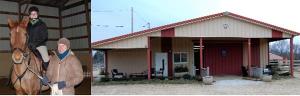
Kim Gentry’s new stabling and dressage facilities at Highgrove Farm, located at 741 Bray Station Road near Collierville, Tennessee, are ideal for her and her clients. “It has an indoor arena, which is one of the reasons we moved here,” she said. The indoor arena is a boon for keeping her horses and students in training. “We’ve done a lot of work on the place,” she said of getting it in shape and organized. “We have 29 stalls and have done a lot of renovations to the barn. We made the wash racks bigger; we’ve done a lot of painting and fixed up the indoor arena. We have lots of turnout paddocks. We have three separate barns,” which includes Kim’s office space in one and the manager’s office in another. “It’s a fabulous location: halfway between Germantown and Collierville.” Her full time barn manager, Glenn Strawn, lives just two doors down the road. She has watering systems in the indoor and outdoor arenas, and sound systems, which she uses for riding to music (Kur) and instruction.
Kim’s training program is modeled on the German system, and she believes in keeping horses in a steady routine. She works with German trainer Stephan Kiesewetter and regularly travels back and forth from the U.S. to Germany to train with him. “I just got back from Germany,” she said. “My horse is still there with him. He’s at one of the top sales facilities in Germany. I went seven times last year, a commute made easier because I was a groom for KLM airlines.” In turn, Stephan comes to her facility five times per year for clinics. “Going to Germany keeps me adjusted to that high level quality of riding and keeps my thinking several levels up. And a lot of my clients go to Germany to see how things are done. The horses there do something every day; it’s not good just to leave them in a stall. They have a structured routine of physical fitness building.” Kim maintains that structured routine in her program. “We work in all weather,” she continued. “I ride seven to nine horses a day and teach lessons to ten or fifteen regular students. Please note n we’re out here riding horses on the coldest day of the year.”
Kim explained the structure and requirements of the German riding system: “The German system is focused on the well-being of the horse, and their theories are based on years and years of experience. In Germany, riders have to take tests before they can show at particular levels. They must show their knowledge and ability to perform at that level. They even have to be certified or approved before they can keep a horse at home. The structured education begins at a very early age with kids in the riding program, so by the time they are adults, their theoretical knowledge is very strong and they’re very good riders n even amateurs. The kids give no back talk, and are encouraged to figure things out on their own. At German stables you will find International Grand Prix riders working, then you’ll see kid’s lessons.”
“The German system has a lot of compassion for the horse and the main focus is to keep the horse happy and healthy. I brought the German system here because it works. It has been hundreds of years in development. The differences between German culture and American culture are that in Germany, horses aren’t pets. Germans respect the horses and work them the correct way. They provide the right environment for the horse. The horses are exercised regularly and kept physically fit. If horses are worked daily, it’s better for them and for their feet. So, they have their routines and you get horses that are happy with what they do.”
Kim described her program as a wheel and she as trainer at the hub of the wheel. Spokes of the wheel include a farrier who has an understanding of the special needs of dressage horses. It includes rapport with a veterinarian and an acupuncturist, who supplement a regular feeding, nutrition, and horse health care program. Succeed® is part of her feeding and nutrition program. To make sure the tack is correct for both rider and horse, “I work with Schleese Saddlery for saddle fitting. I oversee all aspects of the horses’ health and well-being, which impact the horses’ success.”
“I want to provide good quality dressage instruction, rooted in classical training, and do what’s good for the horse and rider. The more independent I can help the rider be, the more I can teach riders to think, the more successful I am. This also means that riders take responsibility for their own learning. I create an environment for learning and that means sometimes I have to take riders out of their comfort zone. I have to challenge and stretch them a bit, and that is where learning and a sense of accomplishment take place.”
Kim’s students range in age from nine years to adults. “A good attitude toward learning is a must,” she said. One of her students, nineteen-year-old Hilary Martin of Collierville, TN recently went to Germany to start the Bereiter program. “She will be there for three years. Getting into the program is tough, even for Germans, so it says a lot for an American to be accepted. One must be an accomplished rider at Third Level and knowledgeable about theory and care of the horse to get into the program. She will even have to take her exams in German.”
Kim is a USDF certified Fourth Level instructor. “There are only about 55 instructors in the country who are certified to Third and Fourth Level,” she said. Her next project is to start a dressage program for the local Pony Club, with monthly lessons and theory instruction. More information about Kim Gentry Dressage can be found at: www.kimgentrydressage.com/.


