

Article & photos by Sara Beth Raab
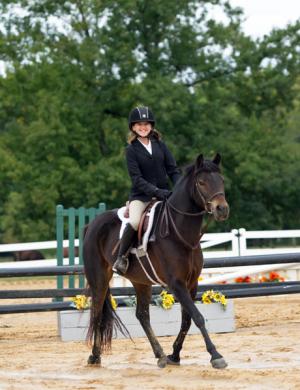
Oak View Stables, Olive Branch, MS hosted the third annual Melanie Smith Taylor clinic October 4-6, 2013. Auditors and riders enjoyed the hospitality of the Lawson family, and could easily see Melanie’s passion for the horse.
A Germantown, TN native, Melanie has quite an amazing show record. She studied under one of the hunter/jumper world’s greats, George Morris; she won American Grand Prix Association’s Lady Rider of the Year, Rider of the Year, and her horse, Val de Loire was named Horse of the Year. Her record continued with Calypso when she won the “triple crown” of show jumping: the American Invitational, the International Jumping Derby, and the American Gold Cup. She was part of the USET’s Gold Medal team in Puerto Rico and Olympic Team Gold Medalist in 1984.
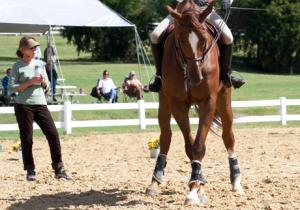
Melanie’s achievements derive from her empathy and understanding of the horse. Her lesson plan builds upon the basics of a horse’s nature. Trey Lawson explains: “Melanie is all about teaching students to be more efficient and effective in their riding. Riding by ‘feel’ is a more advanced communication technique that most aspiring riders, as well as seasoned veterans, underestimate.”
The concept of “feel” is often difficult for riders to understand, but Melanie conveyed it with clarity. Beginning with the warm up, she requires the riders to be very conscious of their energy. In order to increase their energy, riders should THINK “go” before asking “go” of the horse. “I want you to see how little you can do physically to get your horse to understand what you want,” Melanie explained. The riders practiced this “feel” by increasing and decreasing the horse’s stride from just a subtle suggestion by the riders’ energy. “When a rider offers FEEL to the horse, the horse gives softness back to the rider,” Melanie said.
Melanie is very attuned to the details of the horse’s psyche. For example, she rejects the tradition of a hard pat on the horse’s neck as a reward. “If you are rewarding a horse, I should not hear it!” she exclaims. “I want you to slap yourself on the leg; does that feel good? No! If you think that feels good to a horse you do not understand the horse. “
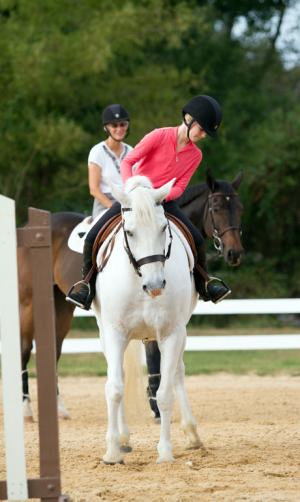
Melanie had some unique tasks for the horse and rider teams to attempt. One task was to have the horse step on an egg with their left front hoof. This builds the rider’s acuity in knowing exactly where each of the horse’s legs is at any given moment. It was interesting to watch how each horse tried to figure out the task.
Another warm up exercise she taught was to have the horse half pass over a pole between their front and back legs. The riders had varying degrees of success with the tasks. Some horses, like Trey Lawson’s Jumper Smoky, owned by Pam Hill, stepped easily sidewise over the ground pole. Others seemed rather perplexed by the idea of having a pole between the front and back legs.
She was very careful to not over face the horse and rider teams with these technical tasks. She explains: “What we want is a horse that is able to THINK about what we are asking. We want horses that are problem solvers.” Melanie was also quick to help the riders understand when their “training” session is complete. She told the rider, “That’s enough for today; he got the concept.”
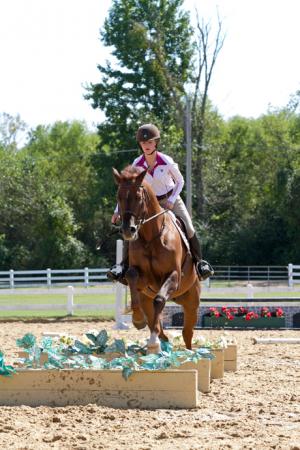
As the lessons moved past the warm up, it was clear that Melanie has high expectations of riders’ accuracy. Though the exercises may look simple, her requirements of perfection at the approach made them more challenging. One exercise was a row of narrow (four feet wide) flower boxes set with a short bounce stride between each. When riders had difficulty with the task, she suggested that they get a better “feel of the horse” by taking a wider approach to the line. She had some of the riders flip the position of the reins in their hands to a driver’s rein position, so that they had a better feel of where the horse was drifting. One class had some difficulty with these flower boxes. But Melanie was assertive in her request to finish this task. “If we cannot be accurate over these small fences, we cannot continue over larger jumps!” she explained.
In the more advanced group, she showed the riders how to develop the ability to ride different distances to a fence. She set up an oxer and vertical and had the riders direct their horses in short bouncy strides to the vertical, attempting a very short distance, and then she asked the riders for a bolder stride to the oxer for a longer stride and take off spot. Experience proved valuable, as some riders were easily able to have their mounts shorten and lengthen stride at each jump, making the transitions effortlessly. Less experienced riders had some homework to do. Taylor explained that being able to adjust your horse’s stride allows you to make a solid plan for riding any course, and proves valuable in a jump off or hunter course.
I highly recommend Melanie’s clinics. I was able to watch most of the weekend and never felt as though I was watching reruns of the same show. I could see how as the jumps go higher, the level of precision, accuracy, and requirements increase. This is the perfection Melanie looks for, which was as evident in the warm up time as in the jumping. The response from the riders and auditors was overwhelmingly positive. The opportunity to learn from such a storied rider, and experience her knowledgeable perspective on the subtleties of riding, was invaluable.
For more information about Taylor-Made Horsemanship Clinics and Melanie Smith Taylor, visit her website: http://taylormadehorsemanship.com/
Oak View Stables, Olive Branch, MS hosted the third annual Melanie Smith Taylor clinic October 4-6, 2013. Auditors and riders enjoyed the hospitality of the Lawson family, and could easily see Melanie’s passion for the horse.
A Germantown, TN native, Melanie has quite an amazing show record. She studied under one of the hunter/jumper world’s greats, George Morris; she won American Grand Prix Association’s Lady Rider of the Year, Rider of the Year, and her horse, Val de Loire was named Horse of the Year. Her record continued with Calypso when she won the “triple crown” of show jumping: the American Invitational, the International Jumping Derby, and the American Gold Cup. She was part of the USET’s Gold Medal team in Puerto Rico and Olympic Team Gold Medalist in 1984.
Melanie’s achievements derive from her empathy and understanding of the horse. Her lesson plan builds upon the basics of a horse’s nature. Trey Lawson explains: “Melanie is all about teaching students to be more efficient and effective in their riding. Riding by ‘feel’ is a more advanced communication technique that most aspiring riders, as well as seasoned veterans, underestimate.”
The concept of “feel” is often difficult for riders to understand, but Melanie conveyed it with clarity. Beginning with the warm up, she requires the riders to be very conscious of their energy. In order to increase their energy, riders should THINK “go” before asking “go” of the horse. “I want you to see how little you can do physically to get your horse to understand what you want,” Melanie explained. The riders practiced this “feel” by increasing and decreasing the horse’s stride from just a subtle suggestion by the riders’ energy. “When a rider offers FEEL to the horse, the horse gives softness back to the rider,” Melanie said.
Melanie is very attuned to the details of the horse’s psyche. For example, she rejects the tradition of a hard pat on the horse’s neck as a reward. “If you are rewarding a horse, I should not hear it!” she exclaims. “I want you to slap yourself on the leg; does that feel good? No! If you think that feels good to a horse you do not understand the horse. “
Melanie had some unique tasks for the horse and rider teams to attempt. One task was to have the horse step on an egg with their left front hoof. This builds the rider’s acuity in knowing exactly where each of the horse’s legs is at any given moment. It was interesting to watch how each horse tried to figure out the task.
Another warm up exercise she taught was to have the horse half pass over a pole between their front and back legs. The riders had varying degrees of success with the tasks. Some horses, like Trey Lawson’s Jumper Smoky, owned by Pam Hill, stepped easily sidewise over the ground pole. Others seemed rather perplexed by the idea of having a pole between the front and back legs.
She was very careful to not over face the horse and rider teams with these technical tasks. She explains: “What we want is a horse that is able to THINK about what we are asking. We want horses that are problem solvers.” Melanie was also quick to help the riders understand when their “training” session is complete. She told the rider, “That’s enough for today; he got the concept.”
As the lessons moved past the warm up, it was clear that Melanie has high expectations of riders’ accuracy. Though the exercises may look simple, her requirements of perfection at the approach made them more challenging. One exercise was a row of narrow (four feet wide) flower boxes set with a short bounce stride between each. When riders had difficulty with the task, she suggested that they get a better “feel of the horse” by taking a wider approach to the line. She had some of the riders flip the position of the reins in their hands to a driver’s rein position, so that they had a better feel of where the horse was drifting. One class had some difficulty with these flower boxes. But Melanie was assertive in her request to finish this task. “If we cannot be accurate over these small fences, we cannot continue over larger jumps!” she explained.
In the more advanced group, she showed the riders how to develop the ability to ride different distances to a fence. She set up an oxer and vertical and had the riders direct their horses in short bouncy strides to the vertical, attempting a very short distance, and then she asked the riders for a bolder stride to the oxer for a longer stride and take off spot. Experience proved valuable, as some riders were easily able to have their mounts shorten and lengthen stride at each jump, making the transitions effortlessly. Less experienced riders had some homework to do. Taylor explained that being able to adjust your horse’s stride allows you to make a solid plan for riding any course, and proves valuable in a jump off or hunter course.
I highly recommend Melanie’s clinics. I was able to watch most of the weekend and never felt as though I was watching reruns of the same show. I could see how as the jumps go higher, the level of precision, accuracy, and requirements increase. This is the perfection Melanie looks for, which was as evident in the warm up time as in the jumping. The response from the riders and auditors was overwhelmingly positive. The opportunity to learn from such a storied rider, and experience her knowledgeable perspective on the subtleties of riding, was invaluable.
For more information about Taylor-Made Horsemanship Clinics and Melanie Smith Taylor, visit her website: http://taylormadehorsemanship.com/


