

By Dr. Bridgett McIntosh
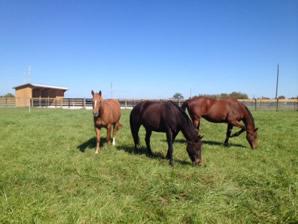
For the first time, the University of Tennessee is focusing on equine research and education through a new facility devoted to horse farm best management practices (BMPs). The UT Equine Extension and Research Center, located at the Middle Tennessee AgResearch and Education Center in Spring Hill, TN serves as a model demonstration farm where UT researchers are examining and showcasing management practices that reduce the environmental impact of horse farms and optimize the health of horses. The facility is focused on simple management practices that will reduce overgrazing and nonpoint source (NPS) pollution, including forage management and rotational grazing, composting manure, heavy use areas, and fencing.
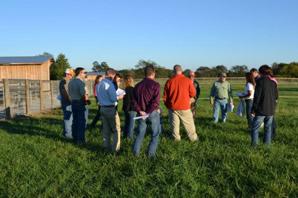
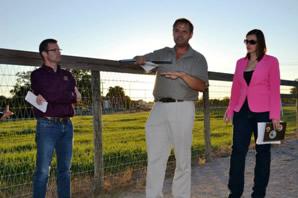
The main focus of the facility is to provide a statewide educational program to teach horse owners and farm operators how to implement conservation practices on their own farms. The facility hosts “Pasture Walks” and other educational events throughout the year that effectively teaches participants how to reduce environmental impact by incorporating BMP’s that reduce siltation, nutrients, and pathogens caused by poorly managed horse pastures. The most recent “Pasture Walk” was hosted on October 8, 2013 where participants learned how to improve their management practices in a hands-on demonstration and tour of the BMPs showcased at the facility. This particular “Pasture Walk” focused on seasonal pasture management and weed control to optimize the nutritional value of the pasture forage, and how to effectively and economically compost horse manure. The event was free and open to the public. The next “Pasture Walk” will be held on May 6, 2014.
The equine industry is an important component of Tennessee agriculture. With over 40,000 horse farms in the state, the need for research and educational programs that promote BMPs is extremely important for sustainability. The UT Equine Extension and Research Center is funded by a grant provided by the Tennessee Department of Agriculture’s NPS 319 Water Quality Program, with additional industry partners including the Tennessee Farmers Cooperative, Allied Seed, Merial, Mirafount and Speedright fencing. For more information about the UT Equine Extension and Research Center and upcoming educational programs please contact Dr. Bridgett McIntosh (931) 486-2777 or bmcintosh@utk.edu.
For the first time, the University of Tennessee is focusing on equine research and education through a new facility devoted to horse farm best management practices (BMPs). The UT Equine Extension and Research Center, located at the Middle Tennessee AgResearch and Education Center in Spring Hill, TN serves as a model demonstration farm where UT researchers are examining and showcasing management practices that reduce the environmental impact of horse farms and optimize the health of horses. The facility is focused on simple management practices that will reduce overgrazing and nonpoint source (NPS) pollution, including forage management and rotational grazing, composting manure, heavy use areas, and fencing.
The main focus of the facility is to provide a statewide educational program to teach horse owners and farm operators how to implement conservation practices on their own farms. The facility hosts “Pasture Walks” and other educational events throughout the year that effectively teaches participants how to reduce environmental impact by incorporating BMP’s that reduce siltation, nutrients, and pathogens caused by poorly managed horse pastures. The most recent “Pasture Walk” was hosted on October 8, 2013 where participants learned how to improve their management practices in a hands-on demonstration and tour of the BMPs showcased at the facility. This particular “Pasture Walk” focused on seasonal pasture management and weed control to optimize the nutritional value of the pasture forage, and how to effectively and economically compost horse manure. The event was free and open to the public. The next “Pasture Walk” will be held on May 6, 2014.
The equine industry is an important component of Tennessee agriculture. With over 40,000 horse farms in the state, the need for research and educational programs that promote BMPs is extremely important for sustainability. The UT Equine Extension and Research Center is funded by a grant provided by the Tennessee Department of Agriculture’s NPS 319 Water Quality Program, with additional industry partners including the Tennessee Farmers Cooperative, Allied Seed, Merial, Mirafount and Speedright fencing. For more information about the UT Equine Extension and Research Center and upcoming educational programs please contact Dr. Bridgett McIntosh (931) 486-2777 or bmcintosh@utk.edu.


