

By Dr. Eleanor Kellon, VMD, Staff Veterinary Specialist for Uckele Health & Nutrition
Laminitis in pastured horses peaks in the spring. There is also a smaller cluster of cases seen in the fall. To understand the reason, you have to look to the causes.
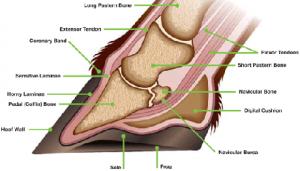
The hoof is the horse's “shock organ” - the area of the body most vulnerable to injury during a serious health crisis. Circulating bacterial products from serious infections (e.g. retained placenta, systemic Strep equi/Strangles) are among the triggers, either from damage to the intestinal wall caused by various forms of colic or intestinal infections like Salmonella or Potomac Horse Fever.
The familiar scenario of laminitis after a horse has gotten unlimited access to grain is also related to intestinal damage that has allowed bacteria access to the body. In that case, the amount of starch is too much for the enzymes in the small intestine to digest. Starch spilling over into the large intestine is rapidly fermented, causing acidic conditions that damage the bowel wall.
When a horse develops laminitis under the above conditions, the cause is usually obvious. However, they only account for a relatively small percentage of laminitis cases.
Review of case histories in a large veterinary hospital found that 80+% of cases of laminitis are related to endocrine disorders – insulin resistance or Cushing's disease, which causes insulin resistance. Insulin resistance/IR is a condition in which the insulin sensitive cells, especially skeletal muscle and fat, do not respond normally to the hormone insulin, whose job is to get glucose into the cells. As a result, much higher than normal levels of insulin are needed to get the job done.
Studies in normal (not IR) ponies and Standardbred horses demonstrated that high levels of insulin, produced by an intravenous infusion of insulin, are able to cause laminitis. The mechanism is not known yet, but one possibility is circulation. Under normal conditions, insulin keeps blood vessels open/dilated, helping ensure good blood supply. When hormones are present in very high amounts, the receptors for those hormones can become refractory to the effects. The end result would be impaired blood flow to the laminae.
What does all of this have to do with fall laminitis? Beginning late August and into the fall, horses experience a rise in the pituitary hormone ACTH. ACTH is the hormone that causes cortisol release from the adrenal gland. For most horses, this is not a problem. However, increased cortisol will worsen insulin resistance and can push IR horses over the edge into laminitis. Also, horses in the early stages of Cushing's disease, which is also characterized by increased levels of ACTH, have an exaggerated release of the hormone in the fall. This can be high enough to push them into insulin resistance and laminitis. In fact, an unexplained fall laminitis is sometimes the very first symptom of Cushing's disease.
There's nothing we can do to prevent the ACTH rise, but you can be alert for signs the horse could be getting in trouble. Look for increased water consumption and urination, weight gain without change in diet, increasing fat deposits along the neck, tail base, shoulders or other abnormal location, depression. Early signs of laminitis can include reduced activity, reluctance to move when asked, tenderness on hard ground, shortened stride, stiff movements and reluctance to turn.
If you see suspicious signs, contact your veterinarian about checking ACTH levels and starting the horse on pergolide to control ACTH levels. Herbal treatment with Vitex agnus-castus (Chastetree berry) can be used but is not as reliable as pergolide.
Diet is also extremely important when dealing with IR and laminitis risk. A hay based diet with hay containing no more than 10% sugar (ESC on analysis) and starch combined is the cornerstone, with minerals balanced, supplemental vitamin E and salt.
If your horse does end up with laminitis, supplements to enhance blood flow can help. These include the herb Jiaogulan (Gynostemma pentaphyllum) and the amino acid arginine, as well as citrulline. Taurine has been found in a recent study to improve insulin sensitivity. L-glutamine is also useful to support antioxidant glutathione and carnitine derivatives for treatment of neuropathic pain and help with insulin sensitivity.
One of the most devastating effects of fall laminitis is that it can appear to strike out of nowhere. However, if you know and are alert to the warning signs, you can intervene and protect your horse before disaster strikes.
Laminitis in pastured horses peaks in the spring. There is also a smaller cluster of cases seen in the fall. To understand the reason, you have to look to the causes.
The hoof is the horse's “shock organ” - the area of the body most vulnerable to injury during a serious health crisis. Circulating bacterial products from serious infections (e.g. retained placenta, systemic Strep equi/Strangles) are among the triggers, either from damage to the intestinal wall caused by various forms of colic or intestinal infections like Salmonella or Potomac Horse Fever.
The familiar scenario of laminitis after a horse has gotten unlimited access to grain is also related to intestinal damage that has allowed bacteria access to the body. In that case, the amount of starch is too much for the enzymes in the small intestine to digest. Starch spilling over into the large intestine is rapidly fermented, causing acidic conditions that damage the bowel wall.
When a horse develops laminitis under the above conditions, the cause is usually obvious. However, they only account for a relatively small percentage of laminitis cases.
Review of case histories in a large veterinary hospital found that 80+% of cases of laminitis are related to endocrine disorders – insulin resistance or Cushing's disease, which causes insulin resistance. Insulin resistance/IR is a condition in which the insulin sensitive cells, especially skeletal muscle and fat, do not respond normally to the hormone insulin, whose job is to get glucose into the cells. As a result, much higher than normal levels of insulin are needed to get the job done.
Studies in normal (not IR) ponies and Standardbred horses demonstrated that high levels of insulin, produced by an intravenous infusion of insulin, are able to cause laminitis. The mechanism is not known yet, but one possibility is circulation. Under normal conditions, insulin keeps blood vessels open/dilated, helping ensure good blood supply. When hormones are present in very high amounts, the receptors for those hormones can become refractory to the effects. The end result would be impaired blood flow to the laminae.
What does all of this have to do with fall laminitis? Beginning late August and into the fall, horses experience a rise in the pituitary hormone ACTH. ACTH is the hormone that causes cortisol release from the adrenal gland. For most horses, this is not a problem. However, increased cortisol will worsen insulin resistance and can push IR horses over the edge into laminitis. Also, horses in the early stages of Cushing's disease, which is also characterized by increased levels of ACTH, have an exaggerated release of the hormone in the fall. This can be high enough to push them into insulin resistance and laminitis. In fact, an unexplained fall laminitis is sometimes the very first symptom of Cushing's disease.
There's nothing we can do to prevent the ACTH rise, but you can be alert for signs the horse could be getting in trouble. Look for increased water consumption and urination, weight gain without change in diet, increasing fat deposits along the neck, tail base, shoulders or other abnormal location, depression. Early signs of laminitis can include reduced activity, reluctance to move when asked, tenderness on hard ground, shortened stride, stiff movements and reluctance to turn.
If you see suspicious signs, contact your veterinarian about checking ACTH levels and starting the horse on pergolide to control ACTH levels. Herbal treatment with Vitex agnus-castus (Chastetree berry) can be used but is not as reliable as pergolide.
Diet is also extremely important when dealing with IR and laminitis risk. A hay based diet with hay containing no more than 10% sugar (ESC on analysis) and starch combined is the cornerstone, with minerals balanced, supplemental vitamin E and salt.
If your horse does end up with laminitis, supplements to enhance blood flow can help. These include the herb Jiaogulan (Gynostemma pentaphyllum) and the amino acid arginine, as well as citrulline. Taurine has been found in a recent study to improve insulin sensitivity. L-glutamine is also useful to support antioxidant glutathione and carnitine derivatives for treatment of neuropathic pain and help with insulin sensitivity.
One of the most devastating effects of fall laminitis is that it can appear to strike out of nowhere. However, if you know and are alert to the warning signs, you can intervene and protect your horse before disaster strikes.


