

By Nancy Brannon
Unless they are Mustangs roaming wild, horses generally depend for feed and care on their human caretakers. That care ranges on a broad continuum from quality care in modest surroundings to meticulous care in the richest settings. Recently, veterinarians at the University of Tennessee College of Veterinary Medicine (UTCVM) in Knoxville have been working with horses from both ends of the extreme – from severe neglect to meticulous care.
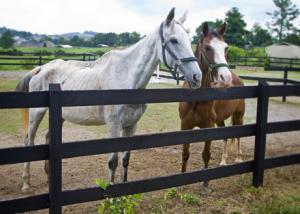
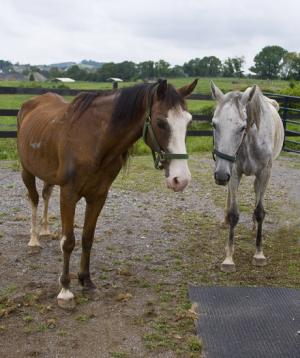
On July 10, 2013 seven malnourished and starving horses were seized from the farm of James Crafton Ford, Jr., Gravelly Hills Road in Maryville, TN. The Blount County SPCA and the Sheriff’s Department made the seizure, and Horse Haven of Tennessee transported and houses the horses. Ford was arrested on charges of animal cruelty, but was out on $1,000 bond until his hearing July 17 in Blount County General Sessions Court.
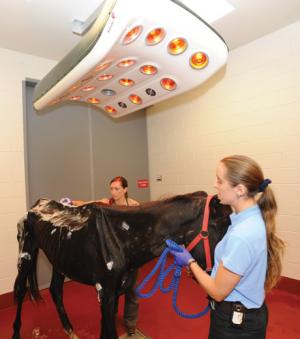
One of the horses, named Pugsley by rescuers, a 15-month old colt, was so emaciated that at only 500 pounds, he had no muscle and did not have the strength to stand on his own. After spending the night at UT with four of the other horses, he was taken to Horse Haven, only to return a few days later because he couldn’t get up on his own. At UTCVM, doctors put the UC Davis Sling to use.“It is difficult to pick up a horse of this size without a sling, and it's not safe either,” said Dr. Karen McCormick, UTCVM veterinarian. On a body score scale from one to ten, Pugsley rated a one. “It’s the second worst case I’ve seen, but the youngest,” Dr. McCormick said.
After a brief stay at UTCVM, the other horses were taken to Horse Haven of Tennessee for care, but Pugsley remained in the veterinary hospital in critical condition. In addition to weakness, he had “[wounds] on his shoulders, elbow, and hip from being recumbent – that’s basically bedsores,” Dr. McCormick explained. “Horses aren't meant to lie down for extended periods of time; they're meant to be up and around and eating continuously like they do in the wild.”
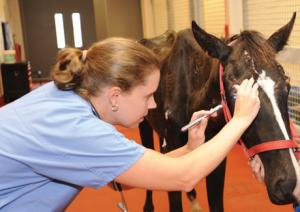
He also had a skin disease and an ulcer in his eyes, more signs he had suffered neglect. “It's really sad to see a horse like this that’s probably never had any kind of normal life,” Dr. McCormick said. “I think he knows we're trying to help him. And he is really sweet for probably not having had much human interaction before.”
In spite of all the work from the healthcare team, Pugsley did not survive. Pugsley's UTCVM healthcare team and Horse Haven made a joint decision to humanely euthanize him July 19th after he took a turn for the worse and couldn't get back on his feet. His blood sugar level had deteriorated quickly, and he lost his appetite and what little strength he had left.
The other six horses remain at Horse Haven, being slowly brought back with a regular feeding program and “are doing well,” said Sonja Cowsert with Horse Haven. “Pugsley was still nursing when he was rescued and that was probably the only food he got. He had so many scrapes on him, and at times he would just give up and lay down.”
Pugsley’s bill cost Horse Haven about $100 per day, even with discounts on some things. “The UT staff were wonderfully available to the horses. They have facilities that no one else has,” said Cowsert. “The Davis Sling was so helpful. Horses can lay down in it and then be hoisted back up as needed.” The horses have had Coggins tests, been vaccinated as their body condition allowed, and have had a visit with the farrier.
Horse Haven primarily feeds Purina Strategy and has seen great results. “We don’t feed anything special – just what’s available to the general public,” Cowsert said. “We exclusively feed pelleted feed because it’s easier to digest, and easier to chew, especially for horses with teeth problems.”
According to Dr. McCormick, bringing a horse back from starvation is a really slow process that takes place to prevent refeeding syndrome, an electrolyte and mineral imbalance that can cause their body to shut down. “Your first instinct is to just give the horse all the food he can eat, but you can kill him with that. The key is controlled feeding, not only with the amount, but also the makeup of the diet.” The entire process can take several months.
At the other end of the horse care spectrum are the Budweiser Clydesdales, who get the ultimate care from a team of caretakers, including Dr. Steve Adair. Dr. Adair is a board-certified veterinary surgeon at UTCVM, and for the past year, his resume has also included “Anheuser-Busch.”
Adair serves as a herd health adviser for the Clydesdales, an unbiased consultant who visits periodically to check on the horses and update the herd’s administrators on equine issues around the country. The job takes him to St. Louis, Missouri, as well as other hitch locations around the country. On occasion, the horses have come to him in Knoxville.
“Whenever you've got an individual that does the work they do, you've got to make sure they’re in good health,” he explained.
The University of Tennessee first partnered with Anheuser-Busch in the early 1980s. Dr. Dallas Goble, Dr. Dennis Geiser, and Dr. John Hinton were a part of the original UT herd health advising team. Adair took over the role when his long-time mentor, Goble, retired.
Budweiser owns about 170 Clydesdales around the United States. The horses chosen to join one of Budweiser’s hitch teams must meet certain qualifications: a white blaze, a black mane and tail, the correct bay coloring, and four white stockings.
Considering the breeding, traveling, and caring for the horses, it’s a big investment. The herd’s very specific diet provides an example of that. “We look at them and make sure they're not too light, not too heavy, and we make adjustments on each diet individually, based on that individual’s need,” Adair said.
Budweiser also partners with a special hay producer to manage diet consistency. Each week, the food is shipped directly to wherever the Clydesdales are working. This assures that the horses’ diets are consistent and sufficiently nutritious.
Adair said he enjoys his time traveling the country to visit the Clydesdales, and champions Budweiser for the company’s commitment to the herd’s health. Above all, he loves the horses. “It’s phenomenal being able to work with them. I’m very privileged, and honored.”
If you wish to donate to the rescue efforts at Horse Haven of Tennessee, checks can be sent to: PO Box 22841, Knoxville, TN 37933, or donations of Purina Strategy feed can be delivered in person to 2417 Reagan Road, Knoxville, TN
Photo credit:
(Adams family photos by Linda Ripley, Ripley Photography)
(UTCVM photos by Phil Snow, UT College of Veterinary Medicine)
Unless they are Mustangs roaming wild, horses generally depend for feed and care on their human caretakers. That care ranges on a broad continuum from quality care in modest surroundings to meticulous care in the richest settings. Recently, veterinarians at the University of Tennessee College of Veterinary Medicine (UTCVM) in Knoxville have been working with horses from both ends of the extreme – from severe neglect to meticulous care.
On July 10, 2013 seven malnourished and starving horses were seized from the farm of James Crafton Ford, Jr., Gravelly Hills Road in Maryville, TN. The Blount County SPCA and the Sheriff’s Department made the seizure, and Horse Haven of Tennessee transported and houses the horses. Ford was arrested on charges of animal cruelty, but was out on $1,000 bond until his hearing July 17 in Blount County General Sessions Court.
One of the horses, named Pugsley by rescuers, a 15-month old colt, was so emaciated that at only 500 pounds, he had no muscle and did not have the strength to stand on his own. After spending the night at UT with four of the other horses, he was taken to Horse Haven, only to return a few days later because he couldn’t get up on his own. At UTCVM, doctors put the UC Davis Sling to use.“It is difficult to pick up a horse of this size without a sling, and it's not safe either,” said Dr. Karen McCormick, UTCVM veterinarian. On a body score scale from one to ten, Pugsley rated a one. “It’s the second worst case I’ve seen, but the youngest,” Dr. McCormick said.
After a brief stay at UTCVM, the other horses were taken to Horse Haven of Tennessee for care, but Pugsley remained in the veterinary hospital in critical condition. In addition to weakness, he had “[wounds] on his shoulders, elbow, and hip from being recumbent – that’s basically bedsores,” Dr. McCormick explained. “Horses aren't meant to lie down for extended periods of time; they're meant to be up and around and eating continuously like they do in the wild.”
He also had a skin disease and an ulcer in his eyes, more signs he had suffered neglect. “It's really sad to see a horse like this that’s probably never had any kind of normal life,” Dr. McCormick said. “I think he knows we're trying to help him. And he is really sweet for probably not having had much human interaction before.”
In spite of all the work from the healthcare team, Pugsley did not survive. Pugsley's UTCVM healthcare team and Horse Haven made a joint decision to humanely euthanize him July 19th after he took a turn for the worse and couldn't get back on his feet. His blood sugar level had deteriorated quickly, and he lost his appetite and what little strength he had left.
The other six horses remain at Horse Haven, being slowly brought back with a regular feeding program and “are doing well,” said Sonja Cowsert with Horse Haven. “Pugsley was still nursing when he was rescued and that was probably the only food he got. He had so many scrapes on him, and at times he would just give up and lay down.”
Pugsley’s bill cost Horse Haven about $100 per day, even with discounts on some things. “The UT staff were wonderfully available to the horses. They have facilities that no one else has,” said Cowsert. “The Davis Sling was so helpful. Horses can lay down in it and then be hoisted back up as needed.” The horses have had Coggins tests, been vaccinated as their body condition allowed, and have had a visit with the farrier.
Horse Haven primarily feeds Purina Strategy and has seen great results. “We don’t feed anything special – just what’s available to the general public,” Cowsert said. “We exclusively feed pelleted feed because it’s easier to digest, and easier to chew, especially for horses with teeth problems.”
According to Dr. McCormick, bringing a horse back from starvation is a really slow process that takes place to prevent refeeding syndrome, an electrolyte and mineral imbalance that can cause their body to shut down. “Your first instinct is to just give the horse all the food he can eat, but you can kill him with that. The key is controlled feeding, not only with the amount, but also the makeup of the diet.” The entire process can take several months.
At the other end of the horse care spectrum are the Budweiser Clydesdales, who get the ultimate care from a team of caretakers, including Dr. Steve Adair. Dr. Adair is a board-certified veterinary surgeon at UTCVM, and for the past year, his resume has also included “Anheuser-Busch.”
Adair serves as a herd health adviser for the Clydesdales, an unbiased consultant who visits periodically to check on the horses and update the herd’s administrators on equine issues around the country. The job takes him to St. Louis, Missouri, as well as other hitch locations around the country. On occasion, the horses have come to him in Knoxville.
“Whenever you've got an individual that does the work they do, you've got to make sure they’re in good health,” he explained.
The University of Tennessee first partnered with Anheuser-Busch in the early 1980s. Dr. Dallas Goble, Dr. Dennis Geiser, and Dr. John Hinton were a part of the original UT herd health advising team. Adair took over the role when his long-time mentor, Goble, retired.
Budweiser owns about 170 Clydesdales around the United States. The horses chosen to join one of Budweiser’s hitch teams must meet certain qualifications: a white blaze, a black mane and tail, the correct bay coloring, and four white stockings.
Considering the breeding, traveling, and caring for the horses, it’s a big investment. The herd’s very specific diet provides an example of that. “We look at them and make sure they're not too light, not too heavy, and we make adjustments on each diet individually, based on that individual’s need,” Adair said.
Budweiser also partners with a special hay producer to manage diet consistency. Each week, the food is shipped directly to wherever the Clydesdales are working. This assures that the horses’ diets are consistent and sufficiently nutritious.
Adair said he enjoys his time traveling the country to visit the Clydesdales, and champions Budweiser for the company’s commitment to the herd’s health. Above all, he loves the horses. “It’s phenomenal being able to work with them. I’m very privileged, and honored.”
If you wish to donate to the rescue efforts at Horse Haven of Tennessee, checks can be sent to: PO Box 22841, Knoxville, TN 37933, or donations of Purina Strategy feed can be delivered in person to 2417 Reagan Road, Knoxville, TN
Photo credit:
(Adams family photos by Linda Ripley, Ripley Photography)
(UTCVM photos by Phil Snow, UT College of Veterinary Medicine)


