

Article and photos by Nancy Brannon
Many folks visited the Strawberry Plains Audubon Center (SPAC), Holly Springs, Mississippi, for their annual Hummingbird Migration Celebration September 7-9. A surprise highlight this month, along with the Blue Moon, was the sighting of a rare leucistic ruby-throated hummingbird. Leucistic hummingbirds are aberrant color morphs that lack pigment throughout most of their feathers, though spots of rusty or tawny feathers are typical. They are not, however, true albinos.
But hummingbirds are not the only thing that Strawberry Plains Audubon Center is about. The rest of the year, staff at the center are all about nurturing and maintaining a variety of habitats that attract, feed, and house a variety of wildlife, and educating people about their value. You may already have many of these around your yard, barn, or farm, too, and may not realize their value. My guides Kristin Lamberson and Andrea Schuhmann, wildlife biologist SPAC, showed me a variety of habitats surrounding the antebellum Davis Home.
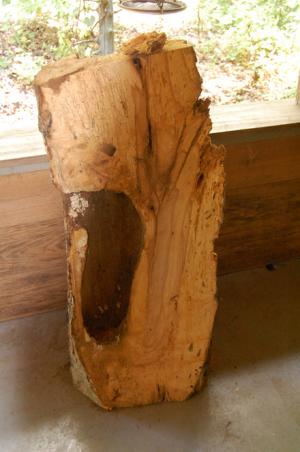
“Diversity is the key,” said Kristin. “The more diversity of planting, the more beneficial insects, the more birds, the more birds eating flies and other insects that bite our horses!” The cycles of nature generally work for the benefit of all beings. Beginning at the education/office building, you’ll see a dead tree with a tower of pipe vine, [DSC_0388], and a section of a dead tree with a huge cavity that once housed a pileated woodpecker and family [DSC_0394]. “Pipe vine is the host for the Pipe vine swallowtail butterfly. Passion vine is also a host plant,” Kristin said. “It’s host plant for a few Fritillary butterflies, mainly the Gulf Fritillary, that we see in September laying its eggs on the leaves. This vine usually grows wild in pastures.” You can see the remnants of a pipevine chrysalis under the roof of the porch. You’ll find a bird’s nest in the eaves of the porch as well. [DSC_0391 & 0392]
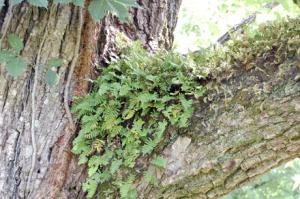
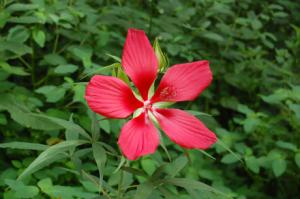
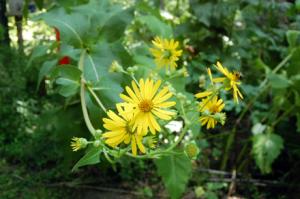
Another dead tree in the yard next to the historic Davis Home provides the center for a variety of native wildflowers: sunflower, goldenrod, native grasses, pokeweed (“Birds love it!” Kristin said), Agastache which has purple flowers, dog fennel, Joe Pye weed (named after Dr. Joe Pye), resurrection ferns in the bough of a tree, and many others. [DSC_0255]. Further along the way one can see jewelweed, with its yellow-orange flowers, native hibiscus, which blooms along the Wolf River, the white flowers of snakeroot, and yellow hyssop. A word of warning: you probably don’t want snakeroot in your pasture because of its toxicity, but in areas not accessible by animals, it has beautiful white blooms with a sweet, fragrant aroma.
The historic home has built-in corner structures made specifically to accommodate nests made by Eastern Phoebes, but Carolina wrens find them attractive, too. There’s also elderberry, and river oats nearby. “All this is important to have cover for the birds and provide free food,” Kristin said.
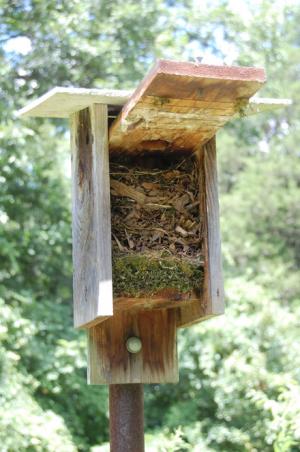
Behind the house is a vernal pool that is a pond in the wet season and dries up in the summer. It provides habitat for salamander, dragonflies, frogs and all kinds of amphibians, turtles, etc. “The dry time is important to alleviate predators for amphibians,” Kristin said. But in the wet season, it attracts wood ducks, prothonatory warblers, and other birds. “It’s important to have structural diversity, too,” Kristin said. “Crevices, holes all can provide shelter.
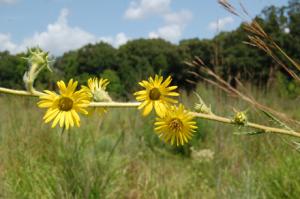
Further back the native plant meadow teems with wildflowers and native grasses that prefer open, sunny habitat. “Native grasses have amazing root systems to help them survive drought,” Kristin explained. The meadow is great quail habitat, as well as for other ground nesting birds.
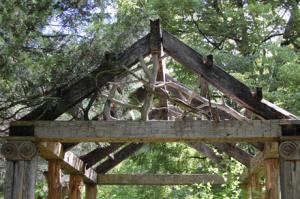
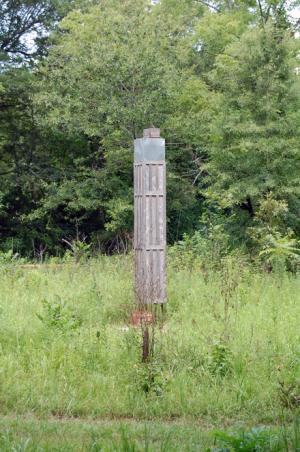
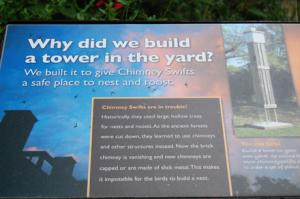
At various locations, Chimney Swift towers provide homes for birds that are so adept at catching insects like mosquitos. There are also bat houses for the nocturnal insect catchers. “It’s like a changing of the guards,” Kristin explained. “The bats go out for the night at about the same time the chimney swifts come in for the night. Bats provide approximately $21 billion worth of pest control a year. They eat 18 species of ‘pests.’”
“Host plants are very important,” Kristen emphasized. “Pawpaw trees are hosts for Zebra Swallowtail butterflies. Milkweed is host for the Monarch butterfly.”
“Insects and birds distribute seeds,” she explained. “Some mushroom spores are spread by flies, for example stinkhorn.”
When folks look at a leaf and see that it is full of holes, the first reaction might be to go find an insecticide. But don’t! “Lacing in the leaf is an indicator of tiny caterpillars, and birds come to eat them,” Kristin explained.
And in case you didn’t know, wood sorrel is edible. It has a lemony taste and is a source of oxalic acid and vitamin C.
Blueberry bushes adorn the front yard of the historic house. “They are easy to grow, drought tolerant, and have large yields. They require full sun,” Kristin explained. People food!
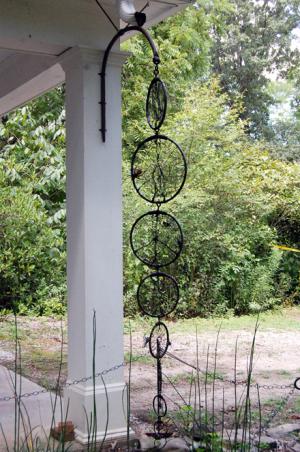
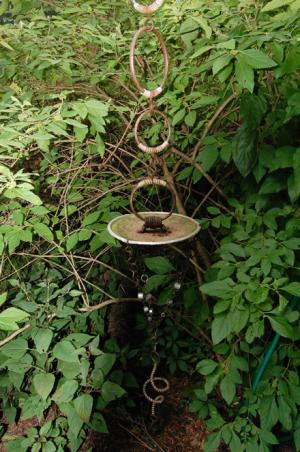
Next to the house carport you’ll find a rain garden. And, of course, the main attraction is the vast hummingbird “sanctuary” in the back yard with a variety of plants and feeders that provide ample food and viewing opportunities for the colorful, energetic avians.
So consider creating and maintaining a Living Garden in an area around your home, barn, or farm. Plants form the skeleton of the garden, with a variety of colorful flowers, supporting a living network of entities drawn to the space, including beneficial insects, birds, amphibians, and many other kinds of “critters” – all providing a world of free ecosystems services to enhance your life. For more information, visit http://strawberryplains.audubon.org
Many folks visited the Strawberry Plains Audubon Center (SPAC), Holly Springs, Mississippi, for their annual Hummingbird Migration Celebration September 7-9. A surprise highlight this month, along with the Blue Moon, was the sighting of a rare leucistic ruby-throated hummingbird. Leucistic hummingbirds are aberrant color morphs that lack pigment throughout most of their feathers, though spots of rusty or tawny feathers are typical. They are not, however, true albinos.
But hummingbirds are not the only thing that Strawberry Plains Audubon Center is about. The rest of the year, staff at the center are all about nurturing and maintaining a variety of habitats that attract, feed, and house a variety of wildlife, and educating people about their value. You may already have many of these around your yard, barn, or farm, too, and may not realize their value. My guides Kristin Lamberson and Andrea Schuhmann, wildlife biologist SPAC, showed me a variety of habitats surrounding the antebellum Davis Home.
“Diversity is the key,” said Kristin. “The more diversity of planting, the more beneficial insects, the more birds, the more birds eating flies and other insects that bite our horses!” The cycles of nature generally work for the benefit of all beings. Beginning at the education/office building, you’ll see a dead tree with a tower of pipe vine, [DSC_0388], and a section of a dead tree with a huge cavity that once housed a pileated woodpecker and family [DSC_0394]. “Pipe vine is the host for the Pipe vine swallowtail butterfly. Passion vine is also a host plant,” Kristin said. “It’s host plant for a few Fritillary butterflies, mainly the Gulf Fritillary, that we see in September laying its eggs on the leaves. This vine usually grows wild in pastures.” You can see the remnants of a pipevine chrysalis under the roof of the porch. You’ll find a bird’s nest in the eaves of the porch as well. [DSC_0391 & 0392]
Another dead tree in the yard next to the historic Davis Home provides the center for a variety of native wildflowers: sunflower, goldenrod, native grasses, pokeweed (“Birds love it!” Kristin said), Agastache which has purple flowers, dog fennel, Joe Pye weed (named after Dr. Joe Pye), resurrection ferns in the bough of a tree, and many others. [DSC_0255]. Further along the way one can see jewelweed, with its yellow-orange flowers, native hibiscus, which blooms along the Wolf River, the white flowers of snakeroot, and yellow hyssop. A word of warning: you probably don’t want snakeroot in your pasture because of its toxicity, but in areas not accessible by animals, it has beautiful white blooms with a sweet, fragrant aroma.
The historic home has built-in corner structures made specifically to accommodate nests made by Eastern Phoebes, but Carolina wrens find them attractive, too. There’s also elderberry, and river oats nearby. “All this is important to have cover for the birds and provide free food,” Kristin said.
Behind the house is a vernal pool that is a pond in the wet season and dries up in the summer. It provides habitat for salamander, dragonflies, frogs and all kinds of amphibians, turtles, etc. “The dry time is important to alleviate predators for amphibians,” Kristin said. But in the wet season, it attracts wood ducks, prothonatory warblers, and other birds. “It’s important to have structural diversity, too,” Kristin said. “Crevices, holes all can provide shelter.
Further back the native plant meadow teems with wildflowers and native grasses that prefer open, sunny habitat. “Native grasses have amazing root systems to help them survive drought,” Kristin explained. The meadow is great quail habitat, as well as for other ground nesting birds.
At various locations, Chimney Swift towers provide homes for birds that are so adept at catching insects like mosquitos. There are also bat houses for the nocturnal insect catchers. “It’s like a changing of the guards,” Kristin explained. “The bats go out for the night at about the same time the chimney swifts come in for the night. Bats provide approximately $21 billion worth of pest control a year. They eat 18 species of ‘pests.’”
“Host plants are very important,” Kristen emphasized. “Pawpaw trees are hosts for Zebra Swallowtail butterflies. Milkweed is host for the Monarch butterfly.”
“Insects and birds distribute seeds,” she explained. “Some mushroom spores are spread by flies, for example stinkhorn.”
When folks look at a leaf and see that it is full of holes, the first reaction might be to go find an insecticide. But don’t! “Lacing in the leaf is an indicator of tiny caterpillars, and birds come to eat them,” Kristin explained.
And in case you didn’t know, wood sorrel is edible. It has a lemony taste and is a source of oxalic acid and vitamin C.
Blueberry bushes adorn the front yard of the historic house. “They are easy to grow, drought tolerant, and have large yields. They require full sun,” Kristin explained. People food!
Next to the house carport you’ll find a rain garden. And, of course, the main attraction is the vast hummingbird “sanctuary” in the back yard with a variety of plants and feeders that provide ample food and viewing opportunities for the colorful, energetic avians.
So consider creating and maintaining a Living Garden in an area around your home, barn, or farm. Plants form the skeleton of the garden, with a variety of colorful flowers, supporting a living network of entities drawn to the space, including beneficial insects, birds, amphibians, and many other kinds of “critters” – all providing a world of free ecosystems services to enhance your life. For more information, visit http://strawberryplains.audubon.org


