

Knee over flap for seat bone alignment
By Wendy Murdoch
Copyright© 2012. All rights reserved.
Do you have trouble finding your seat bones? Is one harder to locate than the other?
Can you find them sitting on a hard surface while off the horse but not while in the saddle? Here’s a quick tip to help you find both seat bones in the saddle.
Feeling both seat bones evenly in the saddle is a function of how you sit, in the saddle and on the horse’s ribcage. Next time before you ride, sit on a flat level surface. Do you feel both seat bones equally? Is one more prominent than the other? Are they at the same angle or does if feel like one is pointing in a different direction? Do you feel like you sit on the back, the front, or the center of your seat bones? Move your pelvis forward and back, arching and rounding your back. How does this change the contact of your seat bones? Does it feel the same on both sides? How do you have to position yourself to make the two seat bones feel more alike?
Look at the seat of your saddle. Are there any indentations on the seat? If so, are there one or two marks? Are they even or uneven? If you bought the saddle new, these indents mark where your seat bones are hitting the seat. If yours is a used saddle, the previous owner has created the indents. If that person sat crooked or more heavily on one seat bone, it could have created a twist in the saddle or damaged the tree. Therefore, it is useful to look at your saddle if you are having trouble finding both seat bones.
After looking at your saddle by itself, look at it girthed on your horse. Stand behind and above your horse (make sure he is OK with this idea) and look down his back toward the ears. Is the saddle sitting level across his back or dropping off to one side? Is this the same as the seat bone you can’t feel? Since the saddle is strapped to the ribcage, it will mirror any rotation in your horse’s ribcage, which makes it difficult or impossible for you to feel both seat bones evenly, depending on the degree of rotation.
When you ride, notice if you can feel one seat bone more clearly than the other. Does this correspond to what you observed in your saddle and on your horse? Do you tense one side of your buttocks or hollow your back on one side more than the other? Or are your seat bones not present at all?
To find your seat bones in the saddle, have your horse stand quietly. Take one foot out of the stirrup and place your leg over the flap. Fill out your back. Notice how the contact of your seat bone becomes more obvious in this position. Place your hand under your seat bone to give you a better sense of its location. Keep your hand under your seat bone as you slowly bring your leg off the flap. Feel if the seat bone shifts or stays pointing down into your hand. Can you keep your pelvis aligned so that your seat bone remains in the same position as when you had your leg over the flap? Repeat with the other leg. You can also place both legs over the flaps. Only return one foot at time to the stirrups to help you maintain the position of your seat bones as you bring your legs down.
Use the Murdoch Minute to align your seat bones in the saddle. Placing your leg over the flap will help you find the correct alignment. Keep your pelvis in place as you return your foot to the stirrups to ensure that your seat bones remain in place. And always remember to enjoy the ride!
Wendy Murdoch resides in Washington, VA. She teaches riders of all levels and disciplines how to improve the horse’s performance by improving their body position. Her book, 50 5-Minute Fixes to Improve Your Riding, based on the Murdoch Minutes, is available at www.murdochmethod.com. On-line join Wendy’s Facebook group Fans of the Murdoch Method and find more articles and her blog at www: murdochmethod.com.
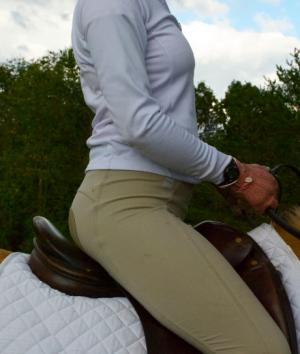
Photo 1. Rider has a hollow lower back. Her seat bones are pointing out behind her.
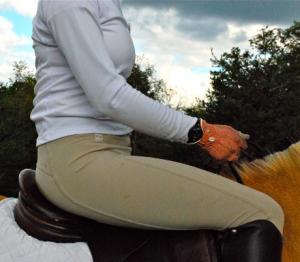
Photo 2. She has placed her leg over the flap of the saddle and filled out her lower back. The seat bone is now pointing down into the saddle.
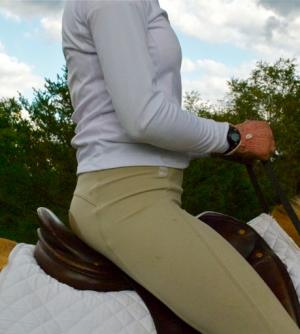
Photo 3. The rider has returned her foot the stirrup while keeping her seat bone aligned underneath her.
By Wendy Murdoch
Copyright© 2012. All rights reserved.
Do you have trouble finding your seat bones? Is one harder to locate than the other?
Can you find them sitting on a hard surface while off the horse but not while in the saddle? Here’s a quick tip to help you find both seat bones in the saddle.
Feeling both seat bones evenly in the saddle is a function of how you sit, in the saddle and on the horse’s ribcage. Next time before you ride, sit on a flat level surface. Do you feel both seat bones equally? Is one more prominent than the other? Are they at the same angle or does if feel like one is pointing in a different direction? Do you feel like you sit on the back, the front, or the center of your seat bones? Move your pelvis forward and back, arching and rounding your back. How does this change the contact of your seat bones? Does it feel the same on both sides? How do you have to position yourself to make the two seat bones feel more alike?
Look at the seat of your saddle. Are there any indentations on the seat? If so, are there one or two marks? Are they even or uneven? If you bought the saddle new, these indents mark where your seat bones are hitting the seat. If yours is a used saddle, the previous owner has created the indents. If that person sat crooked or more heavily on one seat bone, it could have created a twist in the saddle or damaged the tree. Therefore, it is useful to look at your saddle if you are having trouble finding both seat bones.
After looking at your saddle by itself, look at it girthed on your horse. Stand behind and above your horse (make sure he is OK with this idea) and look down his back toward the ears. Is the saddle sitting level across his back or dropping off to one side? Is this the same as the seat bone you can’t feel? Since the saddle is strapped to the ribcage, it will mirror any rotation in your horse’s ribcage, which makes it difficult or impossible for you to feel both seat bones evenly, depending on the degree of rotation.
When you ride, notice if you can feel one seat bone more clearly than the other. Does this correspond to what you observed in your saddle and on your horse? Do you tense one side of your buttocks or hollow your back on one side more than the other? Or are your seat bones not present at all?
To find your seat bones in the saddle, have your horse stand quietly. Take one foot out of the stirrup and place your leg over the flap. Fill out your back. Notice how the contact of your seat bone becomes more obvious in this position. Place your hand under your seat bone to give you a better sense of its location. Keep your hand under your seat bone as you slowly bring your leg off the flap. Feel if the seat bone shifts or stays pointing down into your hand. Can you keep your pelvis aligned so that your seat bone remains in the same position as when you had your leg over the flap? Repeat with the other leg. You can also place both legs over the flaps. Only return one foot at time to the stirrups to help you maintain the position of your seat bones as you bring your legs down.
Use the Murdoch Minute to align your seat bones in the saddle. Placing your leg over the flap will help you find the correct alignment. Keep your pelvis in place as you return your foot to the stirrups to ensure that your seat bones remain in place. And always remember to enjoy the ride!
Wendy Murdoch resides in Washington, VA. She teaches riders of all levels and disciplines how to improve the horse’s performance by improving their body position. Her book, 50 5-Minute Fixes to Improve Your Riding, based on the Murdoch Minutes, is available at www.murdochmethod.com. On-line join Wendy’s Facebook group Fans of the Murdoch Method and find more articles and her blog at www: murdochmethod.com.
Photo 1. Rider has a hollow lower back. Her seat bones are pointing out behind her.
Photo 2. She has placed her leg over the flap of the saddle and filled out her lower back. The seat bone is now pointing down into the saddle.
Photo 3. The rider has returned her foot the stirrup while keeping her seat bone aligned underneath her.


