


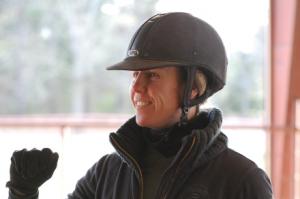
Germantown native and Olympic Gold Medalist Melanie Smith Taylor established the USHJA Emerging Athletes Program (EAP) in 2009. The goal of the program is to provide opportunities to young riders to advance their equine riding education and to become knowledgeable horse people or even competent professionals someday within the hunter/jumper community.
McKrell Baier of Southern Blues Equestrian Center near Collierville, TN got involved with Melanie and the EAP at just the right time, when she was an “emerging” course designer. After assisting International Course Designer, Christa Heibach, with the first selection trial for the 2008 U.S. Olympic Team and attending the Aachen School of Course Design, McKrell was able to put into practice what she had learned beginning with the Level I EAP Trials in 2009. “I was attending Christa’s course design school, all the while keeping Melanie posted on my aspirations to do course design work. I had worked for Melanie when I was in college and we remained good friends,” McKrell recounted.
“When Melanie was just starting the EAP, I told her of my interest in the program, and she asked me to help her put together ideas for how to train with gymnastics on the first day (of the EAP training sessions). Then on the second day of the training sessions, she wanted the students to jump a course like they would find at a horse show. On the second day, Melanie likes to see how the students have put together what they learned on the first day to jump a complete course,” McKrell continued.
“The upshot of this was very good practice for me, to implement what I had just learned in course design school to put together courses for kids who may have very different levels of experience- to make them inviting enough for the more novice riders and challenging enough that the good, thinking riders could really rise to the top and advance to the next level,” McKrell explained.
Starting with the Level I Trails was the perfect opportunity for a new course designer to build very basic, flowing courses along with having the challenge to put together tracks for a wide range of people to jump, yet creating a course that allowed the good riders to show their stuff. The riders who advance to Level 2 Trials face a different set of clinicians, where again they train with gymnastic exercises on day one and face a more difficult, show jumping type course day two. One of the clinicians from whom Melanie got feedback on McKrell’s courses was Bernie Traurig. “Bernie was complimentary of my gymnastic exercises and show course,” McKrell said. “This was the first chance for me to get feedback on my courses from others.”
In 2010 and 2011, McKrell was again named course designer for the EAP. “Now, Melanie gave me full rein to put together courses for both the Level I and II Trials. She told me what she wanted to see from the riders and I got a blank slate to design the courses to create opportunities for the riders to demonstrate those skills she was looking for. In 2010 renowned USEF course designer, Phil De Vita, built my course for Melanie in Oklahoma City for the Level II Trials there, and I was thrilled to have his praise, as I really respect his course design and love riding his courses!”
McKrell’s courses have been improving over the years with the opportunity to also work with well known designer’s courses. “For the 2009 and 2010 finals, I began with an old Nation’s Cup course and then revamped it to fit a new ring. In 2010, modifying Christine Tauber’s course from the 1998 Samsung Nation’s Cup at Madison Square Garden to fit in the long, narrow Buffalo International ring was a difficult exercise, but really interesting – I learned so much!” McKrell added.
In July 2011, McKrell was able to attend the Level II Trials in Oklahoma City and got the chance to build her course together with clinician, Linda Allen, the world’s only female Olympic course designer. “Oklahoma City has a beautiful stadium and it was an unbelievable opportunity to get to build my own course in a facility with nice materials, while having Linda to give me feedback. It’s one thing to draw a nice track on paper – but to build it in reality offers completely different challenges! When Linda walked around with me after I had laid the rails for all 11 jumps, and only moved one pole a couple of feet and solved about three problems at once, I was amazed and thrilled to have done it!”
McKrell further explained the course design process. “You design the course on paper first, then put it into reality. Linda was very complimentary and offered further help with my course design career. The course rode beautifully for all, and the top riders rode it exactly as I had planned.”
McKrell and Christian Baier provide multi-discipline training, including show jumping, hunters, dressage, and eventing at their Southern Blues Equestrian Center on Quinn Road in Collierville, TN. To read more about McKrell and Christian, visit www.southernbluesequestrian.com.
McKrell Baier of Southern Blues Equestrian Center near Collierville, TN got involved with Melanie and the EAP at just the right time, when she was an “emerging” course designer. After assisting International Course Designer, Christa Heibach, with the first selection trial for the 2008 U.S. Olympic Team and attending the Aachen School of Course Design, McKrell was able to put into practice what she had learned beginning with the Level I EAP Trials in 2009. “I was attending Christa’s course design school, all the while keeping Melanie posted on my aspirations to do course design work. I had worked for Melanie when I was in college and we remained good friends,” McKrell recounted.
“When Melanie was just starting the EAP, I told her of my interest in the program, and she asked me to help her put together ideas for how to train with gymnastics on the first day (of the EAP training sessions). Then on the second day of the training sessions, she wanted the students to jump a course like they would find at a horse show. On the second day, Melanie likes to see how the students have put together what they learned on the first day to jump a complete course,” McKrell continued.
“The upshot of this was very good practice for me, to implement what I had just learned in course design school to put together courses for kids who may have very different levels of experience- to make them inviting enough for the more novice riders and challenging enough that the good, thinking riders could really rise to the top and advance to the next level,” McKrell explained.
Starting with the Level I Trails was the perfect opportunity for a new course designer to build very basic, flowing courses along with having the challenge to put together tracks for a wide range of people to jump, yet creating a course that allowed the good riders to show their stuff. The riders who advance to Level 2 Trials face a different set of clinicians, where again they train with gymnastic exercises on day one and face a more difficult, show jumping type course day two. One of the clinicians from whom Melanie got feedback on McKrell’s courses was Bernie Traurig. “Bernie was complimentary of my gymnastic exercises and show course,” McKrell said. “This was the first chance for me to get feedback on my courses from others.”
In 2010 and 2011, McKrell was again named course designer for the EAP. “Now, Melanie gave me full rein to put together courses for both the Level I and II Trials. She told me what she wanted to see from the riders and I got a blank slate to design the courses to create opportunities for the riders to demonstrate those skills she was looking for. In 2010 renowned USEF course designer, Phil De Vita, built my course for Melanie in Oklahoma City for the Level II Trials there, and I was thrilled to have his praise, as I really respect his course design and love riding his courses!”
McKrell’s courses have been improving over the years with the opportunity to also work with well known designer’s courses. “For the 2009 and 2010 finals, I began with an old Nation’s Cup course and then revamped it to fit a new ring. In 2010, modifying Christine Tauber’s course from the 1998 Samsung Nation’s Cup at Madison Square Garden to fit in the long, narrow Buffalo International ring was a difficult exercise, but really interesting – I learned so much!” McKrell added.
In July 2011, McKrell was able to attend the Level II Trials in Oklahoma City and got the chance to build her course together with clinician, Linda Allen, the world’s only female Olympic course designer. “Oklahoma City has a beautiful stadium and it was an unbelievable opportunity to get to build my own course in a facility with nice materials, while having Linda to give me feedback. It’s one thing to draw a nice track on paper – but to build it in reality offers completely different challenges! When Linda walked around with me after I had laid the rails for all 11 jumps, and only moved one pole a couple of feet and solved about three problems at once, I was amazed and thrilled to have done it!”
McKrell further explained the course design process. “You design the course on paper first, then put it into reality. Linda was very complimentary and offered further help with my course design career. The course rode beautifully for all, and the top riders rode it exactly as I had planned.”
McKrell and Christian Baier provide multi-discipline training, including show jumping, hunters, dressage, and eventing at their Southern Blues Equestrian Center on Quinn Road in Collierville, TN. To read more about McKrell and Christian, visit www.southernbluesequestrian.com.


