

By Leigh Ballard
Therapeutic riding is a specialized equine activity which uses horseback riding as a tool to help riders with disabilities achieve physical, emotional and psychological goals. The Mississippi State University Extension Service 4-H Therapeutic Riding and Activity Center (TRAC), located in West Point, Mississippi, is developing a model program based on guidelines set forth by the Professional Association of Therapeutic Horsemanship (PATH), formerly known as North American Riding for the Handicapped Association (NARHA).
Certified riding instructors develop carefully planned and individualized programs for children and adults with disabilities. Students of all ages and disabilities benefit from therapeutic riding. The movement of a horse’s gait stimulates muscle responses for the student. Physical benefits include improved posture, muscle strength, and balance. Psychological benefits come from the human-animal bond that often develops between horse and rider. Emotionally, a rider develops a sense of independence and a sense of positive self-esteem from accomplishing the feat of riding a horse. Therapeutic riding programs have made a positive influence on students with a wide range of disabilities including autism, cerebral palsy, Down Syndrome, spinal cord injuries, strokes, amputations, and other conditions.
The Mississippi State TRAC program is located at the 4-H Elizabeth H. Howard Arena, which was donated by Tommy and Brenda Howard. When their daughter Elizabeth was born with cerebral palsy, they were told by her doctor that therapeutic riding would be one of the best things to develop her muscles and strength. Her mother saw marked physical changes in her abilities after Elizabeth became involved with the program. Her parents were excited by her progress and wanted her to have more opportunity to ride, but, at the time, access to the riding facility was limited. Then, the program was able to use the Mississippi Horse Park, but only on a limited basis due to other events at that venue. Jimmy Bryan of Bryan Foods had already donated land to the 4H program in West Point, MS, and discussions were ongoing about how to best use the land. The Howards and the Bryans were introduced to each other, and the plans for a therapeutic riding arena and facility, fully committed to the program, were begun. Now a facility is always available for the riding program. The first classes were held last fall, and the number of students has doubled with the increased availability. Elizabeth continues riding and making progress.
Persons interested in becoming certified instructors for therapeutic riding can apply through PATH and begin online coursework and testing. Upon successful completion of that process, they are then eligible to attend certification workshops. The TRAC center, which is accredited through PATH, often hosts instructor certification workshops; one is planned for the summer of 2012.
The riding center provides therapy for students in the area, and promotes knowledge and use of therapeutic riding throughout the south. The center welcomes applications for riders and volunteers to help with the program.
Volunteers, college students, and 4-H students are integral to the center’s success. Mississippi State University offers undergraduate classes, which give an overview and introduction to the therapeutic riding program, through the Animal Science Department. These classes attract Adaptive Physical Education students, as well as students in Kinesiology and Physical Therapy.
In addition to volunteers and instructors, the horses are of utmost importance to the program. Some of the horses come to the center with extensive performance and show backgrounds. Others have been family pets. Regardless of background, the horses seem to know the importance of their job and the impact they have on their riders’ lives. The center is always looking for suitable horses that can be donated for use in the program. Donations of appropriate tack and equipment are also accepted.
For more information about the 4-H TRAC Program can contact Mary Riley, 4-H Therapeutic Riding Coordinator, at 662-325-3350 or mriley@ext.msstate.edu.
Photo Cutlines to use:
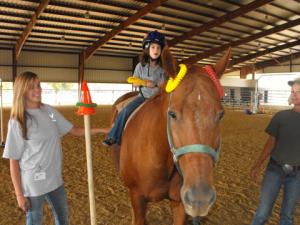
Hippo made fun, Paige, rings.jpg: (left to right) (left to right) Hippotherapy Made Fun! Volunteer Alden Burdine, Paige Lindley (mounted on Bob), and Mary Riley.
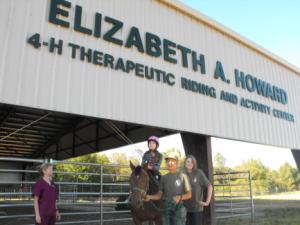
Pictures for mid south horse review 2011 001.jpg: (left to right) Jackie Parker, Physical Therapist, Elizabeth Howard (mounted), Mary Riley, Hannah Miller,
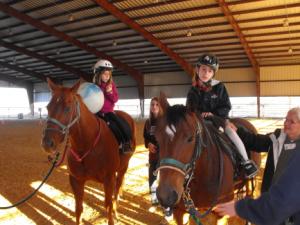
Pictures for mid south horse review 2011 002.jpg: (left to right) Bille Jean Kirkland (mounted), Hannah Miller, Elizabeth Howard (mounted), and Judy Jones.
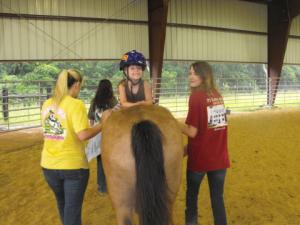
Waverly hippo 2.jpg: Waverly Glenn doing hippotherapy with volunteers (left to right) Taylor Jane Taggart and Hannah Miller.
Therapeutic riding is a specialized equine activity which uses horseback riding as a tool to help riders with disabilities achieve physical, emotional and psychological goals. The Mississippi State University Extension Service 4-H Therapeutic Riding and Activity Center (TRAC), located in West Point, Mississippi, is developing a model program based on guidelines set forth by the Professional Association of Therapeutic Horsemanship (PATH), formerly known as North American Riding for the Handicapped Association (NARHA).
Certified riding instructors develop carefully planned and individualized programs for children and adults with disabilities. Students of all ages and disabilities benefit from therapeutic riding. The movement of a horse’s gait stimulates muscle responses for the student. Physical benefits include improved posture, muscle strength, and balance. Psychological benefits come from the human-animal bond that often develops between horse and rider. Emotionally, a rider develops a sense of independence and a sense of positive self-esteem from accomplishing the feat of riding a horse. Therapeutic riding programs have made a positive influence on students with a wide range of disabilities including autism, cerebral palsy, Down Syndrome, spinal cord injuries, strokes, amputations, and other conditions.
The Mississippi State TRAC program is located at the 4-H Elizabeth H. Howard Arena, which was donated by Tommy and Brenda Howard. When their daughter Elizabeth was born with cerebral palsy, they were told by her doctor that therapeutic riding would be one of the best things to develop her muscles and strength. Her mother saw marked physical changes in her abilities after Elizabeth became involved with the program. Her parents were excited by her progress and wanted her to have more opportunity to ride, but, at the time, access to the riding facility was limited. Then, the program was able to use the Mississippi Horse Park, but only on a limited basis due to other events at that venue. Jimmy Bryan of Bryan Foods had already donated land to the 4H program in West Point, MS, and discussions were ongoing about how to best use the land. The Howards and the Bryans were introduced to each other, and the plans for a therapeutic riding arena and facility, fully committed to the program, were begun. Now a facility is always available for the riding program. The first classes were held last fall, and the number of students has doubled with the increased availability. Elizabeth continues riding and making progress.
Persons interested in becoming certified instructors for therapeutic riding can apply through PATH and begin online coursework and testing. Upon successful completion of that process, they are then eligible to attend certification workshops. The TRAC center, which is accredited through PATH, often hosts instructor certification workshops; one is planned for the summer of 2012.
The riding center provides therapy for students in the area, and promotes knowledge and use of therapeutic riding throughout the south. The center welcomes applications for riders and volunteers to help with the program.
Volunteers, college students, and 4-H students are integral to the center’s success. Mississippi State University offers undergraduate classes, which give an overview and introduction to the therapeutic riding program, through the Animal Science Department. These classes attract Adaptive Physical Education students, as well as students in Kinesiology and Physical Therapy.
In addition to volunteers and instructors, the horses are of utmost importance to the program. Some of the horses come to the center with extensive performance and show backgrounds. Others have been family pets. Regardless of background, the horses seem to know the importance of their job and the impact they have on their riders’ lives. The center is always looking for suitable horses that can be donated for use in the program. Donations of appropriate tack and equipment are also accepted.
For more information about the 4-H TRAC Program can contact Mary Riley, 4-H Therapeutic Riding Coordinator, at 662-325-3350 or mriley@ext.msstate.edu.
Photo Cutlines to use:
Hippo made fun, Paige, rings.jpg: (left to right) (left to right) Hippotherapy Made Fun! Volunteer Alden Burdine, Paige Lindley (mounted on Bob), and Mary Riley.
Pictures for mid south horse review 2011 001.jpg: (left to right) Jackie Parker, Physical Therapist, Elizabeth Howard (mounted), Mary Riley, Hannah Miller,
Pictures for mid south horse review 2011 002.jpg: (left to right) Bille Jean Kirkland (mounted), Hannah Miller, Elizabeth Howard (mounted), and Judy Jones.
Waverly hippo 2.jpg: Waverly Glenn doing hippotherapy with volunteers (left to right) Taylor Jane Taggart and Hannah Miller.


